




Do trekking poles help with walking on wet and slippery tree roots?
If you’ve ever hiked through Brazil’s Atlantic Forest after a rainstorm, you know the challenge: trails crisscrossed with slick, mossy tree roots that turn a simple walk into a balancing act. One wrong step can send you sliding. So, do trekking poles actually help? The short answer is yes, dramatically. Here’s how and why.
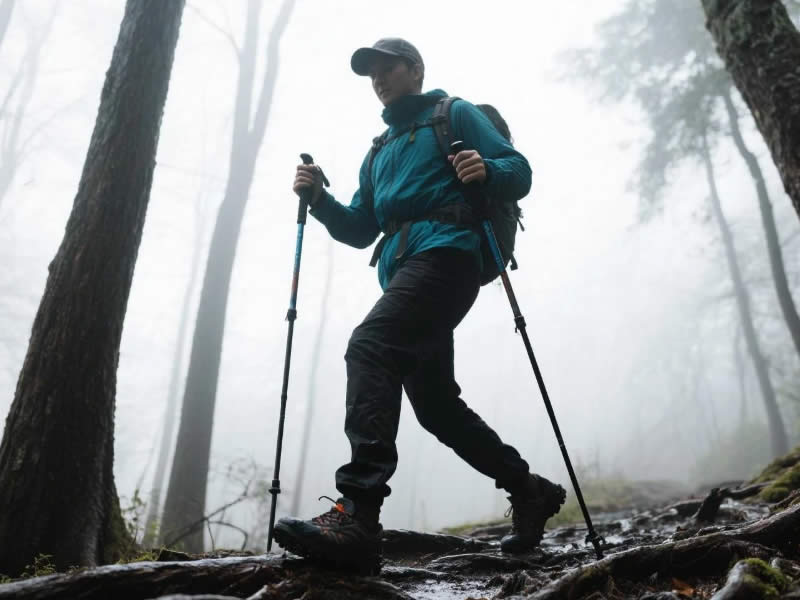
Recommended trekking pole purchase link: https://lightenup.aliexpress.com/store/1101521655
Why wet roots are so dangerous
Tree roots, especially those of species like the Brazilian walnut or jequitibá, develop smooth bark that becomes nearly frictionless when wet. Add a layer of algae or thin mud, and they rival ice. Without support, you rely entirely on your feet’s traction, which is often inadequate.
How trekking poles improve safety
- Four points of contact – Two feet plus two poles quadruple your stability. If one foot slips on a root, the poles can arrest your fall immediately.
- Probing ahead – Before committing your full weight, tap the pole tip on a root. You’ll feel if it’s solid or rotting, wet or dry. This lets you plan a safer step.
- Weight distribution – By pressing down on poles, you reduce the vertical load on your feet, decreasing the chance of a slip. Light feet = less sliding.
- Lateral balance – Roots often slope sideways, twisting ankles. Poles planted on either side of a root act outriggers, keeping your torso upright.
Best techniques for root‑covered trails
- Use rubber tip covers – Carbide tips can skid on hard, wet wood. Rubber tips (or “root caps”) provide better grip. Some brands offer special soft rubber ends for slick surfaces.
- Plant slightly ahead – Place each pole just past the root you intend to step on. This gives a forward brace as you transfer weight.
- Keep poles close to your body – Wide planting reduces leverage; keep poles within shoulder width for maximum stability.
- Shorten poles on steep root sections – On descents with roots, shorten poles by 5–10 cm. This allows you to plant closer to your feet without raising your elbows.
What to avoid
- Dragging poles behind you – This offers no balance benefit. Always plant actively.
- Using only one pole – On root mats, one pole creates asymmetry. Use two.
- Relying on wrist straps alone – Straps help, but a firm but relaxed grip is key. Don’t let straps carry all your weight.
Brazilian trails where root walking is common
- Tijuca Forest (Rio) – Countless roots across the main trails after rain.
- Serra do Mar (Ubatuba to Santos) – The entire coastal range is a root labyrinth.
- Ilha Grande – Trails to Lopes Mendes beach feature root‑woven sections.
- Chapada Diamantina (some valleys) – Near rivers, roots become slick year‑round.
Scientific backing
A study in Gait & Posture found that using two trekking poles reduced the rate of slips on wet, uneven surfaces by over 50% compared to no poles. The poles act as sensory extenders, giving your brain earlier feedback about surface conditions.
Final verdict
Yes, trekking poles are exceptionally helpful for walking on wet and slippery tree roots. They transform a nerve‑wracking, fall‑prone experience into a controlled, confident stride. For Brazilian hikers, who frequently encounter root‑rich Atlantic Forest trails, poles are not just a convenience—they are a safety essential. Invest in quality poles, fit rubber tips, and practice the planting technique. Your knees and your pride will thank you.




