




Can I use trekking poles to clear bushes and webs on Brazilian jungle trails?
Hiking through Brazil’s Atlantic Forest or Amazon jungle trails often means encountering dense bushes, overgrown branches, and—most famously—spider webs stretched across the path. It’s tempting to use your trekking poles as machetes or web sweepers. But is that a good idea? The short answer: yes, but gently and selectively. Here’s how to do it right without damaging the ecosystem or your poles.
Recommended trekking pole purchase link: https://lightenup.aliexpress.com/store/1101521655
Why hikers want to clear the trail
Jungle trails in Brazil (e.g., Tijuca Forest, Ilha Grande, or Amazon reserve trails) are narrow and quickly reclaimed by vegetation. Spider webs—especially from orb-weavers—can hit your face every few meters. Using a pole to clear the path seems logical and efficient.
Proper techniques for bush and web clearing
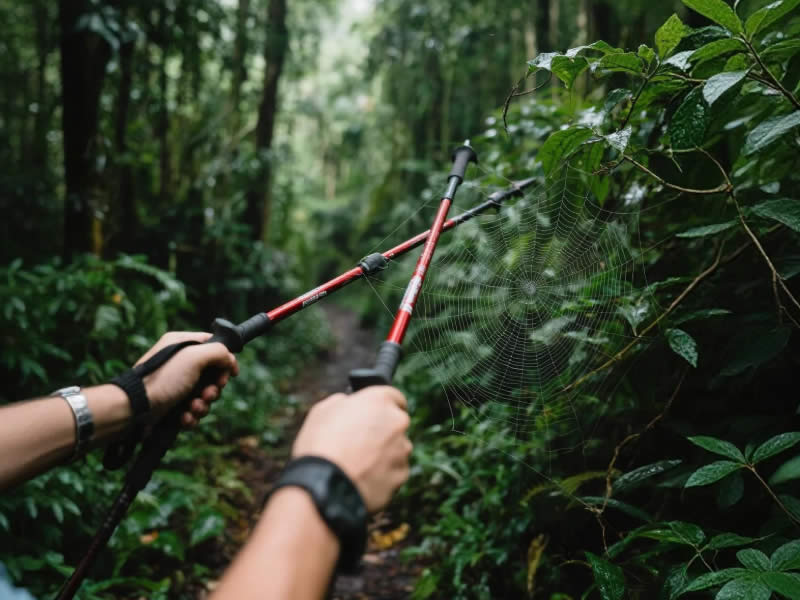
- For spider webs – Raise one pole vertically or horizontally in front of your face while walking. The web will slide off the pole rather than sticking to your skin. Rotate the pole to wrap the web, then flick it aside. Never swing the pole wildly—you could hit a fellow hiker or a fragile plant.
- For light branches and leaves – Gently push foliage aside with the pole shaft (not the tip). Use a slow, sweeping motion. This prevents snapping branches unnecessarily and avoids whipping leaves that might hold thorns or ants.
- For thorny bushes (e.g., rose bramble) – Use caution. Carbide tips can catch on thorns. Instead, use the pole to lift a branch up and over, then step under. Rubber tip covers help prevent snagging.
What NOT to do
- Do not whack bushes hard – This damages native vegetation and can disturb nesting birds or sleeping snakes. Brazilian jungle plants are often slow‑growing; a broken branch may take years to recover.
- Do not use poles as machetes – Carbon poles can snap; aluminum poles will bend. Neither is designed for chopping.
- Do not clear a path off‑trail – Using poles to push through untouched jungle causes erosion and tramples understory plants. Stick to established trails.
Environmental considerations for Brazilian ecosystems
- Atlantic Forest – One of the world’s most endangered biomes. Every plant matters. Use poles only to clear webs and very light brush, never to break live branches.
- Amazon – Extremely fragile soil and plant life. Avoid any bush clearing; instead, wear a long‑sleeved shirt and a hat with a net. Let the jungle be.
- Cerrado – Woody shrubs are tough. Pushing with a pole may uproot them; walk around when possible.
Alternatives to pole‑based clearing
- Wear a jungle hat with a brim – Tilley‑style hats deflect webs before they hit your face.
- Hike behind a taller person – Let them take the first wave of webs.
- Use a lightweight telescopic web sweeper – Some ultralight hikers carry a carbon fiber rod just for this purpose, saving their poles for support.
Maintenance after clearing
After pushing through muddy or thorny brush, clean your poles:
- Wipe shafts to remove sap (can jam locks).
- Check rubber tips for embedded thorns.
- Inspect locks for dirt ingress; rinse with fresh water.
Final verdict
Yes, you can use trekking poles to clear bushes and webs on Brazilian jungle trails, but gentleness is key. Use poles to lift webs and nudge leaves aside, never to whack or chop. Respect the jungle’s fragility. With a light touch and proper technique, your poles will keep your face web‑free without harming Brazil’s incredible biodiversity. For dense bushwhacking, leave the poles in your pack and use your hands or a dedicated tool.




