




What are the best trekking pole tips for muddy Brazilian rainy season?
Brazil’s rainy season (roughly December to March in the Southeast, April to July in the Northeast) transforms trails into slippery, muddy nightmares. The red clay of the Atlantic Forest becomes a greasy slide, and lowland paths turn into boot‑sucking bogs. Choosing the right trekking pole tip can mean the difference between confident strides and face‑first falls. So, what are the best tips for these conditions? Let’s break it down.
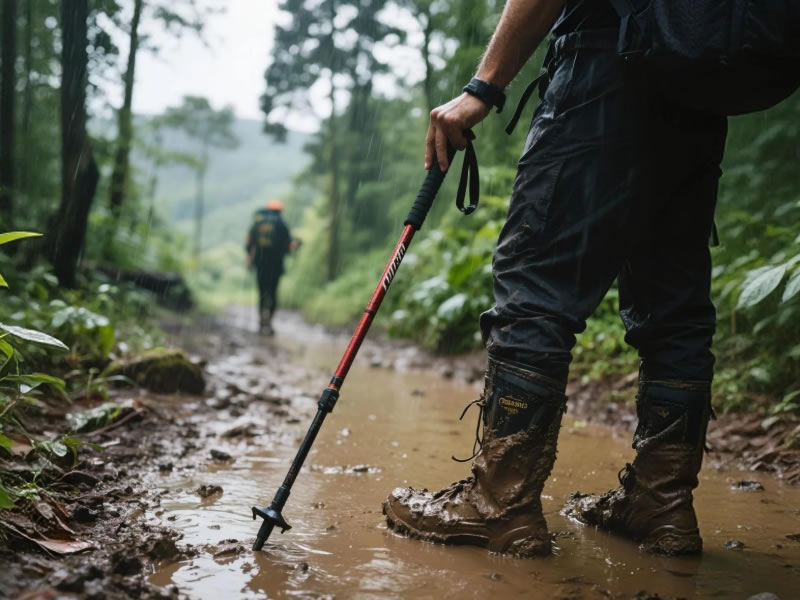
Recommended trekking pole purchase link: https://lightenup.aliexpress.com/store/1101521655
Understanding the challenge
Muddy Brazilian trails have three characteristics:
- Low friction – The surface is slick; carbide tips can skate sideways.
- Depth – Mud can be 10–30 cm deep; standard tips sink without providing stability.
- Hidden obstacles – Rocks and roots lurk under the mud, waiting to snap a poorly designed tip.
The best tip configuration for mud
1. Wide mud baskets (the most important upgrade)
Mud baskets are plastic discs that screw onto the pole just above the tip. Their job is to prevent the pole from sinking too deep. For deep Brazilian mud, choose extra‑wide baskets (60–80 mm diameter). Standard snow baskets (50 mm) work but are smaller. Some brands (Black Diamond, LEKI) offer specific “mud baskets” with angled vanes that shed mud effectively.
2. Carbide tips with a blunt profile
While sharp, pointed carbide tips are great for hard rock, they penetrate mud too easily without providing lateral grip. A blunter carbide tip (some models have a rounded or flared end) pushes mud aside rather than stabbing through, creating a wider footprint. Look for tips described as “mud‑optimized” or “all‑terrain.”
3. Rubber “mud paws” (controversial but effective)
Some companies sell soft rubber attachments that fit over the carbide tip and have a broad, flat shape (like a paw). These float on top of soft mud, providing surprising grip. They work well on shallow mud (under 5 cm) but fail in deep muck. Decathlon’s Quechua brand has affordable versions. Test them before a long trek.
What to avoid in muddy conditions
- Narrow snow baskets (<40 mm) – They sink as if not there.
- Hard plastic trekking tips (no carbide) – They slip and wear quickly.
- No basket at all – Your pole will become a mud pogo stick.
Recommended tip + basket combinations for Brazilian rainy season
| Brand | Tip | Basket | Best for |
|---|---|---|---|
| Black Diamond | Carbide flex tip | Mud basket (65 mm) | Deep clay mud |
| LEKI | Carbide flextip | Big Mud basket (70 mm) | Rocky muddy trails |
| Cascade Mountain Tech | Standard carbide | Universal powder basket (55 mm) | Moderate mud |
| Decathlon Forclaz | Carbide tip | “Boue” mud basket (60 mm) | Budget option |
DIY and maintenance tips
- Clean baskets after each hike – Mud hardens like concrete, making baskets impossible to unscrew. Rinse with water and a stiff brush.
- Carry spare baskets – They crack against rocks. A spare set costs R$20–40.
- Lubricate threads – A dab of silicone grease prevents baskets from seizing.
Final verdict
For muddy Brazilian rainy season trails, the best trekking pole tip setup is a blunt carbide tip combined with a wide (60+ mm) mud basket. Avoid sharp, needle‑like tips that sink too deep. If you hike frequently in the Serra do Mar or Atlantic Forest during wet months, invest in dedicated mud baskets—they’re cheap and transform performance. With the right tips, you’ll glide over mud instead of plunging into it, saving energy and staying upright.




