




What are the best trekking poles for walking on Brazilian sandy beaches?
Brazilian beaches are legendary—from the soft, white sands of Jericoacoara to the vast tidal flats of Maranhão and the bustling shores of Copacabana. Walking on sand is excellent low‑impact exercise, but if you have balance issues, joint pain, or simply want to maintain a steady rhythm, you might wonder: are trekking poles a good idea? The short answer is standard trekking poles are poor on soft sand, but with the right modifications or alternatives, they can work. Here’s what you need to know.
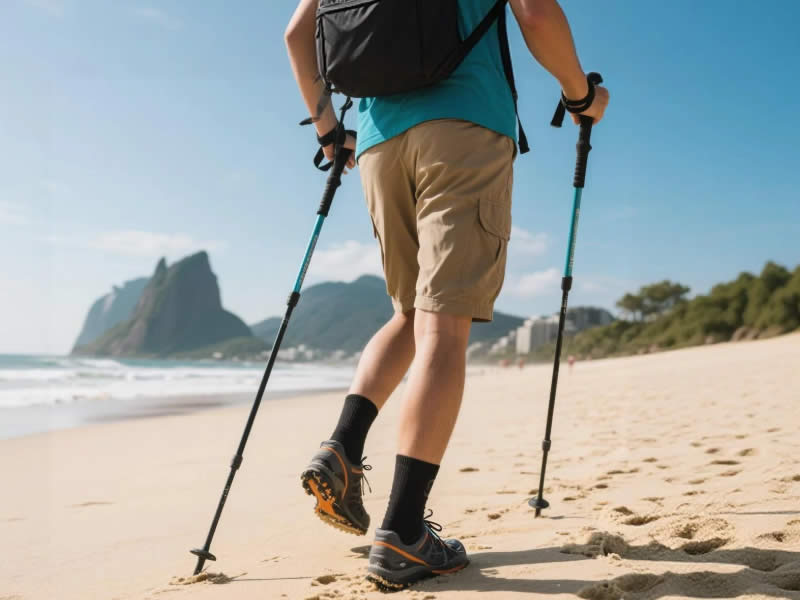
Recommended trekking pole purchase link: https://lightenup.aliexpress.com/store/1101521655
The problem with regular poles on sand
- Sinking – A standard carbide tip or even a rubber tip sinks 5–15 cm into dry loose sand. You waste energy pulling the pole out of a hole.
- Dragging – Without a wide basket, the pole creates a furrow, adding resistance.
- No solid purchase – Sand shifts, so the pole doesn’t provide a stable push point.
Solutions: sand‑specific accessories
- Extra‑wide sand baskets (powder baskets) – These are large plastic discs (60–100 mm diameter) originally designed for deep snow. On sand, they float on the surface, preventing sinking. Brands like Black Diamond, LEKI, and Cascade Mountain Tech sell them separately (approx. $10–15 per pair). They are the single most effective upgrade.
- Rubber feet with wide bases – Some manufacturers offer “sand feet” – soft rubber attachments that distribute weight like a small snowshoe. Decathlon’s Quechua brand has a “pied de plage” (beach foot) for their poles. They work well on damp compact sand but still sink in dry soft sand.
- Aluminum poles, not carbon – Carbon poles are light but brittle; if they get wedged between rocks near beach access points, they can snap. Aluminum is more durable and affordable.
When poles still make sense on sand
- Wet, compact sand near the waterline – Here the surface is firm, and poles behave almost as on a dirt trail. Wide baskets are optional; regular rubber tips work fine.
- Mixed terrain (beach to rocky headland) – If you’re walking a coastal trail that alternates between forest paths and beach sections, carry poles for the trail and collapse/strap them on sand.
- Rehabilitation or mobility aid – If you have a knee or hip condition, the stability of two poles (even with sinking) may outweigh the extra effort.
Better alternatives for pure beach walking
- Barefoot or minimalist shoes – Walking on sand strengthens foot muscles naturally. No gear needed.
- A single wooden walking stick – Lightweight, floats, and doesn’t have complex locks. Vendors on Brazilian beaches often sell hand‑carved sticks.
- Adjustable hiking staff – Some poles are designed specifically for beach walking with wide, flat bases (e.g., “beach walker” poles). They are rare in Brazil but can be imported.
What not to use
- Carbide tips without baskets – They dig deep holes and damage wet compact sand (as well as sea turtle nesting areas if you venture above high tide).
- Cheap twist‑lock poles – Sand gets into the threads, locking them permanently.
- Heavy steel poles – They rust quickly in salty air and water.
Maintenance after beach use
Salt and sand are corrosive. After every beach walk:
- Rinse poles with fresh water, especially the locking mechanisms.
- Dry completely before collapsing.
- Lubricate flick‑lock cams with silicone spray.
- Remove and clean sand baskets – sand trapped under the basket can crack the plastic.
Final verdict
For walking on Brazilian sandy beaches, the “best” trekking pole is often no pole at all – go barefoot or use a simple wooden staff. If you must use poles, equip them with extra‑wide sand baskets (60+ mm) and choose aluminum flick‑lock models. Avoid carbide tips on wet compact sand. With the right setup, you can enjoy miles of beach without fighting sinking poles. But honestly, for the ultimate Brazilian beach experience, leave the gear behind, feel the sand between your toes, and let the ocean be your guide.




