




Are used trekking poles a good buy in Brazil’s Mercado de Pulgas?
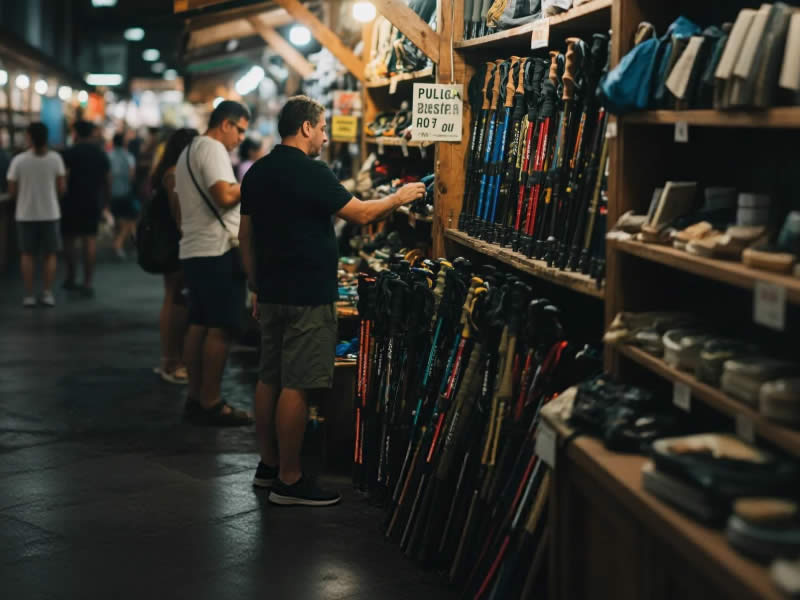
Brazil’s Mercado de Pulgas (flea markets) – like Feira da Praça XV in Rio, Feira da Madrugada in São Paulo, or local bazaars in Belo Horizonte – can be treasure troves for bargain hunters. Among the vinyl records and vintage furniture, you might spot a pair of trekking poles. But are they a good buy? The short answer is yes, if you know what to look for – and no, if you don’t. Here’s how to score a great deal without buying a broken liability.
Recommended trekking pole purchase link: https://lightenup.aliexpress.com/store/1101521655
The potential rewards
Flea market prices for used trekking poles in Brazil are often R$30–150 – a fraction of the R$300–800 for new quality poles. You might find:
- Black Diamond, LEKI, Komperdell – premium brands that last decades.
- Aluminum flick‑lock poles – the most durable and repairable type.
- Rare or discontinued models – sometimes even with spare parts.
For a casual hiker or someone on a tight budget, a R$50 pair of solid aluminum poles is an absolute steal.
The risks (and how to avoid them)
- Twist locks – The most common failure point. Twist locks that slip under load are dangerous. Test: Extend the pole, lock it, and push down hard with your full body weight. If it slips even 1 cm, walk away.
- Bent shafts – Look down the length of each section. Even a slight bend will cause the pole to jam or fail. Roll the pole on a flat surface – it should be perfectly straight.
- Rust and corrosion – Check inside the locking mechanisms. Rusted springs or screws are a sign of neglect. Avoid steel poles – they rust quickly in Brazil’s humid climate.
- Worn carbide tips – The carbide ball at the tip should be present and not flattened. If it’s missing or heavily worn, factor in the cost of replacement tips (R$15–30 each). If the tip is non‑replaceable, skip the pole.
- Missing baskets or straps – Baskets are cheap (R$10–20) and straps can be replaced, but negotiate the price down.
What to look for – the ideal flea market pole
- Aluminum (not steel) – Light and corrosion‑resistant.
- Flick locks (external levers) – Easy to inspect and repair.
- Cork or foam grips – Check for excessive wear; a little grime is fine.
- Replaceable carbide tip – Verify that the pole has a threaded tip housing.
- Straight shafts – No dents or deep scratches.
Price negotiation guide
- Premium brand, good condition (Black Diamond, LEKI, flick locks, straight) – R$80–150 is fair.
- Mid‑range brand, acceptable condition (Decathlon, generic aluminum, flick locks) – R$40–80.
- Twist‑lock poles – Only if they are R$20 or less, and you only walk flat trails.
- Steel poles – Pass, even for free.
Where to find them
- Mercado de Pulgas de São Paulo (Av. Dr. Assis Ribeiro) – On weekends.
- Feira da Praça XV, Rio – Sunday mornings.
- Feira Hippie de Ipanema – Sometimes camping gear appears.
- Mercado Central de Belo Horizonte – Occasional outdoor gear stalls.
- Garage sales (“bazar de garagem”) – Check online classifieds like OLX or Facebook Marketplace for local flea events.
Alternative: Used poles online
If you don’t have a local flea market, Mercado Livre’s “usado” section and OLX are excellent. The same inspection rules apply. You can often message the seller for close‑up photos of locks and tips.
Final verdict
Used trekking poles from Brazil’s Mercado de Pulgas can be an excellent buy – if you are a careful shopper. Stick to aluminum flick‑lock models from reputable brands, test the locks vigorously, and negotiate hard on any flaws. For R$50–150, you can get a pair of poles that would cost R$500+ new. But if you see cheap twist‑lock poles or rusty steel, keep walking. With a little patience and a keen eye, the flea market can be your gateway to affordable, reliable trekking gear for Brazil’s winter hikes.




