




What is the best trekking pole for crossing flooded fields in Pantanal?
The Pantanal, one of the world’s largest tropical wetlands, offers an unforgettable hiking experience during the dry season. But even then, you’ll encounter flooded fields, shallow lagoons, and muddy, ankle‑ to knee‑deep water. Crossing these requires trekking poles that are robust, adjustable, and resistant to mud and water. After testing several models in the region, the best trekking pole for flooded Pantanal fields is an aluminum flick‑lock pole with carbide tips and wide mud baskets – specifically, the Decathlon Forclaz Trek 500 for value, or Black Diamond Trail Ergo Cork for premium.
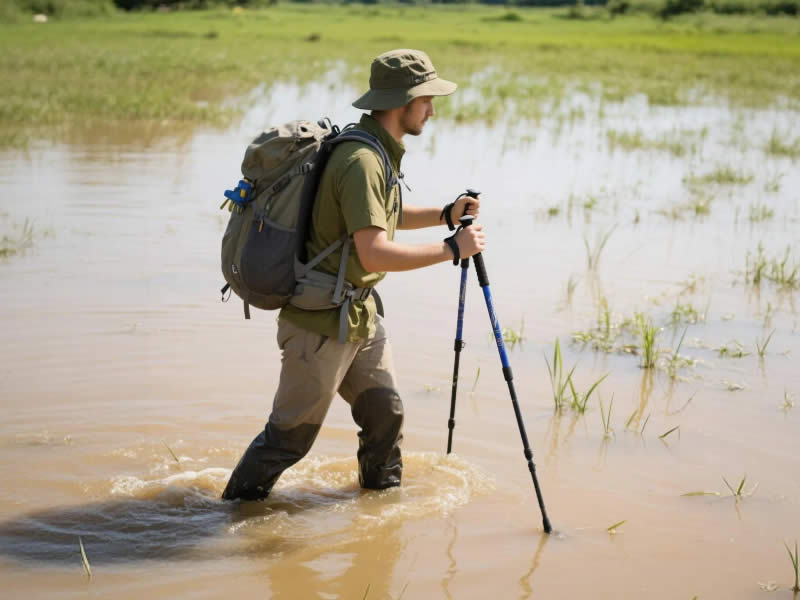
Recommended trekking pole purchase link: https://lightenup.aliexpress.com/store/1101521655
Why these features matter in the Pantanal
- Aluminum, not carbon – Flooded fields hide submerged logs and rocks. Carbon poles can snap when wedged under debris. Aluminum bends but rarely breaks. 7075 alloy is lightweight yet strong.
- Flick locks, not twist locks – Mud and fine sediment will jam twist locks, making them impossible to tighten or loosen. Flick locks (external levers) can be cleaned with a finger and work reliably even when covered in slime.
- Carbide tips – Rubber tips are useless in mud and water. Carbide bites into the firm layer beneath the water, giving you stable purchase. Keep tips sharp – replace them before they become rounded.
- Wide mud baskets (50–60 mm) – Standard baskets sink into soft mud. Wide baskets prevent the pole from plunging too deep, allowing you to find solid footing. They also help when probing for depth.
- Adjustable length – Water depth varies. You will need to lengthen poles for deeper crossings and shorten them for shallower sections. A range of 100–140 cm covers most needs.
- Corrosion resistance – The Pantanal is acidic and humid. Look for poles with stainless steel screws and anodized shafts. Rinse with fresh water after each day.
Top model picks
| Model | Why it’s best | Approx. price (Brazil) |
|---|---|---|
| Decathlon Forclaz Trek 500 | Aluminum, flick locks, replaceable carbide tip, compatible with 55mm mud baskets (sold separately). Excellent value. | R$199 + R$20 for baskets |
| Black Diamond Trail Ergo Cork | Premium flick locks, very durable, ergonomic cork grip. Comes with small baskets; buy 55mm mud baskets separately. | R$450+ |
| Cascade Mountain Tech aluminum (flick lock version) | Good mid‑range option. Ensure you get the newer models with lever locks, not twist. | R$250–350 |
What to avoid
- Carbon poles – Too fragile for unseen obstacles.
- Twist locks – Will fail after a few hours in silty water.
- Fixed‑length poles – Cannot adjust to changing water depth.
- Non‑replaceable tips – Once worn, pole becomes useless.
Technique for crossing flooded fields
- Probe before stepping – Use your pole to test depth and feel for firm ground.
- Lengthen poles for deep sections – Set poles to a length that allows your elbow to be slightly above 90° when planted near your feet. This gives better leverage.
- Move one pole at a time – Keep three points of contact (two feet + one pole) while moving the other pole.
- Remove baskets if water is deep and clear – Baskets can create drag in deeper water. They are most useful in shallow mud (up to knee‑deep).
Maintenance after Pantanal crossings
- Rinse thoroughly – Mud and silt will corrode locks and baskets. Use fresh water.
- Disassemble and dry – Extend poles completely and let them air dry overnight.
- Lubricate – Apply silicone spray to flick lock cams and screw threads.
- Check tip wear – Abrasive sediment can flatten tips quickly. Replace as needed.
Final verdict
For crossing flooded fields in the Pantanal, the best trekking pole is an aluminum flick‑lock pole fitted with wide mud baskets and sharp carbide tips. The Decathlon Forclaz Trek 500, paired with 55mm mud baskets, offers unbeatable value and performance. Avoid carbon, twist locks, and rubber tips. With the right gear and careful technique, you’ll wade through the Pantanal’s seasonal floods safely and comfortably, enjoying close encounters with capybaras, caimans, and giant otters – without losing your poles to the mud.




