




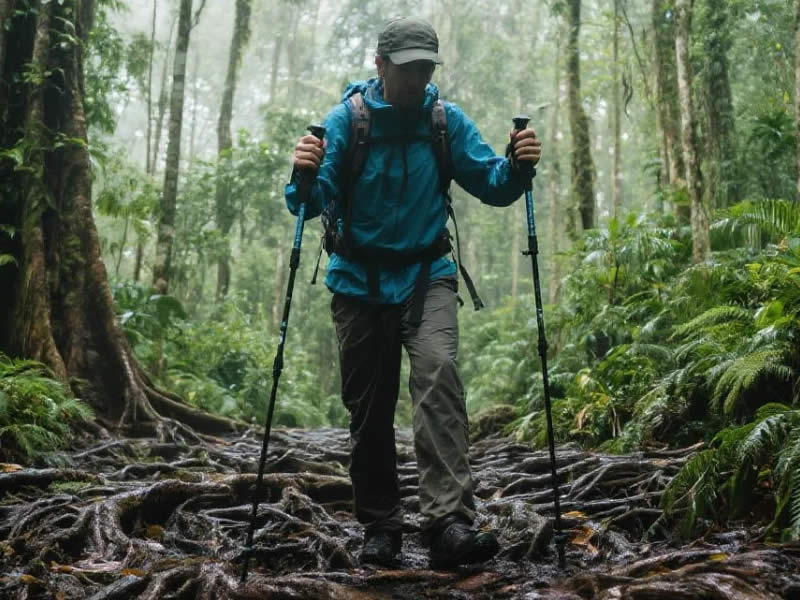
Do trekking poles help on the slippery tree root carpets of the Amazon rainforest?
The Amazon rainforest is a realm of breathtaking biodiversity and challenging terrain. While it may lack the steep, rocky peaks of other Brazilian hiking destinations, its floor presents a unique and often underestimated obstacle: the slippery, tangled carpet of tree roots. After a brief rain – or even during high humidity – these roots become coated with a thin film of moisture and algae, making them as treacherous as black ice. So, do trekking poles actually help? The short answer is yes, dramatically. Let’s explore how and why.
Recommended trekking pole purchase link: https://lightenup.aliexpress.com/store/1101521655
The challenge of Amazon root carpets
In old‑growth rainforest, the soil is often thin and nutrient‑poor, so trees develop extensive surface root systems. These roots interlace into a natural mesh that can extend for dozens of meters. While walking on dry roots is manageable, the moment they become wet, they lose all friction. One misplaced step can send you sliding into a muddy puddle or, worse, twisting an ankle in a hidden gap.
How trekking poles improve safety
- Four points of contact – With two feet and two poles, you quadruple your stability. When a foot slips off a root, a well‑planted pole can arrest your fall instantly. This is especially valuable when carrying a backpack or navigating in low light.
- Probing ahead – Before committing your full weight, you can tap the pole tip on a suspicious root. You’ll learn immediately if it’s solid or rotting, dry or slick. This tactile feedback allows you to plan a safer route step by step.
- Weight distribution – By pressing down on poles, you reduce the vertical load on your feet. Lighter feet are less likely to slide sideways. This technique also reduces fatigue over long distances.
- Crossing gaps – Root carpets often have holes or crevices. Poles help you vault or step over these obstacles without losing balance.
Choosing the right poles for Amazon conditions
- Carbide tips are essential – Rubber tip covers will skate on wet wood. Sharp carbide bites into the root’s surface, providing micro‑grip. Avoid worn or rounded tips.
- Aluminum over carbon – Carbon poles can snap when wedged between roots. Aluminum bends but survives. 7075 alloy is best.
- Flick locks, not twist – Mud and moisture make twist locks fail. External flick locks are reliable and easy to clean.
- Mud baskets (optional) – If you encounter deep mud between roots, small mud baskets help prevent sinking. However, in pure root carpets, baskets are not necessary.
Technique for root‑dominated trails
- Shorten poles slightly – A shorter pole allows you to plant close to your body, reducing the lever arm and giving more control.
- Plant between roots, not on them – Aim the carbide tip into the soil or leaf litter in the gaps, not directly onto the root surface. The tip will grip the ground beneath, not slide.
- Use a diagonal rhythm – Opposite arm with opposite leg, just like natural walking. This improves balance and momentum.
- Watch your tip angle – On steep root sections, plant the pole at a 60–70° angle behind you, pushing forward. For balance on flats, plant vertically.
Maintenance after Amazon hikes
Humidity and mud are corrosive. Rinse poles with fresh water, dry them extended, and lubricate locks with silicone spray. Inspect carbide tips for flattening – replace them when they become shiny or round.
Alternatives if you don’t have poles
- A sturdy wooden staff – Better than nothing, but you lose the benefit of two poles.
- Walking stick carved by locals – Common in Amazon communities; can work but lacks adjustability.
- Slow, deliberate footsteps – Shorten your stride, keep your center low, and use hands to grab saplings when needed.
Final verdict
Yes, trekking poles are immensely helpful on the slippery tree root carpets of the Amazon rainforest. They convert a tense, fall‑prone walk into a controlled, confident hike. For any extended Amazon trek – whether in the Tapajós region, the Jau National Park, or near Manaus – a quality pair of aluminum flick‑lock poles with sharp carbide tips is a wise investment. They not only protect you from injury but also enhance your enjoyment of one of the world’s most magical ecosystems. Don’t leave home without them.




