




How to use trekking poles on steep mossy rocks in Ilha Grande?
Ilha Grande, off the coast of Rio de Janeiro, is a hiker’s paradise. Its trails wind through lush Atlantic Forest and lead to stunning beaches like Lopes Mendes and Parnaioca. But the island’s beauty comes with a challenge: steep sections of rock covered in a thick, green moss. When wet – which is often – these mossy rocks become extremely slippery. Trekking poles can be the difference between a confident ascent and a dangerous fall. Here’s how to use them correctly on Ilha Grande’s steep, mossy terrain.
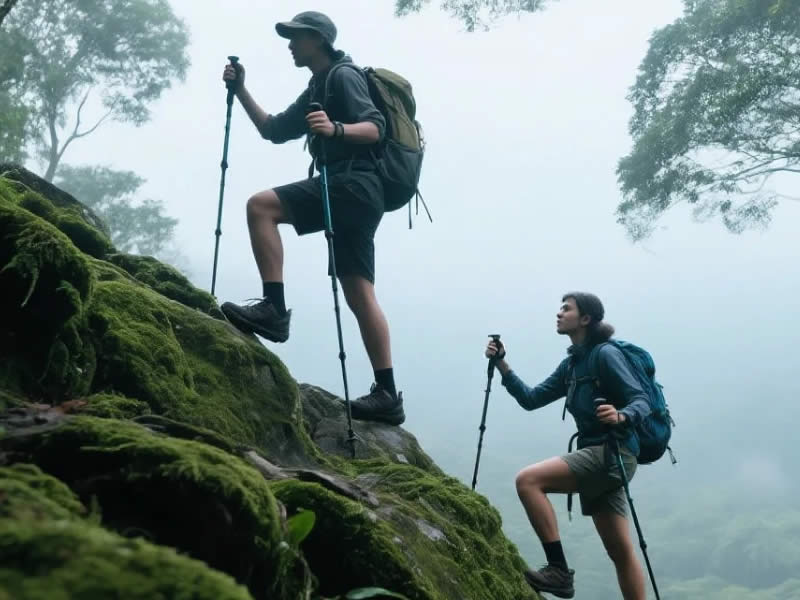
Recommended trekking pole purchase link: https://lightenup.aliexpress.com/store/1101521655
1. Shorten your poles for steep ground
On flat trails, your elbows should be at 90° when the tip is on the ground. But on steep slopes, a shorter pole gives you better leverage and control. For steep mossy rocks, shorten each pole by 5–10 cm (2–4 inches). This allows you to plant the tip closer to your body, keeping your elbows low and your center of gravity stable. A shorter pole also reduces the chance of the tip skidding sideways when you push down.
2. Use sharp carbide tips – never rubber
Rubber tip covers are great for pavement or compact sand, but on mossy rock they are dangerously slippery. They will slide off the moss like a wet eraser. Instead, use sharp, replaceable carbide tips. Carbide bites into the moss and the rock beneath, providing micro‑grip. Before your trip, check that your tips are not worn flat. If the carbide ball is shiny or missing, replace them. Spare tips are sold at Decathlon or adventure shops for R$15–30.
3. Plant one pole at a time, with firm pressure
On steep, slippery rock, never move both poles simultaneously. Follow this rhythm:
- Step forward with your right foot.
- Plant your left pole firmly into a moss‑free crack or a patch of rock where the tip can grab.
- Shift weight onto the pole, then step up with your left foot.
- Plant your right pole, and repeat.
By keeping three points of contact (two feet + one pole, or one foot + two poles) at all times, you maintain stability even if a foot slips.
4. Test each plant before committing
Moss can hide loose stones or hollow sections. Before you lean your full weight on a pole, give it a sharp downward tap. Listen and feel: a solid “thunk” means it’s safe; a sliding or hollow sound means find a different spot. This “probe and plant” technique is essential on Ilha Grande’s slick granite.
5. Use a diagonal stance
On a steep slope, don’t face directly into the hill. Turn your body slightly sideways (a “side‑hilling” stance). Plant your uphill pole close to your uphill foot, and your downhill pole extended a bit further. This distributes your weight and prevents the downhill pole from slipping outward.
6. Avoid relying on the poles for pulling
On very steep, near‑vertical mossy sections, you may be tempted to pull yourself up using the pole handles. This is risky – the pole could slip or the lock could fail. Instead, use your hands to grip tree roots, branches, or rock edges. Keep the poles for balance and braking, not as climbing ropes.
7. Remove baskets for better tip contact
Mud baskets can keep the pole from reaching the rock surface because they lift the tip away. On clean mossy rock, unscrew and remove the baskets. This allows the carbide tip to make direct contact with the rock. You can reattach baskets if you encounter mud later.
8. Descending technique
Going down steep, mossy rock is even more challenging. Shorten your poles to the same length (or slightly longer than for climbing). Plant the pole below your foot (downhill) before stepping down. Always keep the pole tip in contact with the rock before you transfer weight. Never plant the pole above you – that will pull you off balance.
9. Wear appropriate footwear
No pole can compensate for poor boots. Use shoes with a sticky rubber compound (e.g., Vibram Megagrip). Clean mud and moss off your soles before stepping onto rock.
10. Practice on easier sections first
If you’re new to using poles on slippery rock, practice on a gentle slope before tackling the steep sections of trails like the one to Pico da Pedra D’Água. Build muscle memory for the plant‑and‑step rhythm.
Final safety reminder
Even with perfect technique, mossy rock is unpredictable. Never trust a pole 100% – always be ready to catch yourself with your hands or adjust your footing. Hike with a partner, and let someone know your route. On Ilha Grande, the combination of tropical humidity and ancient granite makes falls common. But with proper pole use, you can significantly reduce the risk and enjoy the island’s incredible vistas without injury. Take it slow, plant firmly, and the mossy rocks will become your allies, not your enemies.




