




What trekking pole maintenance is required after hiking on iron‑rich red soils?
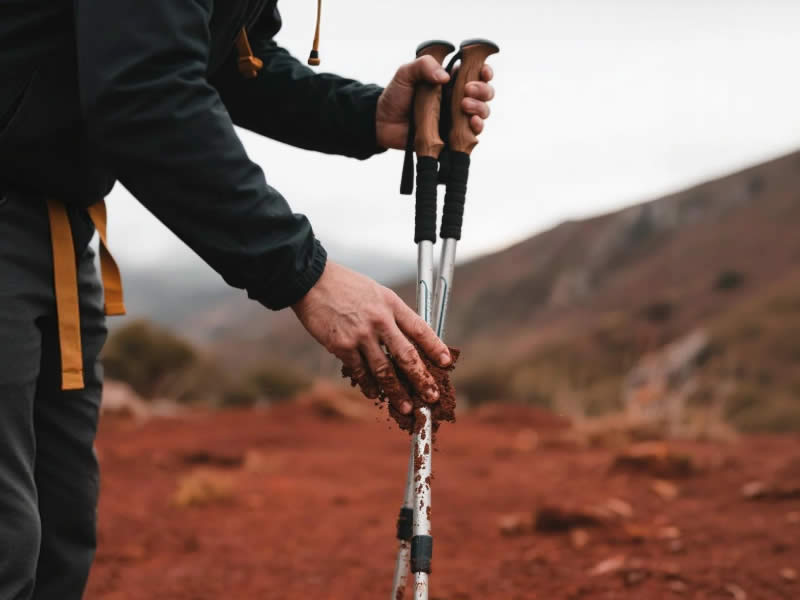
If you’ve hiked in Brazil’s Cerrado, Minas Gerais, or parts of the Atlantic Forest, you know the red soil well. It’s rich in iron oxide – the same mineral that gives Mars its color – and it’s incredibly fine, abrasive, and slightly acidic. This soil sticks to everything, seeps into locking mechanisms, and can slowly corrode your trekking poles if left unattended. Proper maintenance after every hike on iron‑rich red soil is not optional; it’s essential for the longevity and safety of your poles. Here’s a step‑by‑step guide.
Recommended trekking pole purchase link: https://lightenup.aliexpress.com/store/1101521655
Why iron‑rich red soil is so aggressive
- Abrasive particles: The fine particles act like sandpaper, grinding down moving parts (locks, baskets, tip threads) and scratching shafts.
- Acidic nature: Red soils often have a low pH (acidic), which can promote rust on steel screws and springs, and even corrode aluminum over time.
- Hygroscopic: The dust absorbs moisture from the air, promoting corrosion even after the hike.
Immediate post‑hike care (within hours of finishing)
- Knock off loose dirt – Before leaving the trailhead, tap your poles together or against a rock to remove clumps of mud. Do not let the soil dry completely – dried red mud is like concrete.
- Rinse with fresh water – Use a hose, a water bottle, or a stream (avoid contaminating water sources – rinse away from water bodies). Focus on:The tip and basket areaThe locking mechanisms (flick locks or twist locks)The joints where sections slideThe wrist strap attachment points
- Scrub with a soft brush – An old toothbrush or a small nylon brush is perfect for dislodging packed red soil from flick lock cams, screw threads, and basket grooves.
- Dry thoroughly – Use a cloth to wipe down all surfaces. Extend the poles fully and let them air dry in a well‑ventilated area for at least an hour. Never collapse and store poles when they are still damp – trapped moisture will cause rust.
Detailed cleaning of specific components
- Flick locks (external levers): Open the lever and clean any grit from the cam and the inside of the lever. A toothpick can help reach tight spots. If the lock feels gritty, rinse it again and dry completely. Apply a drop of silicone spray (not WD‑40) to the pivot points.
- Twist locks (if you have them): These are more vulnerable. Unscrew the lower section completely (if the design allows) and clean the plastic expander and inner shaft. Red soil can cause twist locks to seize. Consider upgrading to flick locks if you hike frequently on red soil.
- Baskets: Remove baskets and rinse them separately. Check the threads for caked‑on dirt. A small amount of grease on the threads prevents future seizing.
- Carbide tips: Inspect the carbide ball. Abrasive red soil can wear down the tip faster than normal. If the tip is flattened or shiny, replace it. Spare tips are sold at Decathlon and outdoor shops.
Lubrication and rust prevention
After cleaning and drying, apply a light lubricant to moving parts. Silicone spray is ideal – it repels moisture, does not attract dust, and is safe for plastics. Apply sparingly:
- Flick lock cams and levers
- Twist lock threads (use a very light coating)
- Basket threads
- Any screw or spring mechanism
Avoid oil-based lubricants (e.g., motor oil) – they will attract more dust.
Storage after maintenance
Store your trekking poles extended (not collapsed) in a dry, indoor place. Collapsing them while any moisture remains inside can lead to rust inside the sections. If space is limited, store them at half extension. Never store poles in a hot, humid place like a car trunk – this accelerates corrosion.
When to replace parts
- Tips: Replace when the carbide ball is visibly flattened or missing. A worn tip slips on rock.
- Baskets: Replace when cracked or when the threads are stripped.
- Locks: If a flick lock no longer tightens even after cleaning, the cam may be worn. Replacement parts are available for some brands (Black Diamond, LEKI).
- Shafts: If a section is bent more than 5 degrees, replace it (if modular) or retire the pole.
What not to do
- Don’t use WD‑40 as a lubricant – It evaporates quickly and leaves a sticky residue that attracts dirt.
- Don’t wash poles in a dishwasher – The heat can damage plastic components.
- Don’t use a pressure washer – Water will be forced into internal spaces.
- Don’t ignore the wrist straps – Red soil can embed in the nylon; hand‑wash straps occasionally with mild soap.
Frequency of maintenance
- After every hike on red soil: At least a rinse and dry.
- After every 3–4 hikes: Deep clean, inspect tips, lubricate.
- Before a multi‑day trek: Perform full maintenance and carry spare tips.
Final checklist for your post‑hike routine
- Rinse with fresh water
- Scrub locks and baskets with brush
- Dry all parts completely (extend poles)
- Inspect carbide tips – replace if worn
- Apply silicone spray to moving parts
- Store extended in a dry place
Conclusion
Hiking on Brazil’s beautiful iron‑rich red soils is a joy, but the soil itself is relentless. A few minutes of proper maintenance after each hike will keep your trekking poles locking securely, sliding smoothly, and lasting for years. Neglect them, and you’ll face seized locks, rusted screws, and worn‑out tips – potentially failing at the worst moment on a steep descent. Respect the red dirt, and your poles will respect you back.




