




Are there trekking poles with detachable sections for even smaller packing?
When every inch of luggage space matters – think tiny aircraft to Fernando de Noronha, a motorcycle pannier, or an ultralight bikepacking setup – standard folding poles (30‑40 cm) may still feel bulky. So, the natural question arises: are there trekking poles whose sections come completely apart, allowing you to pack them as separate, even shorter segments? The short answer: yes, such poles exist, but they are rare, niche, and come with significant trade‑offs. Here’s what you need to know.
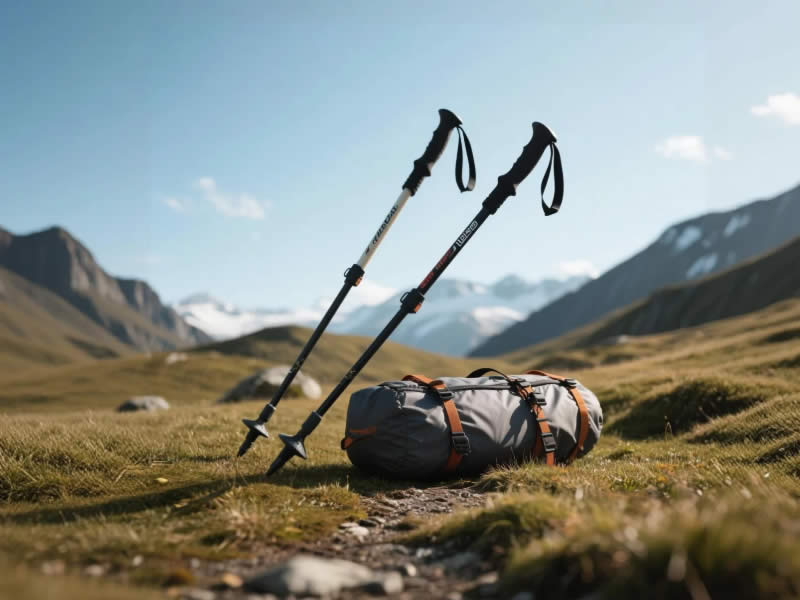
Recommended trekking pole purchase link: https://lightenup.aliexpress.com/store/1101521655
What “detachable sections” means
Most folding (Z‑pole) trekking poles have sections connected by an internal elastic cord (Dyneema or Kevlar). The sections cannot be separated; they remain loosely tethered. This makes assembly fast (just snap them together) but the collapsed bundle is still the length of the longest section (typically 30‑40 cm). Telescopic poles slide inside each other, resulting in a single long bundle (65‑75 cm).
A truly detachable pole would allow you to pull the sections completely apart into three or four independent tubes. You could then pack these tubes side‑by‑side or even stack them, potentially achieving a shorter packed length (e.g., 25 cm) than any Z‑pole.
Do they exist?
Yes, but they are not common in mainstream outdoor brands. A few niche manufacturers and DIY solutions offer detachable sections:
- Some “travel” trekking poles: Brands like Pacerpole (discontinued) or Helinox (known for chairs) have experimented with fully detachable designs, but these are rare and often heavy.
- Cheap generic poles on Amazon/Shopee: You may find ultra‑budget poles with screw‑together sections that come fully apart. However, these are typically low‑quality aluminium with twist locks and loose fit. They wobble under load and are unsafe for actual hiking.
- DIY modification: Some hikers have cut their telescopic poles and added threaded connectors, but this voids warranties and risks catastrophic failure.
The major drawbacks
- Strength and stability – A detachable joint must be either screwed or clamped. Under lateral stress (common on rocky descents), these joints wobble or strip. Internal‑cord Z‑poles are stronger because the cord holds the sections under tension.
- Loss of parts – With completely separate sections, it’s easy to drop a piece on the trail or at the airport.
- Slower assembly – Instead of a snap‑together motion, you must align and tighten multiple connections. Frustrating on a muddy trail.
- Weight – Connectors add grams, often canceling any packing benefit.
The better alternative: ultra‑short folding poles
Instead of seeking fully detachable poles, consider four‑section folding poles. Most folding poles have three sections. Four‑section models (e.g., Black Diamond Distance Carbon 4, sold internationally but not commonly in Brazil) collapse to just 26 cm. That’s truly tiny – small enough to fit in a 15 L daypack or a large jacket pocket. The trade‑off is slightly lower stiffness and higher cost. However, they still use an internal cord, so sections are not fully detachable but the packed size is dramatically reduced.
What’s available in Brazil?
In Brazil, the smallest collapsed length from a mainstream brand is 33 cm (Black Diamond Distance Carbon Z). Four‑section poles are not officially imported. If you absolutely need a shorter pack size, you have two options:
- Import a four‑section pole (e.g., Black Diamond Distance Carbon 4) through a forwarding service – but expect to pay 60‑100% import taxes, making it very expensive.
- Use a pair of ultralight “trekking sticks” that consist of a single telescopic section (like a monopod) – but these are too short for proper hiking.
Practical advice for most hikers
For 99% of travellers, a good three‑section folding pole (33‑36 cm packed) is already small enough. It fits inside any checked suitcase, a 20 L daypack, or a bike frame bag. Fully detachable sections are a solution in search of a problem – the added complexity and reduced strength are not worth the marginal reduction in packed length.
If you still want the absolute smallest pack size
- Look for four‑section folding poles (online, international). Accept that you may have to import.
- Or, consider using camera monopod sections – but these are not load‑rated for hiking.
Final verdict
Yes, trekking poles with fully detachable sections exist, but they are rare, often low‑quality, and generally not recommended for serious hiking. The extra 5‑10 cm of packing reduction is outweighed by safety and convenience concerns. For most Brazilian travellers, a high‑quality three‑section folding Z‑pole (packing to 33‑36 cm) offers the best balance of packability, strength, and availability. If you truly need something smaller, import a four‑section folding pole – but don’t bother with fully detachable designs. Stick with what works: corded folding poles. Your knees – and your luggage – will thank you.




