




Do foldable Z‑poles survive the rough trails of Petrópolis?
Petrópolis, nestled in the Serra dos Órgãos, is famous for challenging hikes like Pedra do Sino, Morro do Açu, and the Travessia Petrópolis–Teresópolis. These trails feature steep granite slabs, loose boulders, muddy gullies, and sharp quartzite. Many hikers love the packability of foldable Z‑poles (e.g., Black Diamond Distance Z, Decathlon Forclaz Compact). But do they survive Petrópolis’ roughness? The answer: it depends – on the specific trail, your technique, and the pole model.
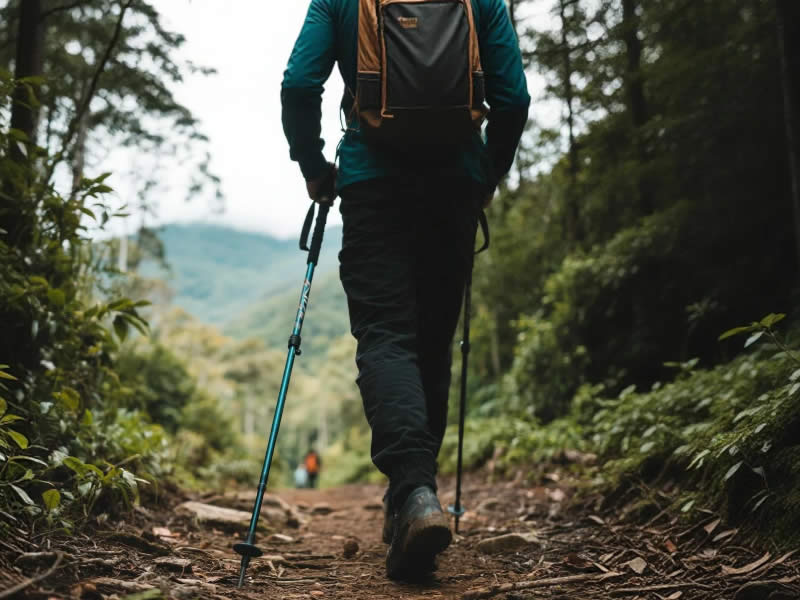
Recommended trekking pole purchase link: https://lightenup.aliexpress.com/store/1101521655
When Z‑poles are fine
- Moderate trails: Morro do Imperador, the historical Caminho do Ouro (easy sections), or the lower parts of Castelos do Açu. These have fewer sharp rocks and less lateral stress. Carbon Z‑poles (280‑300 g/pair) perform well here, saving weight and packing small.
- Experienced, careful users: If you avoid wedging poles between boulders and never use them as levers, carbon Z‑poles can last many trips.
When Z‑poles are risky
- Technical, boulder‑strewn routes: Pedra do Sino’s final scramble, the “Fenda da Freira” section, or the descent from Pirâmide. Here, poles are often jammed between rocks. Carbon can snap; internal cords can fray. Aluminium telescopic poles (e.g., Decathlon Forclaz Trek 500) are much safer.
- Muddy, wet descents: You may instinctively plant hard to brake. The impact can stress the folding joints. Several hikers report broken Z‑pole tips or collapsed sections on slippery Petrópolis trails.
Real‑world feedback from Brazilian hikers
- “I used Black Diamond Distance Carbon Z on the Travessia. One pole snapped on the descent from Pedra do Sino when it got wedged. Now I use aluminium.” – Bruno, Petrópolis local.
- “My Decathlon Forclaz Compact survived three trips to Morro do Açu, but I’m very careful. Wouldn’t take them on Pedra do Sino again.” – Carla, ultralight hiker.
- “For rocky trails, I recommend aluminium flick‑lock poles. The extra 200 g is worth not having a broken pole 10 km from the trailhead.” – Petrópolis guide.
How to improve Z‑pole survival
- Choose models with a flick lock on the top section (e.g., Black Diamond Distance FLZ, Decathlon Forclaz Compact). These allow some length adjustment and are slightly more robust than pure push‑button Z‑poles.
- Use rubber tip covers on hard rock? No – carbide grips better. But carry spare tips; Petrópolis rock wears them fast.
- Inspect after every hike: Look for cracks near the joints. A hairline fracture means the pole is doomed.
- Never plant with the pole in a crevice. If you feel it slide into a crack, pull it out and replant in solid soil.
Alternatives that are nearly as packable but tougher
- Four‑section telescopic poles: Rare in Brazil, but importable. Collapse to ~50 cm – not as small as Z‑poles but stronger.
- Aluminium folding poles: Some models (e.g., Black Diamond Trail Back) fold to 38 cm and use aluminium, heavier (480 g/pair) but more durable than carbon.
Final verdict
Foldable Z‑poles can survive the rough trails of Petrópolis – if you stick to moderate routes and treat them with extreme care. For the iconic, technical climbs (Pedra do Sino, Travessia), most Brazilian hikers and guides recommend aluminium telescopic flick‑lock poles for their durability and reliability. If you already own Z‑poles, bring them but have a backup plan (duct tape and a spare cord). If you’re buying for Petrópolis, invest in a robust pair of aluminium poles (Decathlon Forclaz Trek 500 is ideal). Your safety on the granite slabs is worth the extra grams.




