




Do carbon trekking poles become brittle at near‑freezing temperatures in Serra da Mantiqueira?
Serra da Mantiqueira, spanning parts of São Paulo, Minas Gerais, and Rio de Janeiro, is known for its dramatic peaks (like Pedra do Baú) and chilly winter mornings. During June to August, temperatures at higher elevations (above 2,000m) can drop to 0–5°C. If you’re planning a winter trek with carbon trekking poles, a critical question arises: do carbon fibers become brittle in the cold, and could your poles snap unexpectedly? The short answer is yes, carbon trekking poles can become more brittle at near‑freezing temperatures, but the risk depends on the quality of the carbon, the design, and how you use them. Here’s what you need to know.
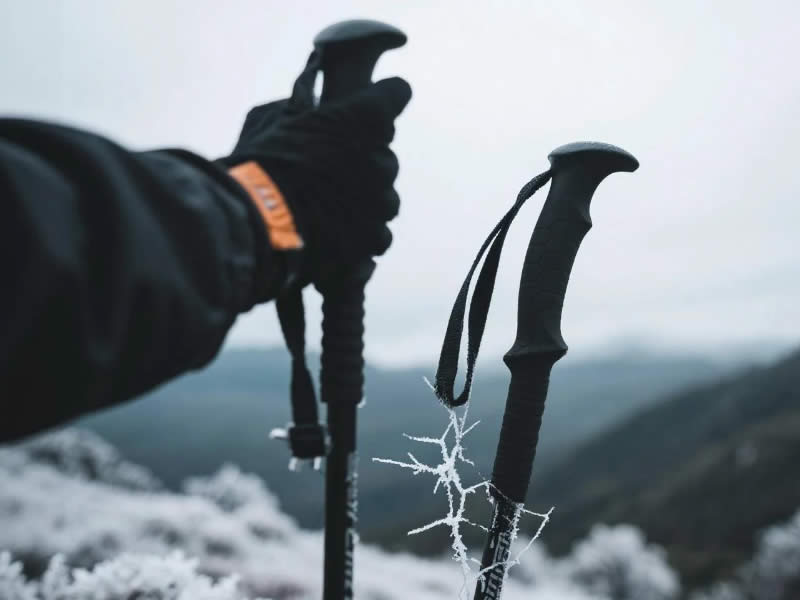
Recommended trekking pole purchase link: https://lightenup.aliexpress.com/store/1101521655
How cold affects carbon fibre
Carbon fibre composites consist of carbon strands embedded in a polymer resin (usually epoxy). The resin matrix is what holds the fibres together and transfers loads. When temperatures drop, the epoxy becomes stiffer and less ductile. This means it can absorb less impact energy before cracking. The carbon fibres themselves are not significantly weakened by cold, but the interface between fibres and resin can become more prone to delamination. In practical terms, a carbon pole that might bend slightly under lateral stress at room temperature could instead crack or snap at 0°C.
Scientific background
Data from materials science shows that many epoxy‑based composites experience a reduction in impact resistance below their glass transition temperature (which for standard epoxies is around 50–80°C, but cold‑temperature performance is still a concern). Tests on carbon fibre tubes indicate that at -10°C, impact energy absorption can drop by 20‑40% compared to room temperature. While Serra da Mantiqueira rarely reaches -10°C, near‑freezing (0–5°C) still increases brittleness. Additionally, repeated freeze‑thaw cycles (common in the mountains) can accelerate micro‑cracking.
Real‑world experience from Brazilian hikers
In online forums (e.g., “Montanhismo Brasil”), several hikers report carbon pole failures during winter ascents in Serra da Mantiqueira. Typical scenarios: the user wedged the pole between two rocks on a steep descent, applied lateral force to push themselves up, and heard a “crack” – the pole snapped just above the tip. Others have had folding Z‑poles fail at the joints when the temperature hovered near freezing. Meanwhile, aluminum poles, while heavier, bent but did not break under similar circumstances.
When is carbon still acceptable?
- High‑quality carbon poles with reinforced tips and multi‑directional layups (e.g., Black Diamond Distance Carbon, LEKI Ultratrail) are more resilient. However, even premium poles are not immune.
- If you avoid lateral stress – Use carbon poles only for vertical support, never as levers to pull yourself up. On rocky Mantiqueira terrain, this is easier said than done.
- If temperatures stay above 5°C – On sunny days, the rock surface may be much warmer than the air. The cold risk is highest at night and early morning.
Safer alternatives for Mantiqueira winters
- Aluminium flick‑lock poles – 7075 aluminium (e.g., Decathlon Forclaz Trek 500, Black Diamond Trail Ergo) is far more forgiving. It may bend but will not shatter. At near‑freezing, aluminium actually becomes slightly stronger (though it does not become brittle like carbon). Weight penalty: about 200‑250 g per pair.
- Steel tips and robust baskets – Aluminium poles with good flick locks are the default choice for most guides in Serra da Mantiqueira.
How to reduce the risk if you choose carbon
- Warm the poles – Keep them inside your tent or sleeping bag overnight. Cold soaking makes them more brittle. Don’t leave them outside in frost.
- Inspect for cracks – Before the trek, flex each pole gently. Listen for creaking sounds. Any visible crack means immediate retirement.
- Avoid wedging – On rocky sections, plant the pole on top of a rock, not in a crevice. If you feel it slide in, pull it out immediately.
- Use rubber tip covers? No, they reduce grip. Keep carbide exposed for better traction.
- Carry a repair sleeve – A short section of aluminium pipe that can slide over a broken carbon pole for emergency splinting.
What about folding (Z‑pole) carbon?
Folding carbon poles are even more susceptible because the joints concentrate stress. Several Mantiqueira hikers report that the internal cord can fray in cold, and the plastic buttons become stiff. Recommendation: avoid folding carbon for winter ascents.
Final verdict
Yes, carbon trekking poles do become more brittle at near‑freezing temperatures, and they are more likely to snap under lateral stress in Serra da Mantiqueira’s winter conditions. For safety and peace of mind, choose high‑quality aluminium flick‑lock poles for any serious winter trek in the Mantiqueira. If you already own carbon poles and want to use them, be extremely careful to avoid wedging them between rocks, keep them warm, and inspect them frequently. But for the coldest ascents (e.g., Pedra da Mina, Pico dos Marins), aluminium is the wiser choice. Your safety is worth the extra grams.




