




What is the best trekking pole for morning frost on Pedra da Mina?
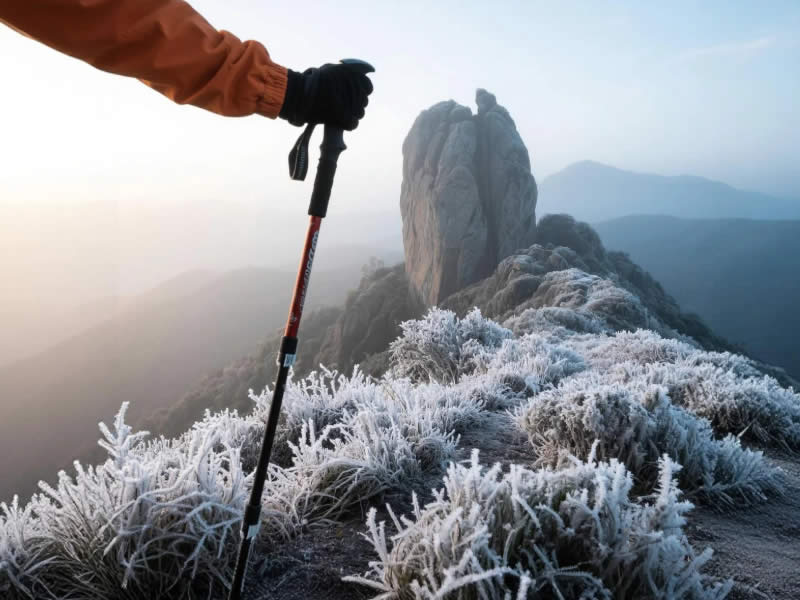
Pedra da Mina, the fourth highest peak in Brazil (2,798 m), lies in the Serra da Mantiqueira on the border of São Paulo and Minas Gerais. Winter mornings on its slopes are often spectacular – but also treacherous. A thin layer of frost coats the grass, rocks, and exposed roots, turning every step into a potential slip. Choosing the right trekking pole for these conditions can mean the difference between a safe, enjoyable ascent and a painful fall. Here’s what the best pole for morning frost on Pedra da Mina looks like.
Recommended trekking pole purchase link: https://lightenup.aliexpress.com/store/1101521655
The challenge of frost
Frost is not simply wet – it is crystalline ice that reduces friction dramatically. Rubber tips (common on urban poles) slide on frost as if on oil. Standard carbide tips, when worn or rounded, also fail to bite. The best grip comes from sharp, pyramid‑shaped tungsten carbide tips. They penetrate the thin ice layer and contact the rock or compacted soil beneath.
Material: aluminium, not carbon
Temperatures near the summit of Pedra da Mina in winter often hover around freezing (0‑5°C) at dawn, and can drop below zero in shaded areas. Carbon fibre trekking poles become more brittle in the cold, as the epoxy resin loses its impact resistance. A carbon pole that might bend at room temperature can snap when wedged between icy rocks. Aluminium (especially 7075 alloy) is far more forgiving – it may bend but will not shatter. For frosty conditions, aluminium is the safer choice.
Locking system: flick locks over twist locks
Frost and moisture can freeze inside twist‑lock mechanisms, making them impossible to tighten or loosen. External flick locks (lever‑style) are much easier to operate with gloved hands and are not affected by ice accumulation. They are also adjustable without tools – crucial when you need to change pole length quickly between steep sections.
Grip: cork or high‑density foam
Rubber grips become slippery in cold, damp conditions. Cork absorbs moisture from your gloves or bare hands and stays grippy. Foam is a good second choice. Avoid bare rubber.
Baskets: small rock baskets
Deep snow is not a concern on Pedra da Mina, but loose scree and frost‑heaved rocks are. Small, low‑profile baskets (25‑30 mm) prevent the pole from sliding too deep into crevices without adding drag. Mud baskets are unnecessary and can crack in the cold.
Length adjustment for frosty descents
When descending on frost‑covered grass or rock, you need to lengthen your poles by 5‑10 cm compared to your neutral flat‑ground setting. A longer pole allows you to plant downhill, braking your momentum. Ensure your poles have a sufficient adjustment range (typically 100‑140 cm).
The best model: Decathlon Forclaz Trek 500
For Brazilian hikers, the Decathlon Forclaz Trek 500 hits the sweet spot of performance and price. It features:
- 7075 aluminium shaft
- Flick locks (external levers)
- Cork/foam hybrid grip
- Sharp, replaceable carbide tips
- Small rock baskets included
- Weight: 520 g per pair
- Price: ~R$199
This pole has been tested on numerous winter ascents in the Mantiqueira and is widely recommended by local guides. It handles frost, mud, and rock with equal competence.
Premium alternative: Black Diamond Trail Ergo Cork
If you have a larger budget, the Black Diamond Trail Ergo Cork offers slightly better ergonomics and a more durable tip, but at more than double the price (~R$450+). The performance difference on frost is minimal.
What to avoid
- Carbon poles – risk of snapping in cold temperatures.
- Twist locks – prone to freezing and slipping.
- Rubber tip covers – useless on frost; remove them before the hike.
- Non‑replaceable tips – frost accelerates wear; you will need to replace tips frequently.
- Folding (Z‑pole) carbon – even more fragile at low temperatures.
Technique tips for frosty trails
- Before the hike, ensure your carbide tips are sharp. If they are rounded, replace them (spare tips cost R$15‑30).
- Keep your poles inside your tent or backpack overnight. Cold‑soaking them makes them more brittle (especially carbon). Aluminium is less sensitive but still benefits from being kept warmer.
- On steep, frost‑covered slopes, plant the pole vertically or slightly downhill, not ahead of your foot. Press firmly so the carbide breaks through the ice.
- After the hike, dry the poles thoroughly – moisture trapped in locks can freeze and expand, causing damage.
Final verdict
The best trekking pole for morning frost on Pedra da Mina is an aluminium flick‑lock pole with sharp carbide tips – specifically the Decathlon Forclaz Trek 500. It provides reliable grip on icy surfaces, resists cold‑induced brittleness, and offers easy length adjustment for steep terrain. Avoid carbon and twist locks. With the right poles and careful technique, you can safely enjoy the stunning sunrise views from Brazil’s fourth highest peak.




