




Should I use larger baskets on wet snow in Campos do Jordão winter?
Campos do Jordão, nestled in the Serra da Mantiqueira, is famous for its European‑style architecture and chilly winters. Occasionally, the region experiences light snowfall – often a wet, heavy snow that melts quickly on the ground. For hikers exploring trails like the Pedra do Baú or the Morro do Elefante, a common question arises: should you swap your standard trekking pole baskets for larger ones when walking on this wet snow? The short answer is usually not, but there are specific conditions where larger baskets can help. Let’s break down the science and practical advice.
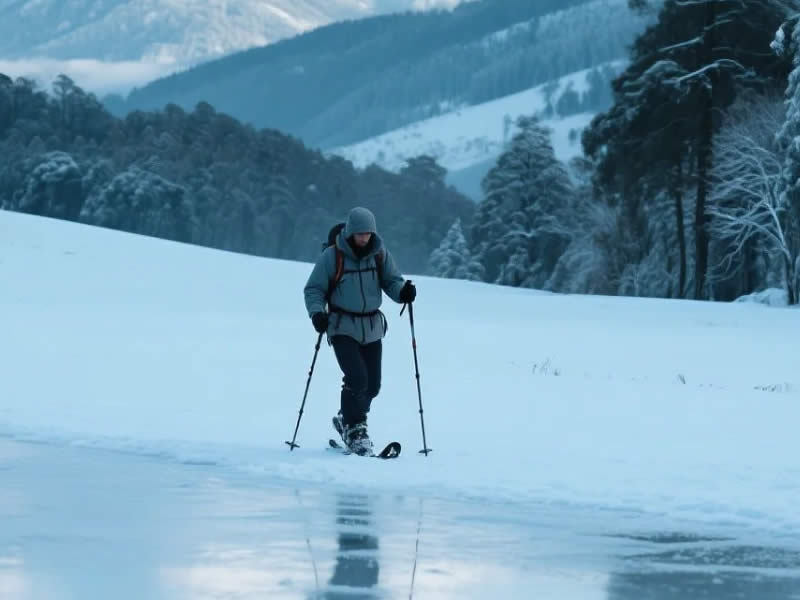
Recommended trekking pole purchase link: https://lightenup.aliexpress.com/store/1101521655
Understanding wet snow in Campos do Jordão
Unlike the dry, powdery snow of high mountains, Campos do Jordão’s snow is typically wet and dense – often called “mashed potato” snow. It forms at temperatures just below freezing (0°C to -2°C) and has high water content. This type of snow does not support a pole well; a standard carbide tip or a small basket will simply punch through to the ground below. The snow depth is rarely more than 5‑10 cm (2‑4 inches), and it usually melts within a day.
The role of baskets
Baskets are plastic discs attached just above the tip. Their purpose is to prevent the pole from sinking too deep into soft surfaces – like deep snow, mud, or sand.
- Small baskets (30‑40 mm) are standard on most trekking poles. They offer minimal flotation and are designed for normal dirt or rocky trails.
- Large powder baskets (60‑80 mm) are used in deep, soft snow to keep the pole on the surface.
Why larger baskets are usually unnecessary in Campos
- Shallow snow depth – With only a few centimeters of wet snow, your pole tip will hit the solid ground (or ice) underneath almost immediately. A larger basket would only add drag and weight, as it would also make contact with the ground but not provide any meaningful flotation.
- Wet snow is heavy – Large baskets can actually act like shovels in wet snow, scooping up snow and making each lift more tiring. You want the pole to penetrate the snow and find solid purchase, not float.
- Increased friction – Dragging a wide basket across wet snow or exposed rocks slows you down and adds unnecessary effort.
- Trail conditions – Most popular trails in Campos are well‑trodden; even after a snowfall, other hikers will pack the snow into a firm surface. Small baskets work fine on packed snow.
When larger baskets might be useful
There are rare exceptions:
- After a heavy snowfall (10‑15 cm or more) – If you are hiking on a less‑used trail where the snow remains deep and unconsolidated, larger baskets can prevent the pole from sinking up to the grip. This is unlikely in Campos, as even the heaviest snow events rarely exceed 10 cm.
- Walking off‑trail – If you plan to snowshoe or trudge through open fields where snow has drifted, larger baskets help. But in Campos, off‑trail hiking in winter is uncommon.
- Very slushy, deep snow – If the snow is melting and becomes slushy, a large basket can keep the pole from plunging into the watery mixture. However, in such conditions, you might be better off using no poles or sticking to the road.
What you actually need for Campos do Jordão winter hikes
- Standard small baskets (the ones that came with your poles) are perfectly adequate for almost all conditions.
- Sharp carbide tips – The real grip comes from the tip biting into icy ground beneath the snow. Ensure your tips are not worn.
- Rubber tip covers – Optional; they are useless on snow. Remove them.
- Flick‑lock poles – Cold temperatures can make twist locks stiff. Flick locks are easier to adjust with gloves.
A note on wet snow vs. ice
If the trail becomes icy rather than snowy (common when snow melts and refreezes), baskets are irrelevant. What matters is the tip. Carbide tips provide good grip on ice if they are sharp. You may also consider adding a spike tip (not common in Brazil) but standard carbide is fine.
Practical test
Next time you encounter wet snow in Campos, try this: plant your pole with the standard basket. You’ll feel it hit the ground almost immediately. Now imagine a large basket – it would hit the ground as well, but with more surface area to drag. You’ll quickly see that large baskets are overkill.
Alternative: remove baskets entirely
Some hikers remove baskets altogether for wet snow, as the bare shaft can slide through the snow and the tip contacts the ground faster. This works, but you risk losing the basket (if it’s threaded, you can unscrew it and keep it in your pack). For short sections, it’s fine.
Final recommendation
For the vast majority of winter hikes in Campos do Jordão, do not use larger baskets. Stick with the standard small baskets that came with your poles. If you are hiking during a rare heavy snowfall (over 10 cm) and the trail is soft, you might consider swapping to larger baskets, but this is rarely necessary. Instead, focus on keeping your carbide tips sharp and your pole length adjusted for slippery conditions. Save the large powder baskets for deep powder snow in places like the Andes or the Alps – not for Campos’ light, wet dusting. Enjoy the crisp winter air and the beautiful views without overthinking your pole accessories.




