




Do anti‑shock trekking poles freeze up in sub‑zero Brazilian mountain mornings?
Brazil’s highest peaks – like Pico da Bandeira (2,891 m), Pedra da Mina (2,798 m), and Agulhas Negras (2,787 m) – can experience sub‑zero temperatures during winter mornings. In such conditions, hikers often wonder if the internal springs or elastomers in anti‑shock trekking poles become unreliable. The short answer is yes, anti‑shock mechanisms can be negatively affected by freezing temperatures, but they do not completely “freeze up” in the sense of seizing solid. Instead, their performance degrades. Here’s a detailed look at what happens and what you should do.
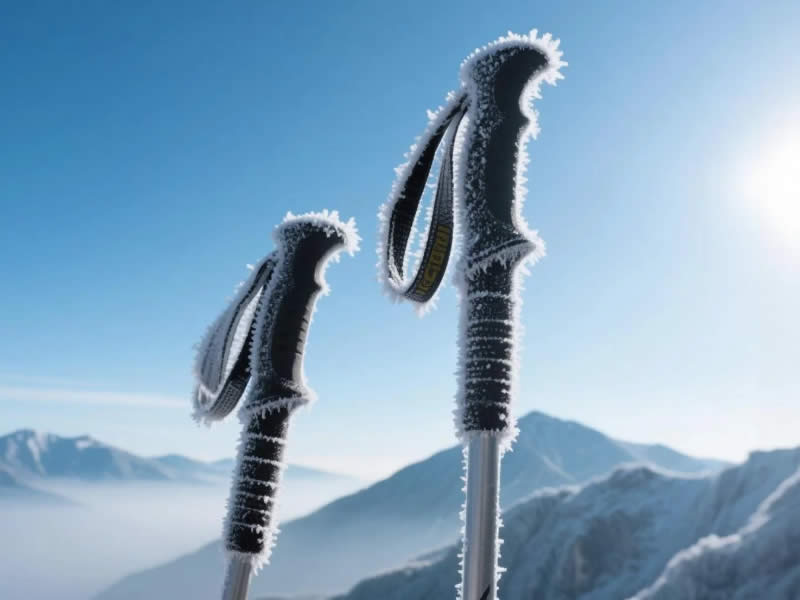
Recommended trekking pole purchase link: https://lightenup.aliexpress.com/store/1101521655
How anti‑shock systems work
Anti‑shock poles contain a small spring (or polymer elastomer) inside the lower section. When you plant the pole, the spring compresses, absorbing the initial impact. This reduces jarring on your wrists and elbows. Common designs include the “internal spring” in models like LEKI’s Anti‑Shock system or Black Diamond’s “Shock” series.
What sub‑zero temperatures do to anti‑shock mechanisms
- Grease and lubricants thicken – The spring mechanism relies on a thin grease to move smoothly. Below 0°C, this grease becomes more viscous, causing the spring to compress more slowly and sometimes stick.
- Elastomers harden – Some poles use rubber‑like elastomers instead of metal springs. In freezing cold, these materials become stiff and lose their shock‑absorbing capability. They may even crack if the temperature drops below -10°C (uncommon in Brazil but possible on some peaks).
- Condensation and ice – Warm air exhaled or body heat can cause moisture to condense inside the pole shaft. If the pole is then left in sub‑zero temperatures, this moisture can freeze, forming ice crystals around the spring. When you plant the pole, the ice may prevent the spring from compressing fully, or it may create a grinding sensation.
- Reduced responsiveness – Even if the spring does not fully freeze, the shock absorption becomes very stiff. You might not feel any cushioning at all. In effect, the anti‑shock feature stops working until the pole warms up.
Real‑world experience in Brazilian highlands
Anecdotal evidence from mountaineers in Serra da Mantiqueira and Itatiaia indicates that anti‑shock poles often feel “dead” or “sticky” on mornings when temperatures drop below freezing. The problem is usually temporary – after an hour of hiking, the friction and body heat warm the mechanism, and normal function returns. However, during the critical early morning ascent on icy slopes, the reduced shock absorption is not dangerous, but the inconsistent feel can be annoying.
Comparison: rigid vs. anti‑shock poles in cold
- Rigid poles have no moving parts. They are completely unaffected by cold. They offer direct feedback, which many experienced hikers prefer on technical terrain.
- Anti‑shock poles can become less effective or momentarily sticky in sub‑zero temperatures. They may also develop a creaking or clicking sound as the spring struggles against thickened grease.
Should you avoid anti‑shock poles for Brazilian winter mornings?
Not necessarily. The inconvenience is minor for most hikers. If you already own anti‑shock poles and like the cushioning they provide in other seasons, you can still use them in winter. However, if you are buying new poles specifically for sub‑zero mornings, a rigid pole (without anti‑shock) is simpler and more reliable. Rigid poles are also lighter and generally cheaper.
How to prevent and manage freezing issues
- Store poles inside your tent overnight – Never leave them outside. Your body heat and tent insulation keep them above freezing.
- Do not collapse poles with moisture inside – After a hike, extend poles fully and dry them indoors. If you store them collapsed, residual moisture can freeze inside the mechanism when temperatures drop.
- Use a dry lubricant – Standard greases thicken in cold. Some manufacturers offer low‑temperature lubricants. Alternatively, use a silicone spray (which stays fluid at lower temperatures) applied sparingly to the spring area.
- Pump the poles before starting – Before you begin your hike, assemble the poles and compress the anti‑shock mechanism manually 20‑30 times. This warms the grease and loosens any ice crystals.
- Carry the poles inside your jacket for a few minutes – If they feel stiff, tuck the lower section under your armpit for a few minutes. Body heat will transfer to the spring.
What about water ingress?
If your poles have been used in rain or wet snow, water can freeze inside the shaft. To avoid this, rinse poles with fresh water (to remove salt or dirt) and then dry them thoroughly in a warm room before storing.
Final verdict
Anti‑shock trekking poles do not “freeze up” completely in sub‑zero Brazilian mountain mornings, but their performance degrades – the spring becomes stiffer, and lubrication thickens. They may feel sluggish or produce creaking sounds until warmed up. For most hikers on short winter ascents, this is an annoyance rather than a safety hazard. However, if you want maximum reliability and simplicity on cold mornings, choose rigid poles without anti‑shock. For those who prefer the cushioning of anti‑shock, store your poles warm, pump them before use, and accept that they will work better after the first hour. In the extreme cold of Brazil’s highest peaks, a rigid pole is one less thing to worry about. Stay safe and enjoy the frosty sunrise.




