




What length adjustment is best for descending frozen grass slopes?
Descending a frozen grass slope is one of the most slippery challenges a hiker can face in Brazil’s winter mountains – think the grassy upper slopes of Pedra da Mina, the open campos of Itatiaia, or the frozen meadows of São Joaquim. Your boots slip easily on the frosty blades, and your trekking poles become essential for stability and braking. But using the wrong pole length can actually make you less safe. Here’s the optimal adjustment and why it works.
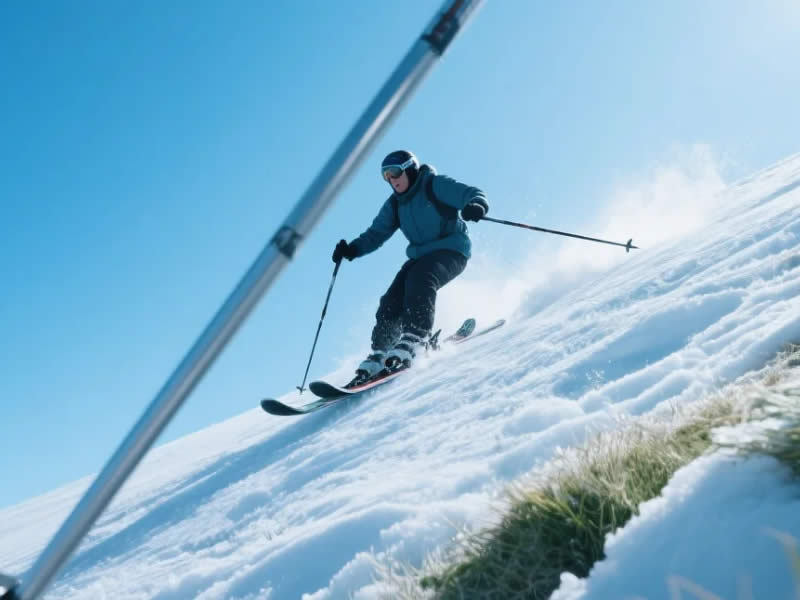
Recommended trekking pole purchase link: https://lightenup.aliexpress.com/store/1101521655
The short answer
On a frozen grass slope, you should lengthen your trekking poles by 5–10 cm compared to your neutral flat‑ground length. This extended reach allows you to plant the tip well downhill, creating an effective brake and improving your balance.
Why longer poles help on descents
When walking downhill, your body leans forward. If your poles are at the same length as on flat terrain, you will be forced to plant them too close to your feet or even behind you – which offers no braking and little stability. By lengthening the poles, you can:
- Plant the tip 30–50 cm in front of your leading foot – This creates a solid forward brace. When you lean onto the pole, it slows your descent and reduces the load on your knees.
- Lower your center of gravity – A longer pole encourages a slightly more upright torso, which shifts your center of gravity back over your feet. This is exactly what you need on a slippery slope to prevent a backward fall.
- Maintain three points of contact – With longer poles, you can keep both poles and one foot on the ground at all times, greatly improving stability.
How much longer? The 5–10 cm rule
The exact extension depends on the steepness of the slope and your height. Start with your neutral flat‑ground length (elbow at 90° when the tip is on the ground). Then:
- For gentle frozen grass slopes (10–15°): Add 5 cm.
- For moderate slopes (15–25°): Add 7–8 cm.
- For steep slopes (25–35°): Add 10 cm or more.
If the slope is very steep (over 35°), you may want to extend your poles to their maximum length (often 135 cm) for maximum braking. However, poles that are too long will force you to lift your shoulders and may destabilize you – so test on a safe section first.
How to find your ideal descent length on frozen grass
- Stand on a slope of typical steepness, facing downhill.
- Hold your pole as you normally would (strap over wrist).
- Extend the pole until the tip rests on the grass about one full step in front of your leading foot.
- Your elbow should be slightly above 90° – around 100–110°.
- Note the length marking on the pole shaft (many have centimeter scales). Set the second pole identically.
Practical techniques for descending frozen grass with longer poles
- Plant firmly, but not vertically – On frozen grass, the carbide tip may slide if planted straight down. Angle the pole slightly forward (tip ahead of grip) so that the tip digs into the frozen ground.
- Use a “pole‑first” rhythm – Before each step, plant the downhill pole. Then step down, transferring weight onto the pole. This ensures you always have a brake engaged.
- Keep both poles in contact – On steep sections, plant one pole, then the other, then move one foot at a time. Never lift both poles simultaneously.
- Shorten your stride – Smaller steps reduce the risk of sliding and make the longer poles easier to manage.
Common mistakes to avoid
- Using neutral length – This forces you to plant poles too close, giving no braking and often causing you to slip forward.
- Lengthening too much – Poles longer than needed force you to raise your arms and lean back, which can actually cause you to fall backwards.
- Planting with rubber tips – Rubber has no grip on frozen grass. Remove rubber covers and use sharp carbide.
- Forgetting to shorten for uphill – After descending, you will need to shorten the poles again for the next ascent. Mark your neutral length with tape so you can quickly reset.
What about frozen grass with a layer of ice underneath?
If the grass is frozen solid and also has a thin ice crust, you may need even longer poles – up to 15 cm above neutral. However, in such extreme conditions, consider adding micro‑spikes to your boots. Poles alone cannot compensate for zero underfoot traction.
Example for a 1.75 m tall hiker
Neutral length (flat ground): ~115 cm.
On a 20° frozen grass slope: extend to 123 cm.
Test: plant pole 40 cm ahead of front foot – feels stable. Adjust up or down 2 cm until comfortable.
Final recommendation
For descending frozen grass slopes, always lengthen your poles by 5–10 cm from your neutral length. This simple adjustment provides superior braking, lowers your center of gravity, and greatly reduces the risk of slipping. Practice on a gentle slope first, and always check that your carbide tips are sharp. With the right length and technique, you can confidently descend Brazil’s frosty winter grasslands – safely and without knee pain.




