




How to store trekking poles in a humid Brazilian apartment to avoid mildew?
Living in a Brazilian apartment, especially in coastal cities like Rio de Janeiro, Santos, or Recife, means dealing with high humidity year‑round. Inland cities like São Paulo can also have damp winters. Trekking poles, if stored carelessly, become perfect breeding grounds for mildew, mould, and rust. The combination of sweat, organic matter (mud), and moisture trapped inside telescopic sections leads to foul smells, seized locks, and weakened materials. Fortunately, with a few simple habits, you can keep your poles fresh and functional. Here’s a complete guide to storing trekking poles in a humid Brazilian apartment.
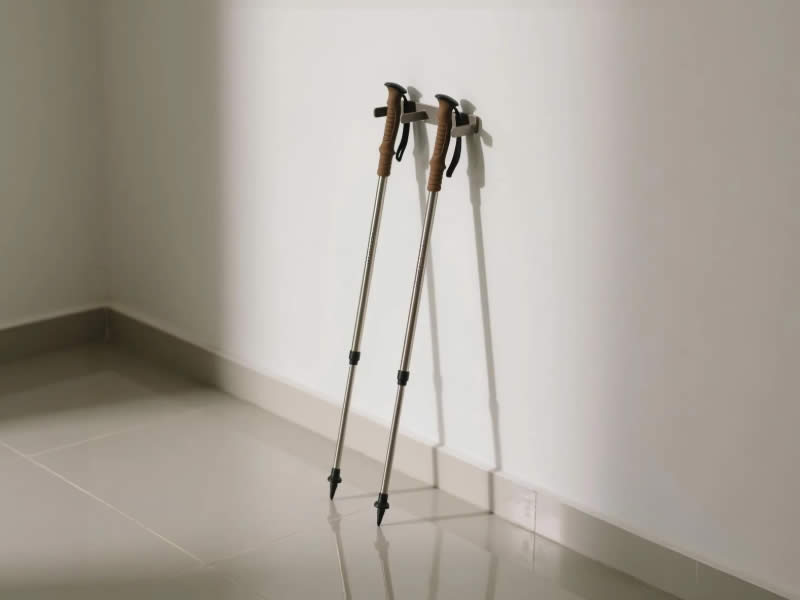
Recommended trekking pole purchase link: https://lightenup.aliexpress.com/store/1101521655
Why poles get mouldy
- Leftover moisture: After a rainy hike or even a sweaty day, water remains inside the shafts, under the grips, and in locking mechanisms.
- Organic residues: Mud, plant sap, and sweat provide food for mildew spores.
- Dark, enclosed spaces: Storing poles collapsed in a closet reduces air circulation, allowing humidity to condense inside.
Step‑by‑step storage method
1. Clean immediately after each hike – Before storing, rinse poles with fresh water to remove mud and salts. Use a soft brush on flick locks and tip threads. Pay special attention to the area where the lower section slides into the upper tube – dirt often lodges there.
2. Dry thoroughly – This is the most critical step.
- Fully extend the poles (telescopic) or unfold folding poles.
- Wipe all surfaces with a dry microfiber cloth.
- For telescopic poles, separate the sections if possible (many twist‑lock poles allow full disassembly).
- Leave them extended in a well‑ventilated area for at least 2‑3 hours. A fan or air conditioner helps.
- Never collapse poles while still damp.
3. Apply anti‑mildew treatment (optional but recommended) – Lightly spray the shafts and grips with a solution of 50% white vinegar and 50% water (vinegar kills mould spores). Wipe dry. Or use a commercial sports gear spray (e.g., Mirazyme, available at Decathlon). Avoid soaking the lock mechanisms.
4. Store vertically, not horizontally – Hang the poles from a hook or stand them upright in a corner. Vertical storage allows any residual moisture to drip out rather than pool inside. If you must store them horizontally (e.g., under a bed), ensure they are bone‑dry first and place them with the tip end slightly lower than the grip.
5. Use silica gel or moisture absorbers – Place a few silica gel packets near the stored poles. In a closed closet, you can also use a rechargeable dehumidifier (e.g., Dry & Dry, available on Mercado Livre). For very humid apartments, consider a small electric dehumidifier.
6. Choose the right location – Avoid storing poles in:
- Bathrooms (high humidity, temperature swings).
- Unventilated wardrobes (stagnant air).
- Balconies exposed to rain or morning dew.
Best places: a living room corner away from windows, a bedroom closet with the door cracked open, or a dedicated gear cabinet with ventilation holes.
What about storing folding (Z‑pole) poles?
Folding poles have internal elastic cords that can trap moisture. After cleaning and drying, store them extended (not folded). Hanging them vertically allows the cord channel to drain. Some models have a tiny hole at the top – ensure it’s clear.
Common mistakes to avoid
- Storing poles collapsed and wet – This is the number one cause of mildew. The trapped moisture has no escape.
- Putting poles back in a stuff sack immediately – The sack blocks air circulation. Only use a breathable storage bag (cotton or mesh).
- Leaving rubber tip covers on – Covers trap moisture against the carbide, leading to rust on the threads. Remove covers before storage.
- Ignoring the wrist straps – Sweat‑soaked straps can grow mould. Wash them occasionally with soap and water, then air dry.
What if mildew has already appeared?
- For shafts and grips: Wipe with a cloth soaked in white vinegar or diluted bleach (1 part bleach to 10 parts water). Rinse with clean water and dry thoroughly.
- For locks (flick locks): Disassemble the lock if possible. Soak the plastic parts in vinegar for 15 minutes, rinse, and dry. Lubricate with silicone spray.
- For straps: Remove if possible; wash with laundry detergent and a splash of vinegar. Air dry in direct sunlight (UV kills mould).
- If the smell persists: Place the poles in a sealed plastic bag with baking soda or activated charcoal for 48 hours.
Long‑term storage (months without use)
If you won’t be hiking for a while:
- Clean and dry the poles as above.
- Apply a light coat of silicone spray to all metal components (locks, tip threads).
- Store extended in a cool, dry place.
- Check every month – if you see any condensation, dry again.
Final verdict
Storing trekking poles in a humid Brazilian apartment without mildew is entirely possible. The golden rule: never store wet poles collapsed. Always clean, dry fully (extended), and store vertically. Use silica gel or a small dehumidifier in your gear closet. With these simple habits, your poles will stay fresh, lock smoothly, and be ready for your next winter hike – whether in the Serra do Mar or the Chapada.




