




Can I use super glue to repair a cracked carbon trekking pole?
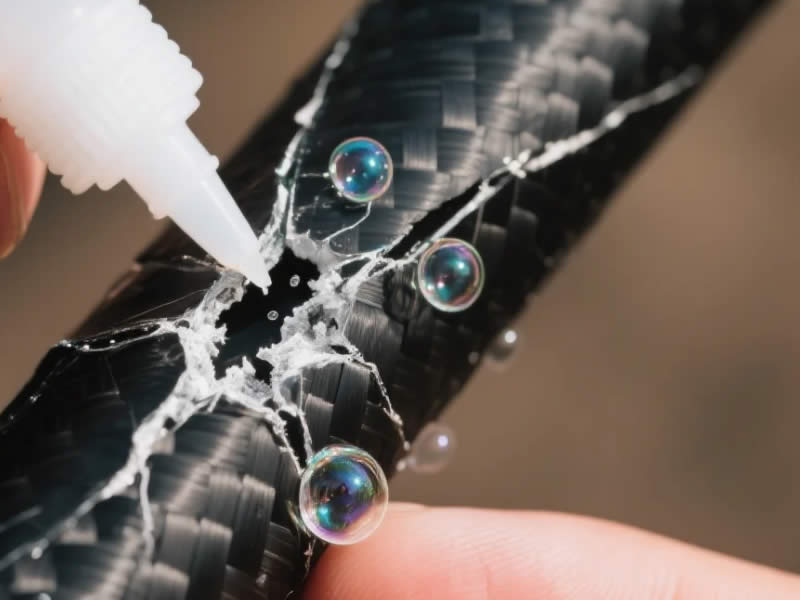
Discovering a crack in your carbon trekking pole is a sinking feeling. Carbon fibre is prized for its lightness and stiffness, but it can crack or splinter when wedged between rocks or subjected to a sharp impact. In a moment of desperation, you might reach for a tube of super glue (cyanoacrylate) to seal the crack. But is this a viable repair? The short answer is no – super glue is only a temporary, emergency stopgap, not a proper repair. Using it alone can give you a false sense of security, and the pole may fail catastrophically under load. This article explains why super glue fails, what a real carbon repair involves, and safer alternatives for Brazilian trails.
Recommended trekking pole purchase link: https://lightenup.aliexpress.com/store/1101521655
Why super glue is insufficient for carbon poles
Super glue is designed to bond small, clean, non‑flexing surfaces – like broken plastic or skin. It forms a brittle, hard film. Carbon trekking poles, however, flex and vibrate under load, especially when you plant them on uneven terrain. The crack in a carbon pole is not just a surface break; it is a separation of the carbon fibres and the epoxy resin matrix. Super glue will wick into the crack, but:
- It has no structural strength – The glue line is thin and brittle. The first time you lean your full weight on the pole, the crack will likely re‑open or propagate.
- It does not reinforce the fibres – A proper carbon repair uses new carbon fibre cloth and epoxy, which add strength across the damaged area. Super glue adds zero fibre reinforcement.
- It can make future repairs harder – Super glue penetrates into the fibres, contaminating the surface. A proper repair requires that the area be sanded and cleaned; super glue residue can prevent the new epoxy from bonding correctly.
Real‑world risk
Imagine you are descending a steep, rocky slope in Serra Fina. Your carbon pole has a hairline crack that you “fixed” with super glue. Halfway down, you plant the pole hard to brake. The crack instantly propagates, and the pole snaps. You lose balance and fall. That scenario has happened to hikers who took shortcuts.
What a proper carbon repair looks like
To safely repair a cracked carbon trekking pole, you need to restore structural integrity. This involves:
- Sanding the damaged area – Remove the paint and any loose fibres, creating a roughened surface for bonding.
- Applying a two‑part epoxy resin – Not super glue. Epoxy is strong, slightly flexible, and bonds well with carbon.
- Wrapping with carbon fibre fabric – A small patch of real carbon cloth (or fibreglass as a substitute) is saturated with epoxy and wrapped around the crack. This provides new fibres that bridge the break.
- Compressing and curing – The wrap is covered with heat‑shrink tape or electrical tape to apply pressure, then left to cure for 24‑48 hours.
This process yields a repaired area that is thicker and heavier but can withstand similar forces to the original. Even then, the repaired pole is not as strong as new, and many mountaineers prefer to replace the section or the pole.
When super glue can be used (very limited cases)
Super glue may be acceptable as an ultra‑temporary, emergency field repair to finish a hike, provided you understand the risk and baby the pole:
- The crack is very superficial (just the paint layer, not the fibres).
- You have no other option (no spare pole, no duct tape).
- You are on relatively flat, easy terrain.
Even then, a better emergency fix is to wrap the cracked area tightly with duct tape or electrical tape, creating a splint. Tape provides some tensile strength and prevents the crack from opening. You can also slide a short piece of aluminium tubing (or a cut section of another pole) over the crack and tape it in place.
Safer alternatives to super glue for cracked carbon
- Buy a replacement lower section – For many brands (Black Diamond, LEKI, Decathlon Forclaz), you can order the lower section (the part with the tip). This is a true “repair” that keeps the original pole intact. Cost: R$80‑150.
- Use a carbon repair kit – Available online (Mercado Livre, Amazon Brasil). Kits include carbon cloth and epoxy. Follow instructions carefully. This is the only DIY method that can restore structural integrity.
- Replace the pole – If the crack is near the tip or the pole was inexpensive, buying a new pair is often more cost‑effective and safer.
- Convert to a tent pole or monopod – If the crack is in the middle, cut the pole and use the intact sections for other purposes.
What about aluminium poles?
Aluminium poles do not crack like carbon; they bend. You can often straighten a bent aluminium pole (though it will be weaker). Super glue is useless there. For aluminium, the best repair is a replacement section.
Final verdict
Super glue is not a safe or durable repair for a cracked carbon trekking pole. It lacks strength, flexibility, and fibre reinforcement. At best, it can serve as an emergency bandage for a few hundred metres of flat walking – but never trust it on steep or rocky Brazilian trails. For a lasting repair, use a dedicated carbon repair kit (epoxy + cloth) or replace the affected section. When in doubt, retire the pole. Your safety is worth far more than the cost of a new pole. Keep your carbon poles away from unnecessary impacts, and always carry a spare tip and a roll of duct tape for emergencies – but leave the super glue for craft projects.




