




What are the best trekking poles for people with plantar fasciitis hiking in Brazil?
Plantar fasciitis is a painful inflammation of the thick band of tissue (fascia) that runs across the bottom of your foot. Hiking on Brazil’s uneven, often rocky or muddy trails can aggravate this condition. The jarring impact from each step transmits shock up through your feet, ankles, and knees. Trekking poles can be a game‑changer – but not all poles are equal for plantar fasciitis. The best poles for this condition reduce impact, promote an upright posture, and minimize hand fatigue. Here’s what to look for and the top recommendations for Brazilian trails.
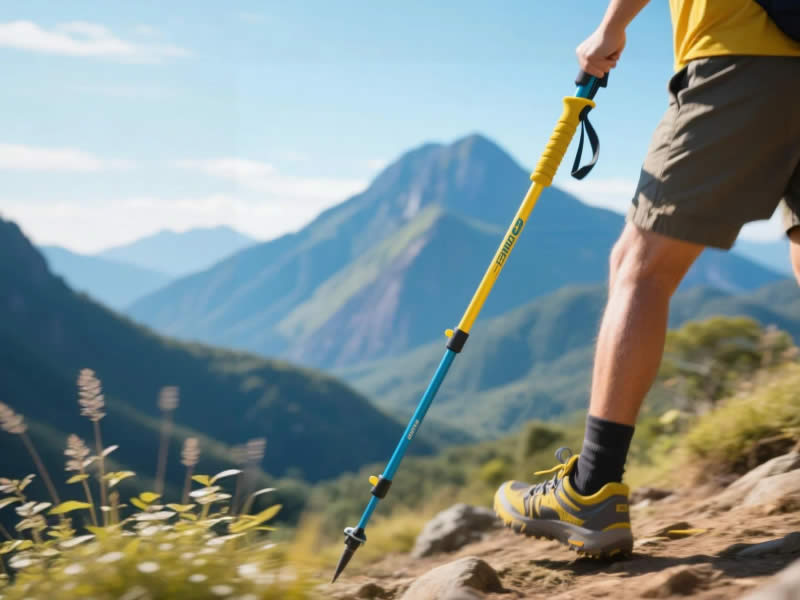
Recommended trekking pole purchase link: https://lightenup.aliexpress.com/store/1101521655
Key features for plantar fasciitis relief
- Shock absorption (anti‑shock) – Poles with an internal spring or elastomer in the lower section absorb some of the impact before it reaches your hands and, indirectly, your feet. This reduces the overall jarring sensation. Look for models with a simple on/off switch (e.g., LEKI Anti‑Shock) so you can disable it on flat sections for better feedback.
- Lightweight construction – Heavy poles increase arm fatigue, which can cause you to lean more heavily on your feet. Carbon or high‑grade aluminium (under 250 g per pole) is ideal.
- Ergonomic, shock‑dampening grips – Cork or foam grips with a contoured shape reduce hand pressure and absorb sweat. Some poles offer “ergonomic” grips angled at 15° to promote a natural wrist position.
- Adjustable length (flick locks) – Being able to fine‑tune pole length allows you to maintain a comfortable, upright posture. A proper length (elbow at 90° on flat ground) reduces compensatory movements that can strain the plantar fascia.
- Rubber tip covers for hard surfaces – On paved sections or compacted trails, rubber covers add a bit of cushioning and reduce noise, further dampening impact.
Why these features matter for Brazilian trails
Brazil’s diverse terrain – from the slippery Atlantic Forest clay to the hard quartzite of Serra do Cipó – generates high impact forces. Anti‑shock poles can reduce the peak force transmitted to your body by 10‑20%. For someone with plantar fasciitis, that reduction may be enough to hike pain‑free. Additionally, the humid climate (especially in the Amazon and coastal forests) makes cork grips a smart choice – they stay grippy even when wet.
Top recommended poles for plantar fasciitis in Brazil
| Model | Key plantar fasciitis features | Approx. price (BRL) |
|---|---|---|
| LEKI Makalu Lite Anti‑Shock | Internal spring, ergonomic cork grip, flick locks, 250 g/pole | R$550‑700 |
| Black Diamond Trail Pro Shock | Adjustable shock absorption, foam grip, durable aluminium | R$500‑650 |
| Komperdell C3 Contour Anti‑Shock | Power lock, ergonomic cork/foam combo, lightweight | R$450‑600 |
| Decathlon Forclaz 900 Anti‑Shock | Affordable anti‑shock, foam grip, flick locks | R$250‑350 |
Why LEKI Makalu Lite Anti‑Shock stands out
LEKI’s Anti‑Shock system is well‑regarded for its smooth, progressive spring action. It can be turned off when walking on flat, hard ground (e.g., the approach to a trailhead). The cork grip is comfortable and moisture‑wicking. The flick lock mechanism is easy to adjust with one hand, allowing you to fine‑tune length for descents (lengthen poles) to take pressure off your feet.
Tips for using poles with plantar fasciitis
- Shorten poles slightly on flat ground – A slightly shorter pole (elbow slightly above 90°) encourages a more upright posture, shifting some load from your feet to your arms.
- Lengthen poles on descents – This helps you brake using your arms, reducing the impact on your feet with each step.
- Use a looser grip – Let the wrist strap carry your weight; a relaxed grip reduces tension that can radiate down to your feet.
- Pair with proper footwear – Poles are not a substitute for good arch support. Use insoles or custom orthotics.
What to avoid
- Rigid poles (no shock absorption) – They transmit full impact. If you already have pain, they may not help enough.
- Heavy steel or budget twist‑lock poles – The extra weight tires your arms, causing you to lean on your feet more.
- Rubber grips in humid conditions – They become slippery, forcing you to grip harder, increasing upper body tension.
Final verdict
For Brazilian hikers suffering from plantar fasciitis, the best trekking poles are those with built‑in shock absorption, lightweight construction, and ergonomic cork grips. The LEKI Makalu Lite Anti‑Shock is a top choice, offering proven impact reduction and comfort on steep, rocky trails. The more affordable Decathlon Forclaz 900 Anti‑Shock is a solid alternative for those on a budget. Remember that poles are a tool to reduce pain, but you should also consult a podiatrist for a comprehensive treatment plan. With the right poles, you can continue to enjoy Brazil’s spectacular winter hikes without debilitating foot pain.




