




Are there trekking poles designed for people with multiple sclerosis?
While no trekking pole is explicitly marketed as “for multiple sclerosis (MS),” many models incorporate features that are highly beneficial for people living with this condition. MS often affects balance, coordination, muscle strength, and fatigue levels. The right trekking poles can be a game‑changer, offering stability, reducing energy expenditure, and increasing confidence on both trails and urban sidewalks. Here’s what to look for and why standard trekking poles work so well for MS.
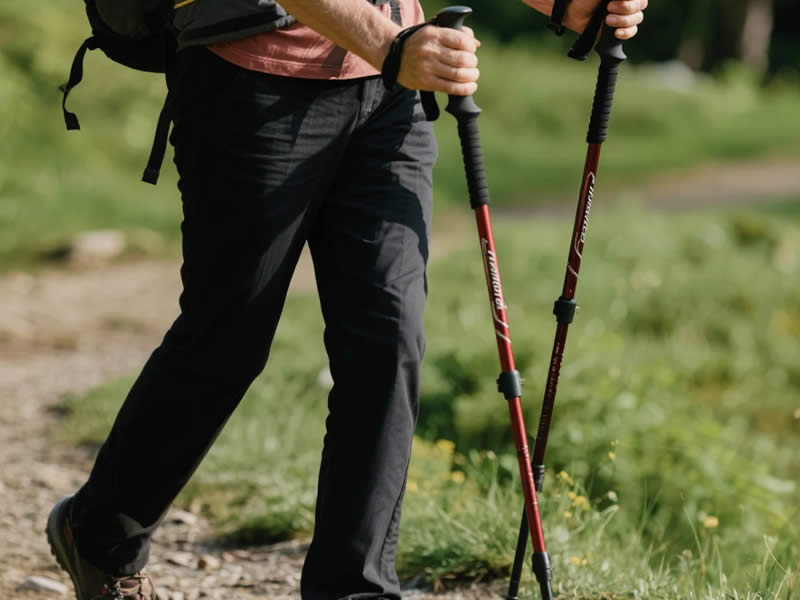
Why trekking poles help with MS symptoms
- Balance improvement – MS can impair proprioception (body awareness). Two poles create a wide, stable base, reducing the risk of falls on uneven ground, wet surfaces, or crowded pavements.
- Fatigue reduction – Poles transfer 20‑30% of your body weight from your legs to your arms, sparing energy for longer walks. This is crucial for managing MS‑related fatigue.
- Foot drop assistance – If you experience foot drop (difficulty lifting the front of the foot), poles allow you to rhythmically plant and push off, helping maintain a smoother gait.
- Compensatory strength – Weakness on one side can be offset by using two poles, distributing effort symmetrically.
Key features to look for (no “MS‑specific” label needed)
- Lightweight construction – Heavy poles cause arm fatigue. Look for aluminium (7075) or carbon fibre under 250 g per pole.
- Ergonomic cork or foam grips – Cork absorbs sweat and conforms to your hand, reducing cramping. Foam is soft and insulating. Avoid hard rubber.
- Adjustable length (flick locks) – MS symptoms can fluctuate. Being able to change pole height quickly (without tools) accommodates different energy levels and terrain. Flick locks are easy to operate with one hand.
- Shock absorption (anti‑shock) – Optional but helpful on hard surfaces (pavement, packed trails). The internal spring cushions impact, reducing jarring through wrists and shoulders.
- Padded, adjustable wrist straps – A wide strap lets you relax your grip while still controlling the pole. This is especially useful if hand strength varies.
- Rubber tip covers (paw tips) – Essential for walking on pavement, tile, or indoor floors. Carbide tips slip on smooth surfaces; rubber provides grip and protects floors.
- Two poles, not one – For MS, two poles provide far greater stability than a single cane or one pole. They also encourage a symmetric gait.
Are there any poles designed specifically for MS or neurological conditions?
Some mobility aid companies (e.g., HurriCane, Trionic) offer specialized walking poles with features like forearm cuffs, wider bases, or advanced shock absorption. However, these are often marketed as “walking aids” rather than trekking poles. In Brazil, standard trekking poles from Decathlon, Black Diamond, or LEKI are more accessible and, when chosen correctly, perform excellently for MS.
Practical tips for MS hikers using trekking poles
- Start on flat, familiar ground – Practice in a park or at home before tackling hills or trails.
- Set the correct height – Elbow at 90° when the tip is on the ground. For descents, lengthen poles by 2‑5 cm; for ascents, shorten similarly.
- Use a “two‑point” gait – Move right pole and left foot together, then left pole and right foot. This natural rhythm improves coordination.
- Take breaks – Poles reduce fatigue but don’t eliminate it. Rest when needed, and lean on your poles while standing.
- Carry a spare rubber tip – Losing a tip on a walk can be frustrating. Keep extras in your bag.
Heat sensitivity and MS
Many people with MS are heat‑sensitive. Lightweight poles with cork grips reduce the effort of hiking, keeping you cooler. Avoid dark‑colored poles that absorb sun; choose light colours.
Where to buy in Brazil
- Decathlon – Forclaz Trek 500 (R$199) is an affordable, flick‑lock, cork‑grip pole. Add rubber tips (R$10‑15) and you’re set.
- Adventure Sports (Rio/SP) – Premium models (LEKI, Black Diamond) with anti‑shock.
- Mercado Livre – Search for “bastão de trekking com ponteira de borracha”. Ensure the seller includes rubber tips.
Physiotherapy and pole training
Before using trekking poles for MS, consult a physical therapist familiar with your specific challenges. They can teach you the correct gait pattern, adjust pole length, and recommend a progression from indoor to outdoor use. Many rehabilitation centres now incorporate Nordic walking poles for neurological conditions.
Final verdict
There are no trekking poles explicitly labelled “for multiple sclerosis,” but standard adjustable trekking poles with flick locks, cork grips, and rubber tips are perfectly suited for MS. They improve balance, reduce fatigue, and enhance safety on Brazil’s diverse terrains – from urban parks to gentle nature trails. Choose lightweight models, use two poles, and always fit rubber covers for pavement. With the right poles and professional guidance, people with MS can enjoy the physical and psychological benefits of walking outdoors, staying active and engaged.




