




What trekking pole tips work on the slippery stone of Pedra do Baú?
Pedra do Baú, a massive granite dome in São Paulo state’s Mantiqueira range, is a magnet for hikers and climbers. Its smooth, sloping rock faces—often wet from mist or rain—can turn a fun scramble into a dangerous slide. One of the most common gear questions among visitors is: What trekking pole tips work on the slippery stone of Pedra do Baú?
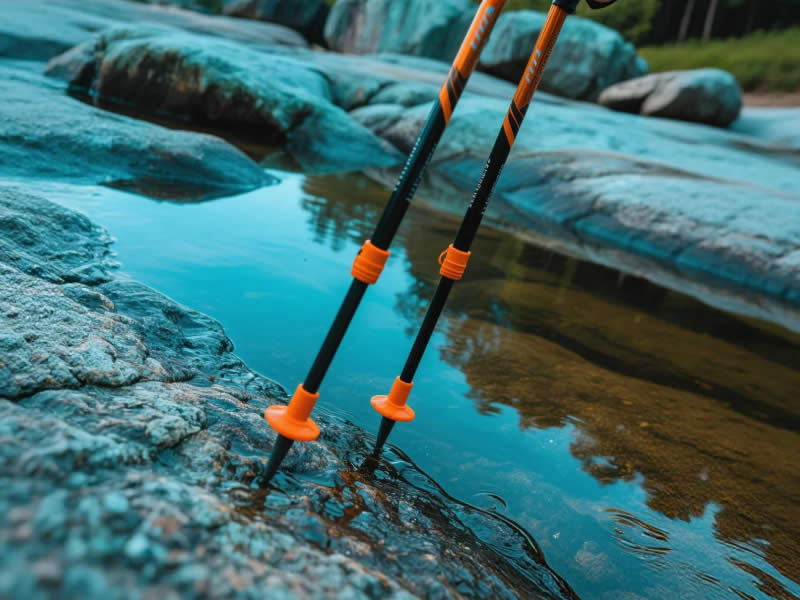
The short answer: Sharp, exposed carbide tips, not rubber boots. Let’s explore why and how to maximize grip on this challenging terrain.
Why rubber tips fail on Pedra do Baú
Most trekking poles come with small rubber tip protectors. These are designed for paved roads or indoor use, not for natural rock. On Pedra do Baú’s polished granite, rubber offers minimal friction. When the stone is damp (which is common in this humid, cloud-forest environment), rubber slides almost as easily as plastic on ice. Hikers who leave rubber tips on often report sudden slips, leading to falls or near-misses.
Carbide tips are the answer
Tungsten carbide tips—the standard sharp point found on quality poles (Black Diamond, Leki, Komperdell, etc.)—work well on granite. The reason: granite is not perfectly smooth at a microscopic level. It has tiny fissures, crystals, and irregularities. A sharp carbide tip can bite into these micro‑features, creating enough friction to hold your weight—provided you plant the pole vertically or at a slight angle.
Technique matters more than the tip
Even with carbide, you cannot simply stab the rock carelessly. On Pedra do Baú’s steepest sections (like the paredão leading to the summit), follow these tips:
- Plant vertically – Angled poles are more likely to skitter sideways. Aim for a near‑vertical placement.
- Apply firm downward pressure – Weighting the pole pushes the tip into the rock’s surface, increasing bite.
- Avoid polished “bathtub” zones – Some areas have been worn glass‑smooth by foot traffic. Test each plant; if it slips, find a small crack or a rough patch.
- Use two poles for balance – Two carbide tips double your points of contact. On the most slippery slabs, plant both poles before moving a foot.
Alternative and custom solutions
For very smooth or wet granite, some experienced Pedra do Baú hikers modify their tips:
- Sand the carbide – A slightly roughened tip (using fine sandpaper) can improve grip. Don’t overdo it.
- Add a small rubber o‑ring – Place a thin o‑ring just above the tip. It acts as a secondary friction point if the tip skids.
- Use a steel needle tip – Some ultralight poles have replaceable needle tips (e.g., Black Diamond’s FlexTip in its sharpest configuration). These excel on hard rock.
What to avoid at all costs
- Rubber tips – Already covered; they are dangerous.
- Plastic basket tips – Some cheap poles have molded plastic tips; they have zero grip.
- Worn‑out carbide – Over time, carbide tips become rounded. Inspect yours; if the tip is no longer pointy, replace them.
A word about the descent
The way down Pedra do Baú is often more slippery than the ascent. Fatigue reduces your planting precision. Lengthen your poles by 5 cm for descents, keep your weight back, and plant each pole deliberately. Many accidents happen when hikers rush or skip pole placement.
Final recommendation
For Pedra do Baú, use sharp, exposed carbide tips on your trekking poles. Remove any rubber protectors. Practice vertical planting on a low‑angle granite slab before committing to the steeper sections. If you are concerned about grip, bring a small piece of sandpaper to rough up the tip. With the right tip and proper technique, your poles will transform this slippery granite dome from a hazard into a manageable and enjoyable climb. Remember: on smooth rock, your poles are only as good as the tips you trust.




