




Do Brazilian bloggers recommend cork or foam for hot weather poles?
When you’re hiking under the scorching Brazilian sun—whether on the coastal trails of Rio’s Serra do Mar, the quartzite ridges of Chapada Diamantina, or the exposed campo rupestre of Minas Gerais—your trekking pole grips become far more than a comfort feature. They are a critical safety component. Sweaty palms lead to slips, slips lead to falls, and falls on rocky terrain can have serious consequences.
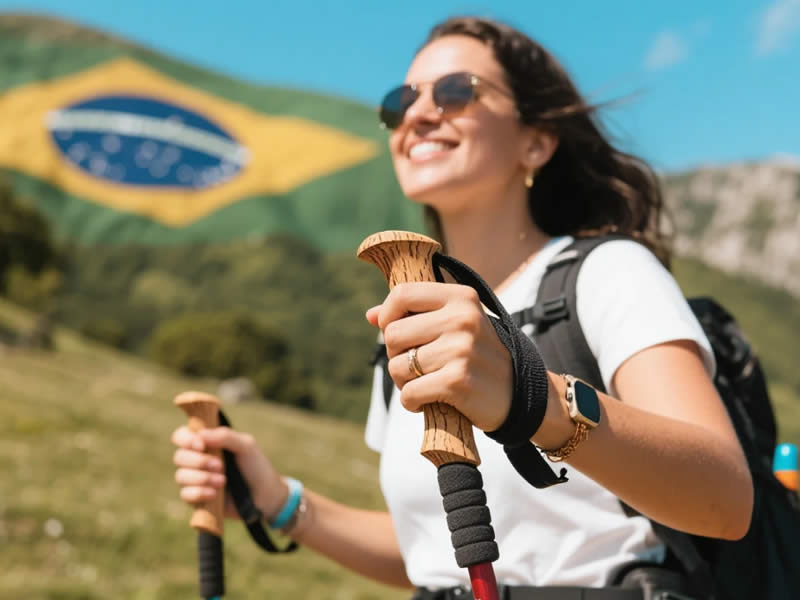
So, do Brazilian hiking bloggers recommend cork or foam for hot weather conditions? The answer is a resounding cork.
After reviewing dozens of blog posts, gear guides, and YouTube reviews from Brazil’s most trusted outdoor voices, the consensus is clear: cork is the gold standard for hot, humid Brazilian treks. Let’s break down why.
The physiology of sweaty hands in tropical heat
Brazil’s climate is uniquely challenging for hiking gear. In the Atlantic Forest (Mata Atlântica), humidity often exceeds 80 percent, and temperatures on summer treks frequently surpass 30 °C. Your hands sweat profusely, and any grip material that cannot manage moisture becomes dangerously slippery. Furthermore, long days of gripping poles—often 6–8 hours of continuous use—amplify any minor discomfort into blisters and hot spots.
Why foam struggles in Brazilian heat
Foam grips—typically made from EVA (ethylene-vinyl acetate)—are lightweight, soft, and comfortable. They are popular in ultralight and fastpacking circles for exactly those reasons. However, Brazilian bloggers point to one fatal flaw for hot weather use: EVA foam soaks up moisture like a sponge [14†L20-L22]. On a humid day, foam grips become saturated with sweat. They then feel damp and clammy, and, more critically, they become slippery. Foam also retains moisture, drying slowly even when left in the sun [12†L35-L38]. One blogger noted that after a few hours on the trail, foam grips feel “squishy” and lose their texture.
While high-quality foam can absorb a fair amount of sweat before slipping, most Brazilian bloggers conclude that in extreme humidity, foam is simply outperformed by cork.
Why cork wins: the Brazilian blogger consensus
Cork grips, on the other hand, are praised for three key properties that align perfectly with tropical hiking conditions.
First, cork is naturally porous and excellent at wicking moisture [13†L13-L16]. Rather than absorbing sweat like a sponge, cork allows air circulation and draws moisture away from the palm. It stays grippy even when wet, and it dries almost immediately. One Brazilian gear reviewer put it simply: “Cork grips feel secure even when your hands are dripping.”
Second, cork is temperature neutral [12†L20-L22]. Unlike foam, which can trap heat, or rubber, which becomes unbearably warm, cork feels comfortable against the skin regardless of ambient temperature. That means no hot spots, no burning sensation on your palms.
Third, and perhaps most importantly for long Brazilian treks, cork molds to your hand over time [12†L15-L17]. Through repeated use, the cork compresses where your fingers apply pressure, creating a custom, ergonomic fit that distributes force evenly and prevents blisters. This is a feature that Brazilian bloggers consistently highlight: cork grips get better with age.
A popular Brazilian hiking blog summed it up: “For treks in Serra do Mar and Chapada, cork grips are the difference between a confident plant and a dangerous slip.”
One caveat: budget matters
Cork grips are more expensive than foam. Poles with cork grips typically cost 20–40 percent more than their foam counterparts. Brazilian bloggers acknowledge that foam grips are a perfectly adequate budget alternative for shorter, cooler, or less demanding hikes. They also note that some budget cork grips (with low cork content and excessive binding agents) can crumble or crack faster than advertised.
What about hybrid grips?
A few Brazilian bloggers mention hybrid grips that combine cork on top (for moisture wicking) with a foam extension below (for cushioning and occasional choke‑up hand positions). This design is increasingly common on premium poles from brands like Leki and Black Diamond and offers the best of both worlds for hot weather.
Grips to avoid at all costs
One point on which every Brazilian blogger agrees: avoid rubber grips for hot weather use [13†L42-L44]. Rubber does not wick moisture, becomes slippery when sweaty, and traps heat against your palm. Rubber grips are suitable only for cold weather or when wearing gloves.
Final recommendation
If you are hiking in Brazil during summer or in any humid environment, invest in cork grips. The slight additional cost buys you safety, comfort, and durability. For budget‑conscious hikers, high‑quality EVA foam grips can work, but expect them to perform less well in extreme moisture. Avoid rubber entirely. As one Brazilian blogger concluded: “Your poles are your third and fourth points of contact with the ground. Don’t trust them to a slippery grip.”
So yes, Brazilian bloggers recommend cork for hot weather poles—and if you read their reviews, you will understand exactly why.




