




Do Brazilian companies recycle old trekking pole components?
As trekking poles become essential gear for Brazilian hikers, a natural question arises: what happens to old, broken, or worn‑out poles? Can they be recycled? Unlike aluminium cans or plastic bottles, trekking poles are composite products—containing aluminium alloys, steel tips, rubber/foam/cork grips, and plastic locking parts. This complexity makes recycling challenging. So, do Brazilian companies recycle old trekking pole components? The short answer: very few do, and there is no national program, but some niche initiatives exist.
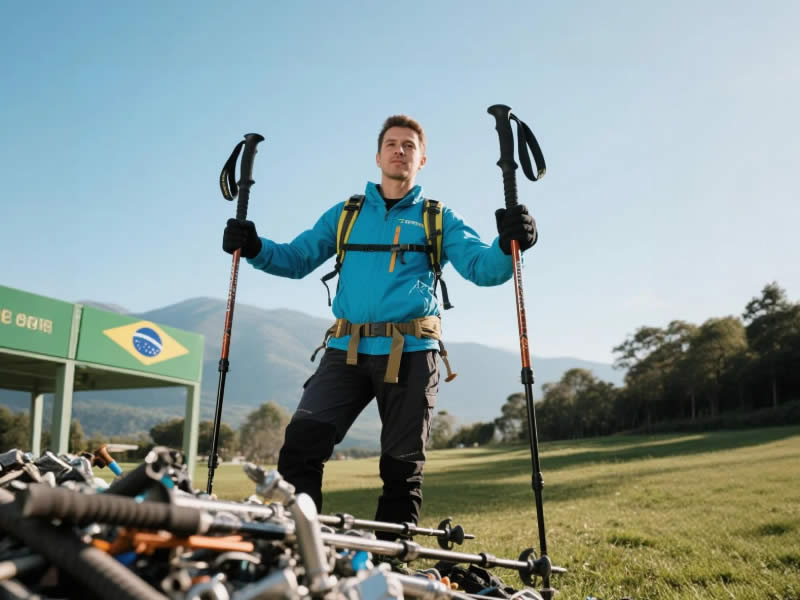
The current state of recycling in Brazil
Brazil’s recycling infrastructure is robust for common materials (PET, glass, aluminium beverage cans) but weak for multi‑material sporting goods. Most trekking poles end up in general waste or sit forgotten in garages. The main barriers:
- Disassembly difficulty – Grips are glued or mechanically fixed; tips are pressed in; aluminium shafts may contain plastic internal components. Separating materials requires labour, often not economical.
- Low scrap value – A trekking pole contains only ~150‑200 g of aluminium (7075 grade). At current Brazilian scrap prices (~R$5‑7 per kg), a pole is worth only R$1‑1.40. Not worth collecting.
- Lack of specialized recyclers – Few Brazilian recyclers handle small aluminium extrusions with mixed materials.
Which companies or initiatives accept old pole components?
- Adventure Sport (specialty retailer) – Some locations (São Paulo, Rio) have pilot programs accepting metal parts (aluminium shafts, steel tips) from any brand. They separate them and send to a metals recycler. Grips and plastic are discarded. This is informal, not advertised; ask at the store.
- Decathlon Brasil – Decathlon has a global “Second Life” program for some gear (tents, sleeping bags) but not for trekking poles. In Brazil, they do not currently recycle poles. However, they sell spare parts (tips, baskets) to extend pole life – which indirectly reduces waste.
- Bamboo pole makers (e.g., Trilha Verde) – These small eco‑brands sometimes reuse old cork grips or rubber tips from discarded poles if still in good condition. They also accept broken aluminium poles for crafting small items (e.g., tent pegs, pot hangers). This is artisanal, not scalable.
- Informal scrappers – In larger cities, catadores (waste pickers) may collect trekking poles left on the curb. They remove obvious metal parts using basic tools and sell to scrap yards. However, most poles are missed.
DIY and upcycling by Brazilian hikers
The most common “recycling” in Brazil is upcycling by users. Hikers share creative reuse ideas in Facebook groups and WhatsApp:
- Broken lower section → cut down to make a monopod or a tent pole.
- Worn tip → replace with a DIY carbide tip from a masonry drill bit.
- Old grips → remove and use as handles for homemade walking sticks.
- Aluminium shaft sections → used as tarp poles or splints for broken tent poles.
This informal repair culture extends product life significantly, which is arguably better than recycling.
What about brands with repair programs?
- Leki – Global warranty and spare parts availability, but Brazil has limited authorized service centers. You can order replacement tips and locks online, but no take‑back program.
- Black Diamond – Similar situation. They do not recycle returned poles.
- Decathlon Forclaz – Sells spare tips; offers a 2‑year warranty. Beyond that, no recycling.
The circular economy gap
Brazil lacks a circular economy for trekking poles because:
- Low volume compared to developed countries.
- High import taxes make new poles expensive, so users keep them longer (less frequent replacement).
- No government incentive for sports equipment recycling.
What can you do as a consumer?
- Repair, don’t replace – Change worn tips, tighten locks, replace baskets. Decathlon and Adventure Sport sell spare parts.
- Donate functional old poles – Many beginner hikers in Facebook groups will happily take your used poles.
- Metal scrap yard – If a pole is completely broken (bent shaft, broken lock), remove the grip and tip (both can go to general waste), then take the aluminium tube to a local scrap metal buyer. They will accept it mixed with other aluminium.
- Upcycle – Turn old poles into garden stakes, photography monopods, or emergency tent supports.
Future prospects
A Brazilian startup focused on outdoor gear circularity could emerge, but currently no company offers a formal recycling program for trekking pole components. The most promising sign is Decathlon’s global commitment to circularity; if they extend their “Second Life” program to trekking poles in Europe, Brazil might follow years later.
Final verdict
Do Brazilian companies recycle old trekking pole components? Almost none do, in a formal sense. Adventure Sport accepts metal parts informally at some stores, and bamboo pole makers upcycle small components. Most recycling is DIY by hikers or informal scrappers. For the environmentally conscious Brazilian hiker, the best strategy is to extend the life of your poles (repair, replace tips, tighten locks) and, when truly dead, separate the aluminium for scrap. Until a dedicated program appears, individual action remains the only solution.




