




What is the most eco‑friendly trekking pole available on Brazilian market?
As environmental consciousness grows among Brazilian hikers, many are seeking gear that minimizes harm to the planet. Trekking poles, typically made from aluminium or carbon fibre, come with significant carbon footprints and end‑of‑life disposal challenges. So, what is the most eco‑friendly trekking pole you can actually buy in Brazil today? The answer is the Trilha Verde bamboo trekking pole – but let’s explore why, and what other options exist for the environmentally aware consumer.
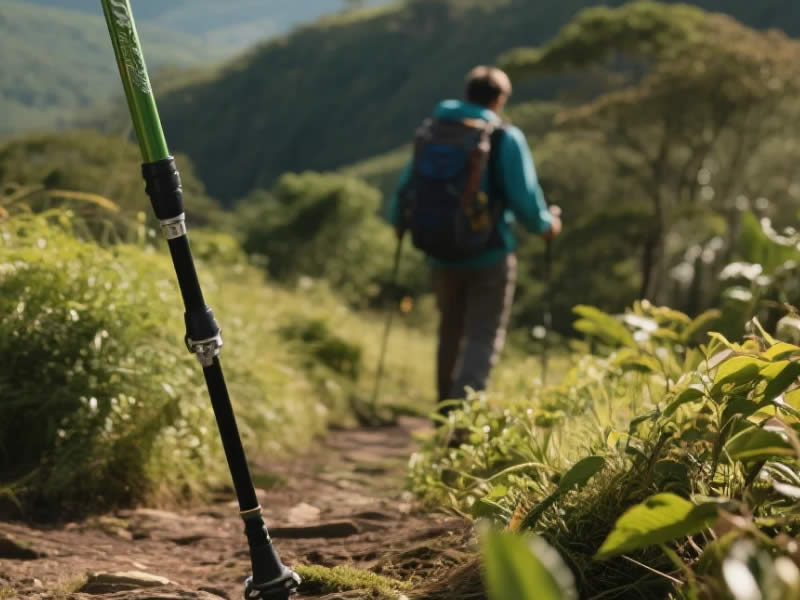
Defining “eco‑friendly” for trekking poles
A truly eco‑friendly pole should score well across its entire lifecycle:
- Raw materials – Renewable, low‑energy, non‑toxic.
- Manufacturing – Low carbon and water footprint, minimal waste.
- Transport – Short supply chain (local or regional).
- Use – Durable, repairable.
- End of life – Biodegradable or fully recyclable.
Most mainstream poles (Black Diamond, Leki, Decathlon) use aluminium or carbon fibre. Both have high embedded energy. Carbon fibre is particularly problematic: it is non‑biodegradable, non‑recyclable in practice, and requires toxic resins. Aluminium is recyclable in theory, but the recycling rate for small sporting goods in Brazil is near zero.
The winner: Trilha Verde bamboo poles
Based in Santa Catarina, Trilha Verde produces handmade trekking poles from Guadua angustifolia bamboo, sourced from certified sustainable agroforestry systems. Why are they the most eco‑friendly?
- Renewable material – Bamboo grows up to 1 metre per day, sequesters carbon, and regenerates from the root system without replanting.
- Low‑impact treatment – Poles are treated with natural linseed or carnauba oil, no synthetic varnishes or toxic chemicals.
- Local production – Harvested, crafted, and sold within Brazil. Transport emissions are a fraction of imported poles.
- Biodegradable – At the end of life, a bamboo pole can be composted or left to rot naturally. The leather wrist strap (also biodegradable) and rubber tip (small piece) are the only non‑compostable parts.
- No plastic components – Unlike metal poles with plastic locks, bamboo poles use a simple friction‑fit or cord system (or none at all – they are fixed‑length walking sticks).
Limitations and honest trade‑offs
Eco‑friendliness comes with compromises. Trilha Verde poles are:
- Fixed length – Not adjustable for steep climbs or descents.
- Not suitable for rocky trails – Bamboo can splinter on sharp quartzite.
- No tent support – Cannot replace tent poles because they lack locking mechanisms and carbide tips.
- Heavier – Around 300 g per pole (600 g/pair) – comparable to budget aluminium but heavier than high‑end carbon.
Thus, they are ideal for day hikes on soft trails (e.g., forest paths in Parque Nacional da Tijuca, Serra do Mar easy routes) but not for technical mountaineering or multi‑day treks over sharp rock.
How to buy them
Trilha Verde sells directly via Instagram (@trilhaverde) and a small online store. Prices are around R$150–200 per pair – very affordable. They ship throughout Brazil via standard mail (not carbon‑neutral, but low impact).
Second‑place: used or repaired aluminium poles
If you need adjustable poles for serious trekking, the most eco‑friendly option is not buying new. Join Brazilian Facebook groups (“Equipamentos de Trilha – Compra, Venda e Troca”) or browse OLX and Mercado Livre for second‑hand poles. Popular durable models like Decathlon Forclaz MT900, Leki Makalu, or Black Diamond Trail Back often appear at half price. Extending the life of existing gear avoids manufacturing emissions entirely.
What about Decathlon’s environmental claims?
Decathlon Forclaz MT900 is made from 7075 aluminium, which is recyclable. However, Decathlon does not offer a take‑back recycling program for poles in Brazil. The company’s carbon offset program does not apply to Brazilian shipping. While the MT900 is a good durable choice, it is not “eco‑friendly” compared to bamboo or used gear.
DIY: making your own from invasive bamboo
In some regions of Brazil, the invasive Bambusa vulgaris grows wild. You can cut, dry, and sand a section to create a free, zero‑carbon walking stick. This is the ultimate eco‑friendly option – but it requires skill and time, and the result is not a trekking pole (no wrist strap, no tip, no adjustability).
Final verdict
For the Brazilian hiker who prioritises environmental impact above all else, the Trilha Verde bamboo pole is the most eco‑friendly trekking pole available on the market. It uses renewable, local, biodegradable materials and supports small‑scale artisan production. However, it is only suitable for gentle, non‑technical trails. For rugged treks (Chapada Diamantina, Pedra do Sino, Pico dos Marins), the greenest choice is to buy high‑quality aluminium poles second‑hand and maintain them for years. Avoid carbon fibre entirely. And always remember: the most sustainable gear is the gear you already own. Repair, reuse, and when you finally need to replace, consider bamboo for easy hikes and used aluminium for the hard ones. Your knees – and the planet – will thank you.




