




Can I repair rather than replace broken trekking poles in Brazil to reduce waste?
Absolutely. Repairing trekking poles is not only possible in Brazil, but it’s also a smart way to save money, reduce landfill waste, and keep your trusted gear on the trail. Many hikers assume a bent shaft or a slipping lock means the end of the pole. In reality, most common issues can be fixed with basic tools, a few spare parts, and a little know‑how. Let’s explore what you can repair, where to find parts in Brazil, and how to extend the life of your poles.
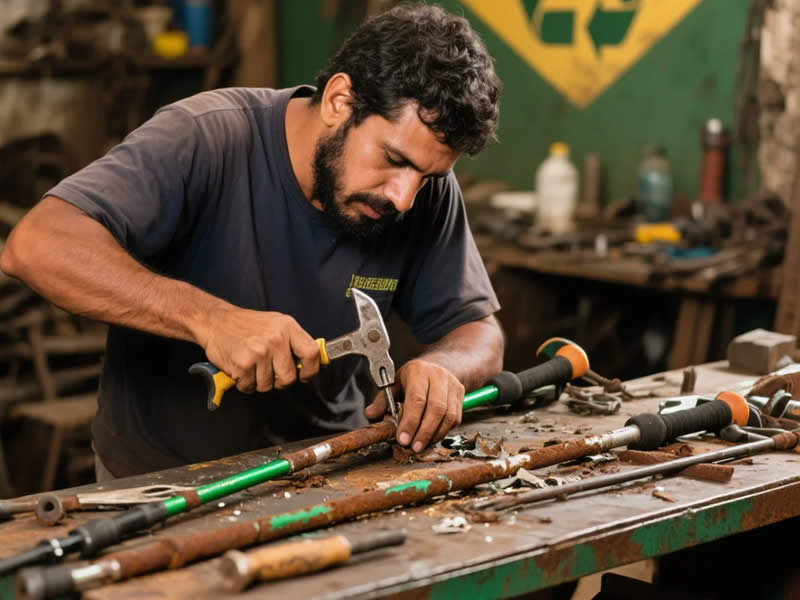
What typically breaks – and how to fix it
- Worn carbide tip – The most common failure on Brazilian trails (abrasive quartzite and granite). Fix: replace the tip. Many poles (e.g., Decathlon Forclaz MT900, Black Diamond Trail Back, Leki) have user‑replaceable carbide tips. Decathlon sells replacement tips for about R$50. Adventure Sport imports Black Diamond FlexTips. Leki tips are available online. If your pole has a non‑replaceable tip, a local metalworker can sometimes press a new carbide point into the ferrule.
- Slipping lever lock – Over time, the cam lock on aluminium poles can loosen. Fix: tighten the screw on the lever mechanism with a hex key (usually 2mm or 2.5mm). Most poles come with a small tool. If the plastic cam is cracked, you can buy replacement lever assemblies from Decathlon (for MT900) or order generic lever locks on Mercado Livre (search “trava para bastão de trilha”).
- Bent aluminium shaft – A bend in the lower section is common after a fall or a hard plant between rocks. Fix: gently straighten it. Remove the lower section, place it on a flat rock, and roll it under your foot or tap with a rubber mallet. 7075 aluminium can be straightened once or twice without significant weakening. Carbon fibre cannot be straightened – if bent, it’s already cracked and unsafe.
- Frozen or corroded twist lock – Twist locks (common on cheap poles) often seize or slip. Fix: disassemble, clean with water and a toothbrush, then apply a dry lubricant (silicone spray). Better yet, replace twist‑lock poles with lever‑lock poles when they fail permanently – but that’s replacement, not repair.
- Broken wrist strap – Straps fray or snap. Fix: sew a new one using nylon webbing and a rivet. Many Brazilian cobblers (sapateiros) can attach a new strap for R$10‑20. Or replace with a generic adjustable strap from a camping store.
- Lost or damaged basket – Baskets crack or fall off. Fix: buy universal replacement baskets on Mercado Livre or at Decathlon (R$15‑30). Most baskets simply snap onto the lower section above the tip.
Where to find spare parts in Brazil
- Decathlon – The best source. They sell replacement carbide tips, lever lock parts, baskets, and even lower shaft sections for the Forclaz MT900. Visit any large store or order online.
- Adventure Sport (São Paulo, Rio, online) – Stocks Black Diamond and Leki spare parts (tips, locks, straps). More expensive but official.
- Mercado Livre / Shopee – Search for “ponteira de carboneto para bastão”, “trava de bastão”, “basket para bastão de trilha”. Many generic parts fit common poles.
- Local hardware stores – For DIY fixes: epoxy glue for tip replacement, heat shrink tubing for grip repair, stainless steel wire to reattach a basket.
- Facebook groups – “Equipamentos de Trilha – Compra, Venda e Troca” often has members selling spare parts or offering repair services.
When replacement is the greener choice
Sometimes repair is not possible or safe:
- Carbon fibre shaft with visible crack or splinter – discard (or use non‑load‑bearing projects like garden stakes).
- Severely bent aluminium that has been straightened multiple times – metal fatigue may cause sudden failure.
- Locking mechanism completely disintegrated and no replacement available.
In these cases, buying a new pole is unavoidable. But you can still reduce waste by recycling the metal parts (aluminium shafts go to scrap yards) and donating functional components (tips, straps) to other hikers.
The environmental math
Repairing a single pair of poles instead of buying new saves approximately:
- 500‑800 g of aluminium (mining, refining, extrusion) or 400 g of carbon fibre (petrochemical‑intensive).
- Packaging waste (cardboard, plastic).
- Shipping emissions from importing new poles to Brazil.
Over a lifetime of hiking, keeping the same pole set for 5‑10 years instead of 2‑3 years cuts your personal gear footprint by more than half.
Practical tips for Brazilian hikers
- Prevent damage – Don’t pry rocks with your poles. Use rubber tip covers on paved sections. Rinse after coastal hikes to prevent corrosion.
- Learn basic maintenance – Tighten lock screws before every long trek. Clean locks with a brush. Apply a drop of oil to moving parts once a year.
- Join repair workshops – Some outdoor stores (Adventure Sport, some Decathlon units) offer free gear repair clinics. Check their event calendars.
- Share knowledge – Post your repair success in WhatsApp groups. Help others fix instead of throw away.
Final verdict
Yes, you can repair rather than replace most broken trekking poles in Brazil – and doing so significantly reduces waste. The key is choosing poles with replaceable tips and robust lever locks (e.g., Decathlon Forclaz MT900, Leki Makalu, Black Diamond Trail Back). Invest in a small hex key set and learn a few basic fixes. Your wallet, the environment, and your hiking karma will all benefit. Remember: the greenest gear is the gear you already own, kept alive through care and repair. So next time a tip wears down or a lock slips, don’t toss the pole – fix it and keep walking.




