




What is the correct rhythm for using trekking poles on long flat sections?
Using trekking poles on long, flat sections of trail is not merely about leaning on two sticks. When done correctly, the right rhythm transforms walking into a full‑body exercise, reduces leg fatigue, and can even increase your speed. Yet many hikers—even experienced ones—develop inefficient habits on flat terrain, such as planting both poles together or overreaching. So, what is the correct rhythm? The answer is an alternating, diagonal stride: plant the left pole at the same moment your right foot steps forward, and the right pole with your left foot.
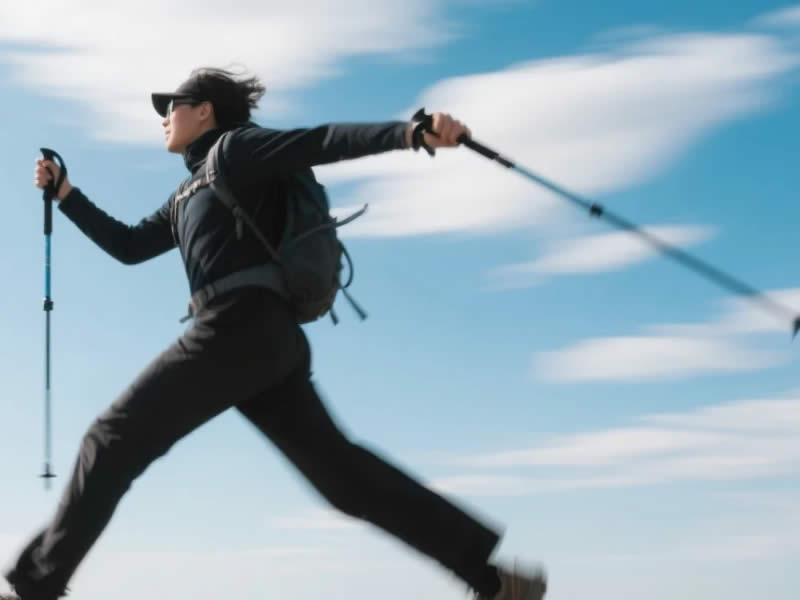
Let’s break down the mechanics, the benefits, and how to practice this rhythm until it becomes automatic.
The diagonal stride – copying nature’s pattern
Humans naturally walk with an opposite arm‑leg swing: when your right leg goes forward, your left arm swings forward. Trekking poles should simply extend that natural arm movement. The correct rhythm is therefore:
- Step 1: Right foot forward + left pole plant.
- Step 2: Left foot forward + right pole plant.
- Repeat.
This is sometimes called the “cross‑country skiing” rhythm, but it is actually the same pattern used in Nordic walking. Each pole plant occurs as the opposite heel strikes the ground. The timing is crucial for efficiency.
Why this rhythm works
- Propels you forward – When you plant the left pole as your right foot lands, you can push backward with the pole, adding a small forward thrust. This reduces the work your leg muscles must do.
- Spreads the load – The diagonal pattern engages your core, back, and shoulder muscles evenly. No single side becomes overworked.
- Maintains a natural gait – If you plant both poles together (like a double plant), you force your body into an unnatural bobbing motion. The alternating rhythm keeps your torso stable and your stride smooth.
- Improves cardiovascular efficiency – Because your upper body is actively working, your heart rate rises slightly, turning a flat walk into a low‑intensity whole‑body workout. Many hikers report feeling less tired after long flat sections when using the correct rhythm.
Common mistakes on flat terrain
- Planting both poles simultaneously – Often seen in beginners or those transitioning from steep downhill technique. On the flat, a double plant creates a pause in your rhythm and wastes energy.
- Overreaching – Reaching the pole too far forward (ahead of your front foot) forces you to lean forward and stresses your shoulders. The pole tip should land roughly level with your heel or slightly ahead, not beyond your toes.
- Gripping too tightly – Your grip should be relaxed, almost like holding a butterfly. The wrist strap should take most of the downward force.
- Poles too long – On flat ground, your elbow should form a 90‑degree angle when the tip is on the ground. If the poles are longer, you will lift your shoulders; if shorter, you will hunch.
Setting your poles for flat sections
- Length: For most hikers of average height (165‑185 cm), a pole length of 120‑125 cm works well on flat terrain. Use the 90‑degree rule: with your arm hanging naturally and elbow bent 90°, the tip should just touch the ground.
- Baskets: Small trekking baskets (not the large snow baskets) help prevent the tip from sinking into soft dirt.
- Tips: Carbide tips are fine. Remove rubber protectors.
How to practice the correct rhythm
- Start without poles – Walk normally and observe your natural arm swing. Notice that your left arm moves forward with your right leg.
- Add one pole – Hold only the left pole. Walk and try to plant it as your right foot steps forward. Do this for 2‑3 minutes, then switch to the right pole only.
- Use both poles – Now walk with both poles, focusing on the diagonal plant. It may feel forced at first. Count out loud: “Right foot, left pole… left foot, right pole.”
- Increase speed gradually – Once the rhythm becomes comfortable, try walking faster. You will find that the poles naturally want to fall into the diagonal pattern.
- Check your plant point – The pole tip should land close to your body, not far ahead. Imagine drawing a line from your heel forward; plant the tip on that line.
Adapting the rhythm for different terrain
- Soft ground (sand, mud) – The same rhythm applies, but you may need to shorten the poles by 2‑3 cm to account for sinking.
- Tall grass or uneven flat trails – Keep the rhythm but increase your focus on where you plant. Avoid stabbing into hidden rocks or roots.
- Walking with a heavy backpack – The diagonal rhythm becomes even more important because it offloads your legs. However, you may need to shorten the poles slightly to maintain the 90‑degree elbow angle under load.
Benefits you will notice after 30 minutes
- Less fatigue in your quadriceps and calves.
- Reduced tension in your lower back (the poles encourage an upright posture).
- A gentle engagement of your arms, shoulders, and core muscles.
- Slightly faster walking speed for the same perceived effort.
Final takeaways
The correct rhythm for long, flat sections is the alternating diagonal stride: left pole with right foot, right pole with left foot. This mimics your natural gait, engages your whole body, and efficiently transfers energy forward. Avoid double planting, overreaching, and incorrect pole length. Practice the rhythm on a flat, forgiving trail (like a park pathway) before taking it into the backcountry. With a little attention, the rhythm will become second nature, and you will wonder how you ever walked long distances without poles. So next time you hit a flat stretch in Brazil’s Atlantic Forest or along a coastal boardwalk, find your rhythm, relax your grip, and let the poles carry you forward with ease.




