




What are good trekking pole carrying slings for Brazilian day hikers?
On many Brazilian day hikes—especially in the Atlantic Forest, Chapada Diamantina, or Serra do Mar—you will not use your trekking poles continuously. You may need your hands free for scrambling, photography, or bushwhacking. When poles are not in use, you need a way to carry them without holding them awkwardly in your hand. That is where carrying slings come in. These simple accessories attach to your backpack, allowing you to stow your poles vertically and access them instantly. So, what are the best options for Brazilian day hikers?
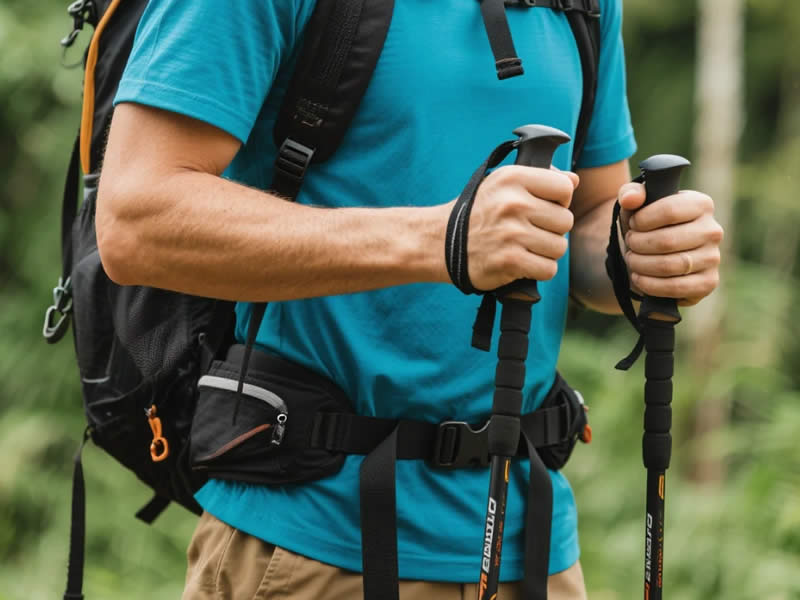
Why you need a carrying sling
- Hands-free sections – During steep scrambles or when climbing ladders, you need both hands.
- Photo stops – Instead of laying poles on the ground (and losing them), you can stow them.
- Tired arms – After a long ascent, you may want to rest your shoulders by not swinging poles.
- Narrow trails – Thick vegetation can snag poles; stowing them keeps you moving.
Without a sling, hikers often tuck poles under their backpack's side compression straps or through the daisy chain. This works but is slower and less secure. A dedicated sling is faster, more stable, and keeps poles from swinging.
Types of carrying slings available in Brazil
- Elastic cord with toggles – The simplest design. Two small elastic loops with plastic or metal toggles attach to your backpack's shoulder straps. When you stow a pole, you slide the handle into one loop and the tip into the other. The elastic holds the pole securely against the backpack's front. Example: Decathlon's Forclaz carrying sling (around R$20‑30). Lightweight, cheap, and effective for day hikes.
- Magnetic quick‑release slings – These feature a magnetic buckle that clips onto the pole's shaft. Press the buckle, and the pole releases instantly. The base attaches to your shoulder strap. Brands like Zpacks or Amazon generic versions. Magnetic slings are fast but can be expensive (R$80‑150) and may not hold heavy poles securely.
- Hook‑and‑loop (Velcro) slings – Similar to elastic but with adjustable Velcro straps. More secure for thick or carbon poles. Slower to release than magnets or toggles.
- Backpack‑integrated solutions – Many Brazilian hiking backpacks (e.g., from local brands like CAMP, Oboz, or imported Osprey) have built‑in shock cord loops on the shoulder straps or side pockets. You can use these without buying extra slings. Check if your pack already has them.
- DIY bungee cord – Some hikers make their own using 3‑4 mm shock cord and small cord locks. A 30‑cm length with a loop at each end works as a basic sling. This costs less than R$5 and is fully adjustable.
What to look for in a good sling for Brazil
- Moisture resistance – Brazil's humidity and sweat will degrade cheap elastic. Choose nylon or polyester webbing over natural rubber.
- Quick release – You want to deploy your poles in 1‑2 seconds, not fiddle with buckles.
- Adjustability – Slings should fit different pole diameters (10‑16 mm) and handle lengths.
- Secure attachment – The sling must attach firmly to your backpack straps; clips that slip are annoying and dangerous.
- Low profile – A bulky sling can rub against your neck or catch on branches.
Where to buy in Brazil
- Decathlon – The Forclaz elastic sling is the most popular. It costs around R$25 and works with most poles. Available in stores and online.
- Adventure Sport – Offers branded slings from Black Diamond, Leki, and others. More expensive (R$60‑100) but very durable.
- Mercado Livre / Shopee – Search for “presa para bastão de trilha”, “suporte para bastão mochila”, or “carregador de bastão”. Many Chinese generic options from R$15‑50. Check reviews for durability.
- Local outdoor shops – In tourist hubs (Gramado, Campos do Jordão, Foz do Iguaçu), you may find locally made slings.
How to use a sling effectively
- Attach the sling – The upper loop should sit on the shoulder strap, near your collarbone. The lower loop attaches to the same strap, lower down (or to the backpack's side compression strap). Ensure the pole will hang vertically, handle up or down – most hikers prefer handle up for easy grabbing.
- Stow the pole – Collapse your pole (if folding) or leave it extended (telescoping). Slide the handle into the upper loop and the tip into the lower loop. Toggle or buckle to secure.
- Check swing – Walk a few steps. The pole should not hit your legs or swing into your face. Adjust strap tension if needed.
- Deploy – In one motion, release the toggles or unbuckle and lift the pole out. Practice at home so it becomes muscle memory.
Do you need a sling for every hike?
For short, well‑marked trails with no scrambling, you may not need a sling. You can simply hold both poles in one hand or tuck them under your armpit. However, for treks with varied terrain (e.g., the Trilha do Ouro in Paraty, or the Pedra do Baú in São Paulo), a sling is a huge convenience.
Popularity among Brazilian day hikers
In local Facebook groups and WhatsApp chats, the Decathlon Forclaz sling is the most recommended. It is cheap, works with any pole, and lasts about 2‑3 years of regular use. Magnet slings are gaining popularity among fastpackers and trail runners, but they are rarer.
Final recommendation
For most Brazilian day hikers, the best carrying sling is the Decathlon Forclaz elastic cord with toggles (or a similar generic version). It is affordable, adjustable, and quick to use. If you want faster deployment, consider a magnetic sling from Amazon or Adventure Sport. Avoid heavy, bulky slings with metal buckles—they add unnecessary weight. And always check that the sling is compatible with your pole's diameter and your backpack's strap width. With a good sling, your poles will be ready when you need them and out of the way when you don't—making your Brazilian day hike safer and more enjoyable.




