




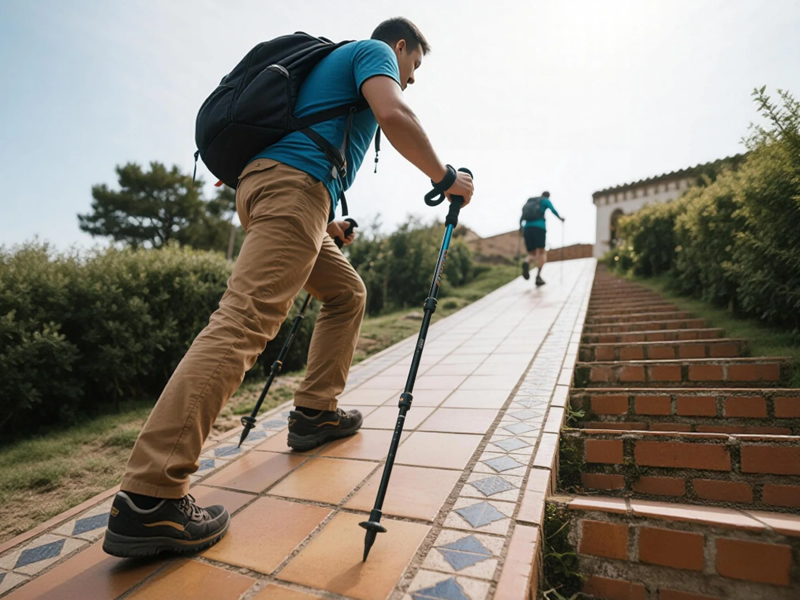
Are there trekking pole anti‑slip attachments for steep tile paths?
Yes, there are several types of attachments designed specifically to improve traction on steep, smooth, or wet tile surfaces. Whether you're navigating the historic calçadas (cobblestone or tile paths) of Ouro Preto, the steep stairways of Petrópolis, or a tiled pedestrian ramp in São Paulo, standard carbide tips can slide dangerously. Specialised anti‑slip attachments provide the grip you need for safety and confidence. Let's explore the options, their effectiveness, and where to find them in Brazil.
The problem with standard trekking pole tips on tile
Carbide tips are designed for soft ground, rock, and mud. On smooth, hard surfaces like ceramic tiles, polished stone, or concrete, they have very little friction. When wet (common in rainy Brazilian cities), they can skid sideways, causing sudden loss of balance. Rubber tip protectors (often included with poles) are meant for transport or indoor use, but they often lack the tread pattern needed to grip steep inclines.
Types of anti‑slip attachments
- Treaded rubber ferrules (city tips)These are rubber caps with a patterned surface—often a hexagonal or chevron tread—that fits over the carbide tip. They are designed for urban or paved trails. Brands like Leki and Black Diamond offer "city tips" or "pavement tips" made of hard, wear‑resistant rubber. They provide good grip on dry and slightly damp tiles. However, on very wet or mossy tiles, they can still slip.
- Pros: Quiet, no damage to tile, easy to install/remove.
- Cons: Limited grip on wet, steep surfaces; wear out quickly on abrasive tiles.
- Metal‑studded rubber caps (crampon‑style tips)These are rubber boots with small tungsten carbide or steel studs embedded in the sole. They provide aggressive traction on ice, but also work well on wet, smooth stone. They are often sold for ice hiking but are increasingly used for urban steep paths. Examples include “Snowline Chainsen” or similar rubber‑with‑spikes attachments. The studs dig into microscopic irregularities in the tile surface, providing reliable bite.
- Pros: Excellent grip on wet, steep, or icy tiles; durable metal studs.
- Cons: Can scratch or chip soft tiles (e.g., polished marble); noisy on hard surfaces; more expensive (R$80‑150 per pair).
- Silicone or neoprene “grip socks”These are stretchy, textured sleeves that slip over the pole tip and part of the lower shaft. They are usually made from silicone with a rough surface. They are lightweight, cheap, and provide moderate grip on dry tile. On wet tile, they are better than plain rubber but not as good as studded options.
- Pros: Cheap (R$20‑40); fit most pole diameters; quiet; no damage.
- Cons: Can roll off if not tight; wear quickly; not for steep, slippery surfaces.
- Specialised end‑caps with large rubber basesSome poles come with interchangeable end‑caps that have a wide, flat rubber disc (like a mini mushroom). These are designed for Nordic walking on pavement and provide a larger contact area, improving stability. Not as effective on steep inclines as studded tips, but better than plain carbide.
Choosing the right attachment for your tile type
- Smooth, polished tile (e.g., marble, glazed ceramic): Use metal‑studded rubber caps. The studs provide the only reliable bite. Avoid plain rubber—it will slide.
- Rough, unglazed tile or stone (e.g., Portuguese pavement): Treaded rubber ferrules work well, as the textured surface already offers some friction. Studded tips are overkill and may be noisy.
- Wet or mossy tile: Always choose studded tips. Plain rubber becomes dangerously slippery.
- Dry, gentle slope: Standard rubber tip protectors (without tread) are acceptable, but treaded rubber is safer.
When not to use anti‑slip attachments
- Off‑road trails: Remove them and use bare carbide tips for proper mud and rock grip.
- Soft wooden floors: Metal studs can dent wood. Use smooth rubber only.
- Very steep, loose gravel: No attachment will help; you need to plant the carbide tip directly.
Where to buy in Brazil
- Decathlon: Sells rubber end‑caps and some treaded tips for Forclaz poles. Look for "ponteira de borracha para asfalto" (asphalt tips). Around R$20‑30.
- Adventure Sport: Carries Leki and Black Diamond city tips and studded attachments. More expensive (R$60‑120) but higher quality.
- Mercado Livre / Shopee: Search for "ponta antiderrapante para bastão", "ponteira com pinos", or "crampon para bastão". Many generic options from R$15‑80.
- Specialist mountaineering shops: In cities like São Paulo, Rio, and Curitiba, you may find imported ice‑trekking attachments like Snowline or Kahtoola.
Installation and usage tips
- Ensure the attachment fits securely over the carbide tip. A loose cap will fall off mid‑stride.
- For studded tips, use them only on the descent or steep sections; they are noisy and wear faster on flat ground.
- Carry a small bag to store the attachments when not in use—they are easy to lose.
- Regularly check the studs; they can become blunt on rough stone and lose effectiveness.
Final verdict
For steep tile paths in Brazil, metal‑studded rubber caps (like crampon‑style attachments) are the safest and most effective choice, especially in wet conditions. They provide reliable traction on smooth, polished surfaces and reduce the risk of slipping. For dry, moderately sloped tile, treaded rubber ferrules are sufficient and less damaging to the surface. Always carry a pair of basic rubber tip protectors as a backup. With the right attachment, you can confidently navigate even the steepest tile paths, whether in colonial towns or modern urban centres.




