




Cork vs EVA foam handles: which is better for sweaty hands in summer?
Cork handles are significantly better for sweaty hands in summer. Cork's natural properties make it the superior choice for hot, humid conditions: it becomes tacky when damp, providing a secure grip even when your palms are sweaty. It also absorbs moisture, reduces odor, and conforms to your hand shape over time for a custom fit. EVA foam, while lightweight and comfortable when dry, becomes slippery with sweat and can absorb unpleasant odors. For UK summer walking – especially on warm, humid days – cork grips are the clear winner. This article provides a detailed comparison of both materials, explaining why cork outperforms EVA foam in sweaty conditions.
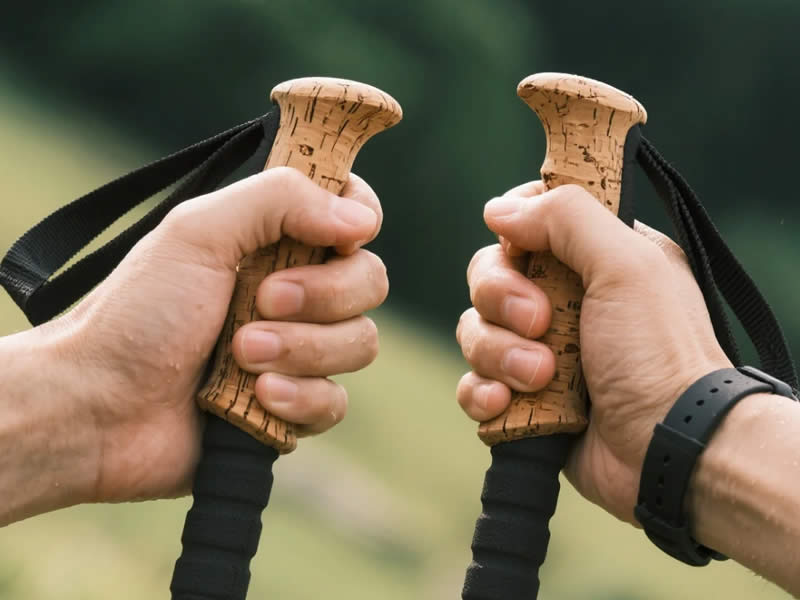
1. Cork – the natural grip solution
Cork is a natural material harvested from the bark of cork oak trees. It has been used for walking stick handles for centuries, and for good reason:
- Tacky when wet – Cork's microporous structure absorbs a thin layer of moisture, creating a non‑slip, tacky surface when your hands are damp. Unlike smooth materials, which become slick, cork's friction actually increases with light moisture. This is the key reason it excels in sweaty summer conditions.
- Moisture absorption – Cork absorbs sweat from your palms, reducing the "pooling" effect that can make foam grips slippery. It wicks moisture away from your skin, keeping your hands drier.
- Natural anti‑odor – Cork is naturally antimicrobial and resists the bacteria that cause unpleasant smells. In hot, sweaty conditions, this is a significant advantage over synthetic materials.
- Conforms to your hand – Over time, cork compresses and molds to the shape of your hand, creating a custom fit that reduces pressure points and improves grip comfort.
- Insulating – Cork provides some thermal insulation, keeping your hands cooler in summer (and warmer in winter).
2. EVA foam – lightweight but flawed for sweat
EVA (ethylene‑vinyl acetate) foam is a synthetic material commonly used on budget and mid‑range poles. Its advantages include:
- Lightweight – EVA is lighter than cork, making it a popular choice for ultralight poles.
- Soft and comfortable – When dry, EVA foam feels cushioned and comfortable in the hand.
- Inexpensive – EVA is cheaper to produce than cork, which is why it appears on budget poles.
However, for sweaty hands in summer, EVA foam has significant drawbacks:
- Becomes slippery when wet – EVA foam is relatively smooth. When sweat accumulates on the surface, it creates a slick film that reduces grip. You have to grip the handle harder to keep control, which increases fatigue.
- Absorbs sweat and odors – EVA foam is porous and absorbs sweat, but it does not wick it away. Over time, the foam can become saturated with sweat, leading to a permanent damp, unpleasant feel and a persistent smell that is hard to wash out.
- Lack of tackiness – Unlike cork, EVA foam does not become tacky when wet. Its friction coefficient drops when damp, making it less secure in humid conditions.
- Compresses over time – EVA foam can permanently compress and lose its cushioning, especially on the contact points where your palm rests.
3. Cork vs. EVA foam – a detailed comparison
| Feature | Cork | EVA Foam |
|---|---|---|
| Grip when wet | Tacky, secure | Slippery |
| Moisture management | Absorbs and wicks | Absorbs, but does not wick |
| Odor resistance | Natural antimicrobial | Prone to odor |
| Long‑term comfort | Molds to hand | Compresses and loses cushioning |
| Weight | Moderate | Light |
| Price | More expensive | Cheaper |
| Best for | Hot, humid, sweaty conditions | Cool, dry conditions |
4. Real‑world experience on UK summer trails
On a warm, humid day in the UK – which is increasingly common in summer – your hands will sweat. If you are using EVA foam grips, you may find yourself constantly adjusting your grip, wiping your hands, or feeling the pole slip in your palm. This can lead to blisters, calluses, and increased fatigue. With cork grips, the handle becomes slightly tacky, providing a secure hold that requires less grip effort. Your hands stay more comfortable, and you can focus on the trail rather than your grip.
5. Who should choose which?
- Choose cork if: You walk regularly in summer, you have sweaty hands, you value long‑term comfort and grip security, and you are willing to pay a small premium for the natural material. Cork handles are available on models like the Decathlon Forclaz MT900 (£55), Leki Makalu (£90–100), and Black Diamond Trail Back (£75–85).
- Choose EVA foam if: You walk primarily in cooler, dry conditions, you are on a tight budget, or you prefer the lighter weight of foam handles. EVA foam is common on budget poles like the Decathlon Forclaz MT100 (£25) and many Mountain Warehouse models.
6. Caring for cork handles
- Wipe clean – After a walk, wipe the cork with a damp cloth to remove sweat and dirt.
- Let dry naturally – Allow cork to air dry; do not place near direct heat.
- Sand occasionally – If the cork becomes smooth, lightly sand with fine (400‑grit) sandpaper to restore the natural texture.
- Protect from salt – Salt from sweat can dry out cork; rinse with fresh water after coastal walks.
7. Final verdict
For sweaty hands in summer, cork handles are clearly superior. Their natural tackiness when damp, moisture‑wicking properties, and antimicrobial characteristics make them the ideal choice for hot, humid conditions. EVA foam is lightweight and cheap, but its tendency to become slippery and absorb odors makes it a poor choice for sweaty summer walking. If you walk regularly in warm weather, spend a little extra on cork‑handled poles – it will significantly enhance your comfort and control. Your hands will thank you.




