




Do trekking poles with extended foam grips help on steep sections?
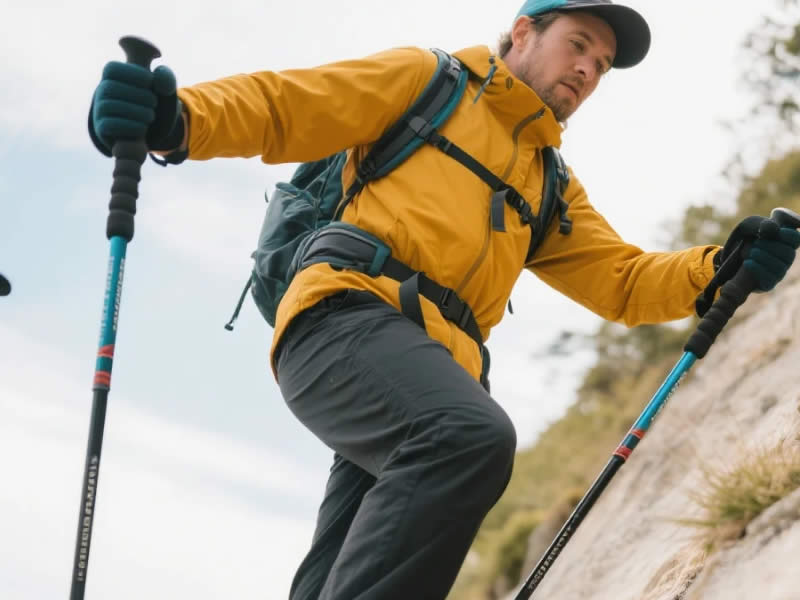
Yes – trekking poles with extended foam grips are very helpful on steep sections. They allow you to "choke up" (grip lower) on ascents, effectively shortening the pole for better leverage, and grip higher on descents for added reach and braking. This saves you from stopping to adjust the pole length on every slope change, keeping your rhythm steady and reducing fatigue. The foam material is also comfortable, sweat‑absorbing, and provides a secure hold in wet conditions. It is a practical feature that seasoned hillwalkers appreciate, especially on long, varied terrain where slopes change frequently. This article explains how extended foam grips work, why they are useful, and when they are worth the extra weight.
1. What are extended foam grips?
Most trekking poles have a grip section (usually cork or foam) that is about 15–20 cm long. Extended foam grips extend this section further down the shaft – often by an additional 10–20 cm – creating a longer, continuous foam surface that you can hold at different points.
The grip itself is made of EVA foam, which is lightweight, comfortable, and absorbs sweat. The extended section allows you to adjust your hand position without changing the pole's length, providing more versatility on varying terrain.
2. How they help on steep ascents
When climbing a steep hill, you want your poles to be shorter for better leverage. A shorter pole keeps your arm closer to your body, allowing you to push down more efficiently. With standard grips, you would need to stop and shorten the pole, then lengthen it again for the descent – a time‑consuming process on long, undulating trails.
With an extended foam grip, you can simply "choke up" – slide your hand down the foam grip to a lower position. This effectively shortens the pole by 5–15 cm, giving you the leverage you need for the ascent. You can then slide your hand back up for the descent, all without adjusting the pole's locking mechanism.
3. How they help on steep descents
On descents, you need longer poles for effective braking. A longer pole allows you to plant further ahead, creating a better braking angle and reducing the load on your knees. With a standard grip, you would need to lengthen the pole.
With an extended foam grip, you can slide your hand to the top of the grip (or just above it) to increase your reach. This effectively extends the pole by a few centimetres, giving you the extra length you need for braking without stopping to adjust.
4. When they are most useful
- Long, undulating trails – Where slopes change frequently and you would otherwise be stopping constantly to adjust pole length.
- Steep, sustained climbs – Where you need the leverage of a shorter pole for a prolonged period.
- Steep descents – Where you need the reach of a longer pole for effective braking.
- Tiring hands – The foam provides a comfortable, non‑slippery surface that reduces hand fatigue.
5. Where they are less useful
- Flat, uniform terrain – Where you do not need to adjust hand position.
- Very technical, rocky ground – Where you may prefer to grip the pole directly and not rely on the foam extension.
- Extreme cold – Foam can become hard and less grippy in freezing temperatures (cork handles are better for winter).
6. Extended foam vs. cork grips
- Foam – Lightweight, absorbs sweat, provides cushioning, and is generally cheaper. Extended foam grips are common on budget and mid‑range poles.
- Cork – Natural material, becomes tacky when wet, more durable, and more expensive. Extended cork grips are rarer, but some premium models offer them.
For most UK conditions, extended foam grips are perfectly adequate and offer a good balance of comfort and cost.
7. Are they worth it?
- If you walk on hilly terrain – Yes. The ability to adjust hand position without stopping saves time and energy.
- If you are a frequent walker – Yes. The extended grip reduces the need to constantly adjust pole length, making your walk smoother.
- If you are on a budget – Many affordable poles (e.g., Decathlon Forclaz MT900, Mountain Warehouse Extreme) include extended foam grips as standard – it does not add much to the price.
- If you primarily walk on flat terrain – The benefit is marginal. You may not notice the difference.
8. Practical tips for using extended foam grips
- Experiment with hand positions – On a steep ascent, hold the pole at the lowest comfortable point on the foam. On a descent, hold it higher.
- Keep the pole length constant – The advantage of extended grips is that you can keep the pole at a fixed length and just move your hand.
- Check the foam for wear – Over time, foam can compress and lose its cushioning. Replace the pole or grip if the foam becomes flat.
- Rinse after muddy walks – Foam absorbs dirt and sweat; rinse with water and air dry.
9. Popular poles with extended foam grips
- Decathlon Forclaz MT900 – The UK's best‑selling pole. Features a comfortable extended foam grip above the cork handle, allowing for versatile hand placement.
- Mountain Warehouse Extreme – Budget‑friendly, with a full‑length foam grip.
- Leki Makalu – Has a short foam extension above the cork grip, offering some versatility.
- Black Diamond Trail Back – Features a foam/cork hybrid grip with a short foam extension.
10. Final verdict
Yes – trekking poles with extended foam grips are genuinely helpful on steep sections. They allow you to quickly adjust your hand position for ascents and descents without stopping to alter the pole length. This saves time, maintains your rhythm, and reduces fatigue on undulating trails. The foam material provides a comfortable, sweat‑absorbing surface that improves grip security in wet conditions. For most UK walkers who tackle hilly terrain, extended foam grips are a worthwhile feature – and they are found on many affordable, popular poles like the Decathlon Forclaz MT900. If you walk on flat terrain, the benefit is less noticeable, but for hillwalkers, they are a small feature that makes a big difference.




