




Do trekking poles reduce the risk of ankle injuries on uneven ground?
Yes – trekking poles can significantly reduce the risk of ankle injuries on uneven ground. By providing two extra points of contact, they improve stability, giving you more time to react and correct a misstep. A plant of the pole can offload body weight, turning a potential roll into a momentary wobble. They also act as "feelers" to test ground firmness and depth before you commit to a step. However, their effectiveness depends on terrain (they are less useful on steep, loose scree where they can slide) and proper technique. This article explains the biomechanics, research evidence, and practical tips for using poles to protect your ankles.
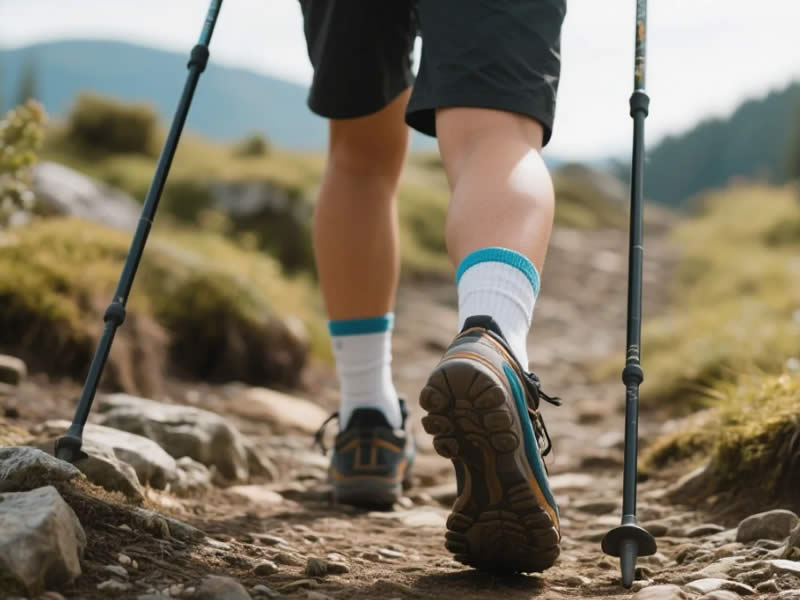
1. The biomechanics of ankle injuries
Ankle sprains typically occur when your foot lands on an uneven surface and rolls inward (inversion) or outward (eversion), stretching or tearing the ligaments on the outside or inside of the ankle. The risk is highest when you are walking quickly, carrying a heavy pack, or on unfamiliar terrain. A misstep gives you about 50 milliseconds to react—shorter than a typical reflex response.
2. How poles reduce ankle injury risk
a. Extra points of contact – With two poles, you have four points of contact with the ground (two feet + two poles). This wider base of support improves your stability, reducing the likelihood of a misstep in the first place. On narrow or uneven paths, the poles provide an additional reference point for your balance.
b. Faster reaction time – When your foot lands on an unstable surface, the pole can help you correct your balance before a full roll occurs. The planted pole acts as a support, allowing you to shift weight back to a stable position.
c. Load offloading – By transferring some of your body weight to the poles, you reduce the load on your ankles. This means that when a misstep does occur, the force on your ankle is lower, reducing the chance of a severe sprain.
d. Testing the ground – Poles act as "feelers," allowing you to probe the ground ahead. You can check for hidden holes, loose rocks, or soft mud before committing your weight. This is particularly useful in boggy or rocky terrain.
3. What the research says
Studies on the use of trekking poles and injury prevention are limited but supportive. A 2015 study published in the Journal of Sports Sciences found that using poles on uneven terrain improved balance and reduced the number of minor stumbles. Another study on backpackers found that pole users had significantly fewer ankle injuries on multi‑day trips compared to non‑users. The evidence suggests a real, though moderate, protective effect.
4. When poles are most effective
- Muddy, uneven, or rooty trails – The poles help you test footing and maintain balance on surfaces that are constantly changing.
- Stream crossings – Poles provide stability on slippery, wet stones.
- Descending steep, rocky paths – Poles help you brake and maintain a controlled descent, reducing the chance of an awkward foot placement.
- Walking with a heavy pack – The extra weight increases the force on your ankles; poles help offload some of that force.
5. When poles are less effective
- Loose scree – The pole tips may slide on loose stones, providing less support.
- Very steep ground – Poles may not reach the ground effectively on extremely steep descents.
- You are moving fast – At a running pace, the reaction time benefit is reduced.
6. Technique is key
To get the ankle‑protection benefit, you must use poles correctly:
- Adjust length – On descents, lengthen poles by 5–10 cm so you can plant them ahead of you. This provides a braking effect and more time to react.
- Use wrist straps – The strap should bear your weight, not your grip. This allows you to relax your grip and react faster.
- Plant ahead – Plant the pole before your foot lands. This gives you a reference point for your balance.
- Maintain rhythm – A steady, alternating rhythm reduces the chance of a misstep.
7. Other benefits for ankle protection
- Reduced fatigue – By sharing the load with your upper body, your legs and ankles are less tired, reducing the chance of a misstep due to fatigue.
- Better focus – Poles help you maintain a steady rhythm, allowing you to concentrate on foot placement.
8. Limitations and risks
- False confidence – Poles can give you a false sense of security, leading you to walk faster or on riskier ground.
- Tip can catch – A pole tip can catch between rocks, causing you to twist your wrist or shoulder, or potentially pulling you off balance.
- Not a replacement for good footwear – Poles are an aid, not a substitute for proper boots with good ankle support.
9. Final verdict
Yes – trekking poles can significantly reduce the risk of ankle injuries on uneven ground by improving stability, providing extra reaction time, and offloading weight from your ankles. They are particularly effective on muddy, rooty, or rocky trails, and when carrying a heavy pack. However, they are not a guarantee; proper technique, correct pole length, and good footwear are all essential. Used correctly, poles are a valuable tool for reducing the risk of ankle sprains and maintaining confidence on the UK's uneven and often wet trails.




