




Do carbide tips last longer than steel tips on muddy paths?
Yes – tungsten carbide tips last significantly longer than steel tips on muddy paths. Carbide is much harder (8.5–9 on the Mohs scale, compared to around 6 for steel), making it highly resistant to abrasion from the fine grit, sand, and quartz particles suspended in mud. Steel tips wear smooth quickly on gritty or stony mud, losing their grip and requiring replacement. For muddy UK trails, choose carbide – it holds its edge longer, saving you money on replacements and keeping your poles effective for far more miles. Replace carbide tips when they become blunt, but you'll do so far less often than with steel. This article explains the material science, real‑world performance, and practical advice for choosing tips for muddy conditions.
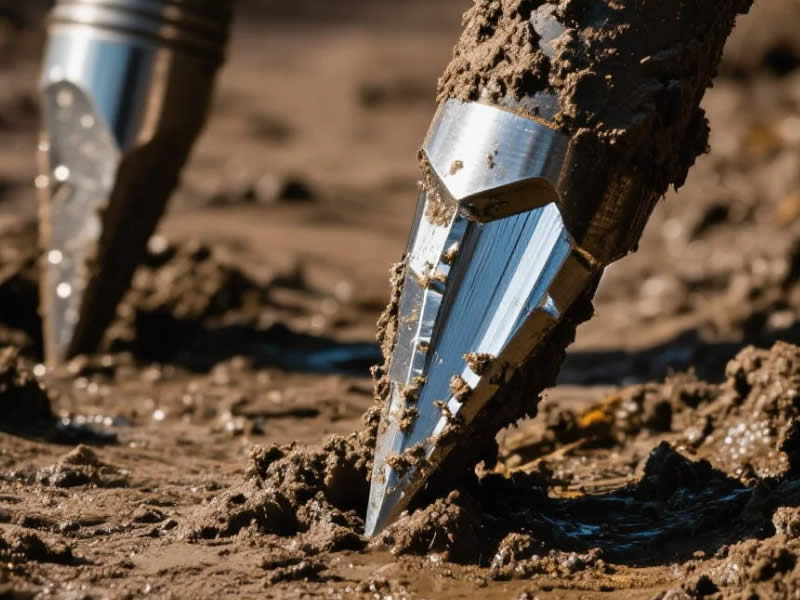
1. The material science – carbide vs. steel
- Tungsten carbide is an extremely hard ceramic‑like material, typically 8.5–9 on the Mohs hardness scale (diamond is 10). It is also highly wear‑resistant and retains a sharp edge even after contact with abrasive materials.
- Steel used in tips is usually a hardened tool steel, around 6–7 on the Mohs scale. While durable, it is significantly softer than carbide and wears down much faster when in contact with abrasive particles.
2. What makes muddy paths abrasive?
Mud itself is not abrasive. However, mud on UK trails contains:
- Quartz and grit – fine particles of rock and sand that act like sandpaper.
- Stone fragments – small pebbles and stones that scratch and wear down softer materials.
- Peat particles – less abrasive, but still cause wear over time.
When you plant a pole in muddy ground, the carbide or steel tip is dragged through this abrasive mixture. Over hundreds of plants, the wear is significant.
3. Real‑world performance difference
- Steel tips – Typically last 100–300 miles on muddy terrain before becoming noticeably blunt. They lose their grip, making the pole less effective on hard or uneven surfaces. Steel tips are often non‑replaceable on budget poles, so once worn, the entire pole is compromised.
- Carbide tips – Typically last 500–1000+ miles on similar terrain. The tip retains its sharp edge far longer. They are almost always replaceable, allowing you to fit new tips when needed.
4. Why carbide is better for muddy UK trails
- Extended lifespan – Carbide tips last 3–5 times longer than steel tips on abrasive ground.
- Better grip – A sharp carbide tip bites into hard ground, rock, and roots far better than a worn steel tip.
- Replaceable – Most carbide tips are user‑replaceable; steel tips on budget poles are often not.
- Cost‑effective – While carbide tips cost more initially (£10–15 per pair vs. £5–8 for steel), they last far longer, making them cheaper per mile.
5. Common misconceptions
- "Steel is stronger than carbide" – Steel may be tougher (more resistant to impact), but it is not harder. For abrasion resistance, hardness matters more.
- "Mud is soft, so wear is minimal" – The abrasive particles in mud are the culprit, not the mud itself. On wet, gritty terrain, wear is significant.
6. How to tell when to replace your tips
- Carbide tip – Replace when the sharp point becomes rounded or flattened. The carbide should be clearly visible; if the tip is chipped or missing, replace immediately.
- Steel tip – Replace (or replace the pole) when the tip is no longer sharp. A blunt steel tip will skid on hard surfaces.
7. Are there any downsides to carbide?
- Brittleness – Carbide is harder but also more brittle than steel. A sharp impact on a rock can chip or crack a carbide tip. However, this is rare in normal use.
- Cost – Carbide tips are more expensive than steel tips, but the longer lifespan makes them more economical over time.
8. Practical advice for muddy UK trails
- Choose carbide – For any regular walking on muddy, gritty terrain, carbide is the clear choice.
- Carry spare tips – Keep a spare pair of carbide tips in your repair kit. They are lightweight and easy to fit.
- Inspect tips regularly – Before each walk, check the tip condition. Replace if blunt.
- Clean tips after walks – Mud and grit can cause wear; rinse with water.
9. Final verdict
Carbide tips last significantly longer than steel tips on muddy paths – typically 3–5 times longer. The superior hardness and wear resistance of tungsten carbide make it the ideal choice for the abrasive, gritty mud found on UK trails. While carbide tips cost more, they save you money in the long run by reducing the frequency of replacements. For any walker who regularly uses poles on muddy, stony, or gritty terrain, carbide tips are the better investment. Replace them when blunt, and your poles will perform effectively for thousands of miles.




