




What are carbide tips and how long do they last?
Carbide tips are small, hard metal points made from tungsten carbide, fitted to the end of trekking poles. They provide excellent grip on rock, mud, and roots by biting into small surface irregularities, delivering far better traction than steel or rubber tips. Tungsten carbide is extremely hard (8.5–9 on the Mohs scale, just below diamond) and highly wear‑resistant, typically lasting 300–1000+ miles depending on the terrain. Abrasive surfaces (gritstone, granite, chalk) wear them faster; mud and grass are gentler. They are also replaceable on most quality poles (usually around £10–15 per pair), allowing you to extend the life of your poles rather than replacing them entirely. This article explains what carbide tips are, how long they last, and how to get the most out of them.
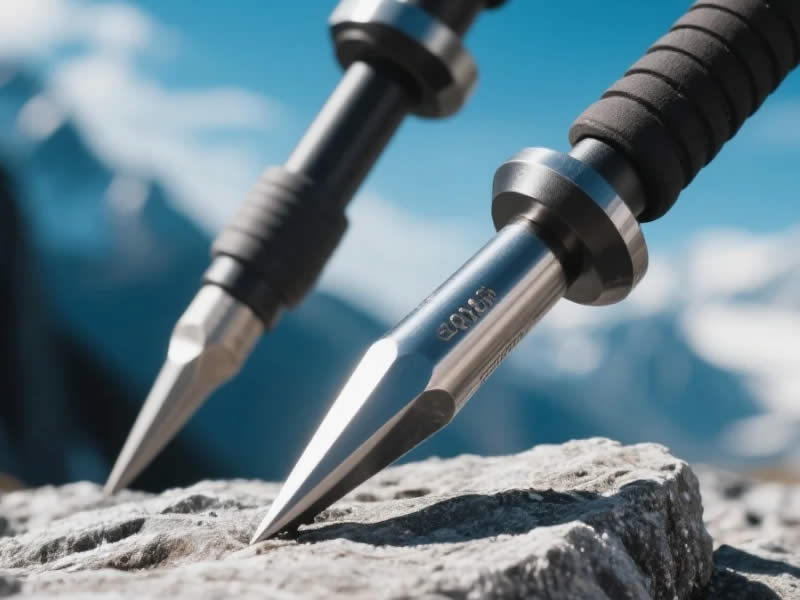
1. What are carbide tips?
Carbide tips (often called tungsten carbide tips) are the small, pointed metal parts at the very end of a trekking pole. They are made from tungsten carbide, a composite material of tungsten and carbon that is exceptionally hard and wear‑resistant. The tip is usually press‑fitted or threaded into a metal ferrule (the sleeve that holds the tip) at the base of the pole. They are designed to:
- Grip on rock – The sharp point penetrates micro‑cracks and small irregularities in the rock surface, providing traction.
- Penetrate mud and soil – The tip sinks into soft ground, giving you a stable plant.
- Bite into roots – The sharp point grips the fibrous surface of roots, preventing the pole from sliding.
2. How long do carbide tips last?
The lifespan of a carbide tip depends heavily on terrain, frequency of use, and walking style. Typical estimates:
| Terrain | Lifespan (miles) | Lifespan (km) |
|---|---|---|
| Mud, grass, soft trails | 800–1000+ miles | 1300–1600+ km |
| Mixed terrain (some rock) | 500–800 miles | 800–1300 km |
| Abrasive rock (gritstone, granite, chalk) | 300–500 miles | 500–800 km |
| Tarmac / road walking | 200–300 miles (if used without rubber tips) | 320–480 km |
3. Factors that affect tip life
- Rock type – Hard, abrasive rocks like gritstone, granite, and quartzite wear tips much faster than softer rocks like limestone or sandstone.
- Walking style – Walkers who drag their poles or plant heavily may wear tips faster.
- Use on road – Tarmac and concrete are abrasive. Use rubber tips to protect carbide on road sections.
- Tip quality – Genuine branded carbide tips (Leki, Black Diamond) generally last longer than generic ones.
4. When to replace carbide tips
Replace your tips when:
- The sharp point becomes rounded – A blunt tip reduces grip on rock and roots.
- The carbide is chipped or cracked – This can happen after a side impact.
- The tip is worn down to the ferrule – The metal sleeve is exposed.
A blunt tip may still work on soft ground, but it will be noticeably less effective on rock and hard surfaces. For safety on steep descents, replace tips as soon as you notice a loss of grip.
5. How to check tip condition
- Visual inspection – Look at the tip from the side. It should have a distinct point. If it appears rounded or flat, it is time to replace.
- Touch test – Run your finger over the tip (carefully!). A sharp tip will feel pointed; a worn tip will feel smooth.
- Plant test – Plant the pole on a hard surface. If it skids or fails to grip, the tip is worn.
6. How to replace carbide tips
Most quality poles have user‑replaceable tips. The process is simple:
- Remove the old tip – Grip the tip with pliers and twist while pulling (some are push‑fit; others are threaded).
- Clean the ferrule – Remove any debris or old glue.
- Insert the new tip – Push the new tip into the ferrule (or screw it in). Ensure it is seated fully.
- Test – Plant the pole on a hard surface to ensure the tip is secure.
Replacement tips are widely available from Decathlon, Leki, Black Diamond, and online retailers. Cost: around £10–15 per pair.
7. How to extend tip life
- Use rubber tips on road sections – This is the single most effective way to extend carbide life.
- Avoid scraping on rocks – Plant deliberately rather than dragging the tip.
- Carry spare tips – For multi‑day treks, spare tips are lightweight and can save you mid‑trip.
- Rinse after muddy walks – Mud and grit can accelerate wear; rinse with water.
8. Final verdict
Carbide tips are small, replaceable tungsten carbide points that provide essential grip on rock, mud, and roots. They typically last 300–1000+ miles, depending on terrain, with abrasive surfaces wearing them faster. When blunt or chipped, replace them promptly—a worn tip reduces stability and can be a safety hazard on steep ground. For regular walkers, a spare pair of tips is a cheap and lightweight addition to your repair kit. With proper care and timely replacement, your carbide tips will keep your poles performing effectively for thousands of miles.




