




Can trekking poles be used as emergency tent poles in the Scottish Highlands?
Yes – trekking poles can be used as emergency tent poles in the Scottish Highlands, provided they are adjustable and reach at least 120–130 cm (the typical height for a single‑pole pyramid shelter or a tarp). This is a common practice among wild campers who use lightweight shelters designed to accept trekking poles (e.g., pyramid tents, mids, tarps). For a standard dome tent with a broken pole, you can use a trekking pole as a temporary replacement by lashing it to the broken section or placing it under the flysheet to prop it up. Use the wrist straps or guy lines to secure it. A 7075 aluminium pole is safer than carbon for this purpose – carbon can snap under the lateral tension created by a taut flysheet. Always carry a small repair kit (e.g., tape, cord, a spare pole section) and practice the technique at home so you can do it quickly and confidently in foul Highland weather. This article explains the techniques, limitations, and practical considerations for using trekking poles as emergency tent supports in the Scottish Highlands.
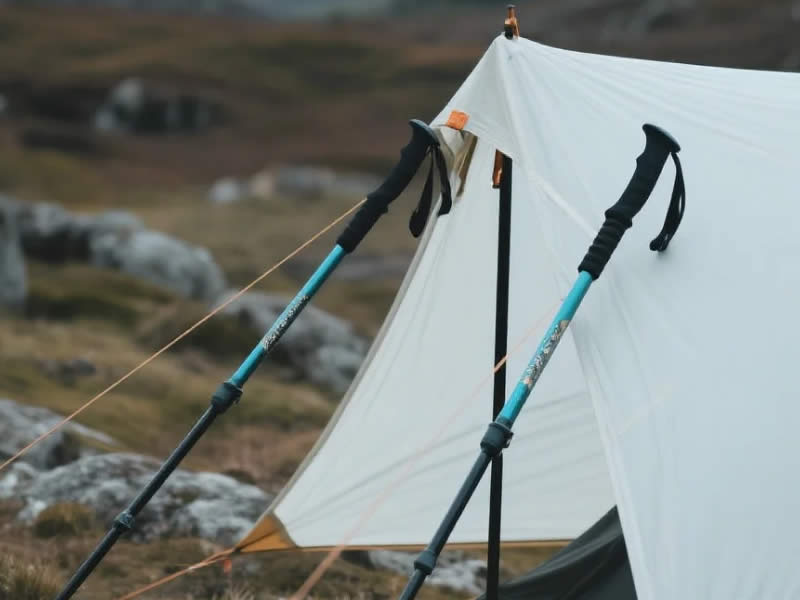
1. When would you need to use a trekking pole as a tent pole?
- Broken tent pole – The most common scenario. A fiberglass or aluminium pole can snap in high winds, especially if it is older or has been stressed.
- Lost pole section – You may drop a pole section on a remote section of the Highlands, leaving you with a one‑sided tent.
- Tent pole failure in winter – Cold temperatures can make plastic components brittle, leading to failure.
- Ultralight shelter – If you are using a trekking‑pole tent (e.g., a pyramid shelter), the trekking poles are the tent poles by design.
2. Which poles are suitable?
- Adjustable – The pole must be adjustable to the correct height for your tent. Most tents require a height of 115–130 cm for the peak. Fixed‑length poles may not reach the required height.
- Aluminium – 7075 aluminium is the best choice. It bends under extreme force but rarely breaks, and you can often straighten a bent section.
- Carbon – Carbon poles are lighter but more brittle. Under the lateral tension of a guyed‑out tent, they can splinter. If you only have carbon poles, use them carefully and avoid over‑tensioning the fly.
- Length – Ensure your pole can reach the tent's required peak height. Most trekking poles extend to 135–145 cm, which is sufficient.
3. How to set up a trekking pole as a tent pole
a. Single‑pole tents (pyramid, mid, tarp) – Insert the pole tip into the peak grommet (or webbing pocket). Extend the pole to the correct height. Stake out the corners, then tension the guylines. The pole will be under compression; ensure it is locked securely.
b. Dome tent replacement – If a section of a dome tent's pole breaks, you can use a trekking pole as a temporary replacement:
- Lash it – Place the trekking pole alongside the broken section and lash them together with cord, tape, or zip ties. The pole will act as a splint.
- Prop it – Alternatively, place the trekking pole vertically under the flysheet at the point of failure, propping up the tent fabric. Guy out the pole to keep it stable.
c. Using two poles as an A‑frame – For a larger shelter, you can use two poles to create an A‑frame support. Place the poles at the two ends of the ridge line, with the tips in the ground and the handles supporting the ridge.
4. Securing the pole
- Use the wrist strap – Loop the wrist strap over a tent peg or guy line to prevent the pole from slipping.
- Guy out the pole – Attach a guy line to the pole (e.g., around the grip) and stake it out to prevent lateral movement.
- Protect the tip – Place a rubber tip cover over the carbide tip to prevent it from abrading the tent fabric.
5. Limitations
- Lateral strength – A trekking pole is not as strong as a dedicated tent pole under lateral forces. In high winds, a trekking pole may flex or bend.
- Height – The pole must be the correct height. If it is too short, the tent will sag; too long, it will strain the fabric.
- Tip damage – The carbide tip can damage the tent's grommet or fabric over time. Use a rubber cover.
6. Practice before you need it
On a calm day in the garden or a local park, practice setting up your tent using only your trekking poles. This will familiarise you with the technique and highlight any issues (e.g., pole length, stability) before you are in a remote Highland bothy or on a windy ridge.
7. Other emergency uses
- Tarp support – Use a single pole to prop up a tarp as a windbreak or cooking shelter.
- A‑frame for a bivy – Use two poles to create a small A‑frame over a bivy bag.
8. Repair kit essentials
- Duct tape – For splinting and reinforcing.
- Guy line – To secure the pole and tent.
- Spare pole section – If your tent has a common pole size, carry a short section as a splint.
- Rubber tip covers – To protect the tent fabric.
9. Final verdict
Yes – trekking poles can be used as emergency tent poles in the Scottish Highlands, but they are a temporary solution, not a permanent replacement for a dedicated tent pole. They work best with lightweight, trekking‑pole‑compatible shelters (e.g., pyramid tents, tarps). For dome tents, they can be used as a splint or prop. Use 7075 aluminium poles (not carbon), ensure the length is correct, and secure the pole with guylines and straps. Practice the technique at home, and carry a repair kit. With the right preparation, a trekking pole can save your shelter – and your night's sleep – in a Highland emergency.




