




Should I plant both poles together or alternately on flat sections?
Plant alternately on flat sections. The diagonal stride – left pole with right foot, right pole with left foot – is the most efficient technique on flat ground. It mimics your natural arm swing, maintains a steady rhythm, and spreads the workload across your body, reducing fatigue over long miles. Double planting (both poles together) is reserved for steep climbs (as a boost), braking on descents, or testing ground stability on uncertain terrain. For long flat stretches on trails like the South Downs Way or the Thames Path, get into a smooth, alternating rhythm and let the poles carry you forward. This article explains why the alternating stride is most efficient, when double planting is useful, and how to master both techniques.
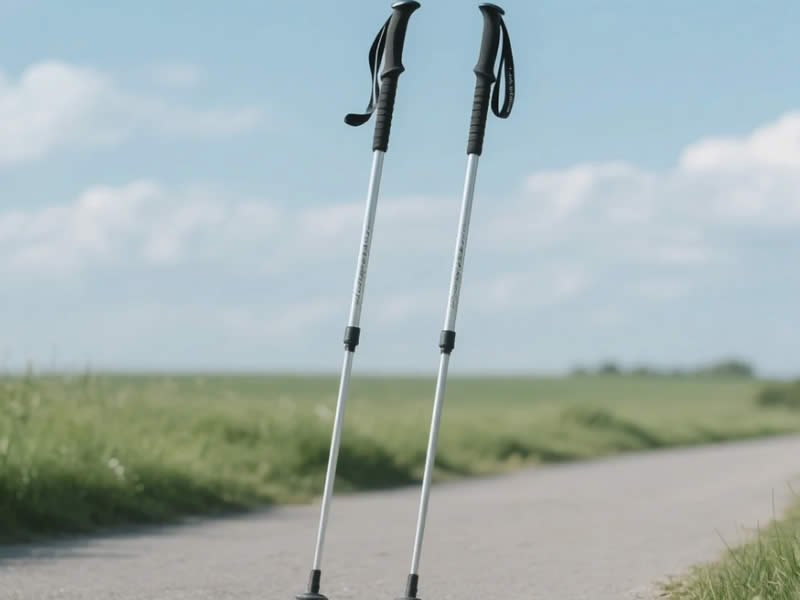
1. Why the alternating stride is best on flat sections
On flat ground, walking without poles involves a natural arm swing: your right arm swings forward with your left leg, and your left arm with your right leg. The alternating pole plant simply extends this natural movement. Here is why it works so well:
- Efficiency – By planting the pole as the opposite foot strikes the ground, you transfer energy through your core and upper body, reducing the work your legs have to do. This spreads the load across more muscle groups, reducing leg fatigue on long, flat sections.
- Rhythm – The alternating stride creates a steady, rhythmic cadence. A consistent rhythm reduces the mental effort of walking and helps you maintain a steady pace over long distances.
- Balance – With an alternating plant, one pole is always on the ground, providing continuous support. This improves stability and reduces the risk of tripping on small obstacles.
- Natural movement – It mimics your body's natural walking pattern, so it feels intuitive and requires less conscious effort.
2. How to execute the alternating stride
- Plant the left pole as your right foot steps forward.
- Plant the right pole as your left foot steps forward.
- Push back – As you plant, push down and slightly backward through the wrist strap. This creates a small forward propulsion.
- Keep your grip relaxed – The wrist strap does the work, not your grip. Your hands should be relaxed, with a light hold on the handle.
- Maintain a steady cadence – Aim for a consistent rhythm, about 60–70 plants per minute per pole. You can count "left, right, left, right" to find your pace.
3. When to use double planting
Double planting (planting both poles together) is not recommended for flat sections. It is a technique for specific situations:
- Steep ascents – On very steep slopes, planting both poles together and pushing down gives you a powerful upward boost.
- Steep descents – On steep, slippery descents, double planting provides maximum braking and stability.
- Testing ground – When crossing uncertain ground (mud, bogs, or deep puddles), planting both poles ahead allows you to test the ground before committing your weight.
- Stream crossings – For wading streams, the tripod method (two poles + one foot) is effectively a double plant with a step.
4. Why double planting on flat sections is inefficient
- Stops your rhythm – Double planting requires a pause between plants, breaking your natural walking rhythm.
- Uses more energy – You lift and plant both poles simultaneously, which is less economical than the smooth alternating motion.
- Less stable – During the moment when both poles are off the ground, you have no pole support, reducing stability.
- Unnatural – Double planting does not mimic your natural arm swing, so it requires more conscious effort.
5. Common mistakes on flat sections
- Planting too far ahead – Reaching too far forward with the pole wastes energy and can disrupt your rhythm. Plant the pole close to your body, level with your heel.
- Gripping too tightly – A tight grip fatigues your forearms and reduces efficiency. Use the wrist strap to transfer load.
- Not using the strap – If you are not using the wrist strap, you are missing the main benefit of the alternating stride.
- Irregular rhythm – An inconsistent pace reduces efficiency. Focus on a steady cadence.
6. Tips for flat sections
- Pole length – Set your poles so your elbows are at 90° when the tip is on the ground. This is your flat‑ground length.
- Relax your shoulders – Keep your shoulders relaxed and your back straight. The power should come from your core and back, not your arms.
- Use rubber tips – On tarmac or hard paths (e.g., sections of the Thames Path), use rubber tip protectors to reduce noise and save your carbide tips.
- Take breaks – Even with good technique, take occasional breaks to rest your arms and shake out your hands.
7. Practice the alternating stride
Before a long trail, practice the alternating stride on a flat, gentle path. Count your steps and plants until the rhythm becomes automatic. Within a few miles, it will feel completely natural.
8. Final verdict
On flat sections, plant alternately – left pole with right foot, right pole with left foot. This diagonal stride is the most efficient technique, mimicking your natural arm swing, maintaining a steady rhythm, and spreading the load across your body. Double planting is reserved for steep ascents, descents, and testing uncertain ground. Master the alternating stride, and you will walk further with less fatigue, making flat sections a breeze on even the longest trails.




