




How to use trekking poles with thick winter gloves or mittens?
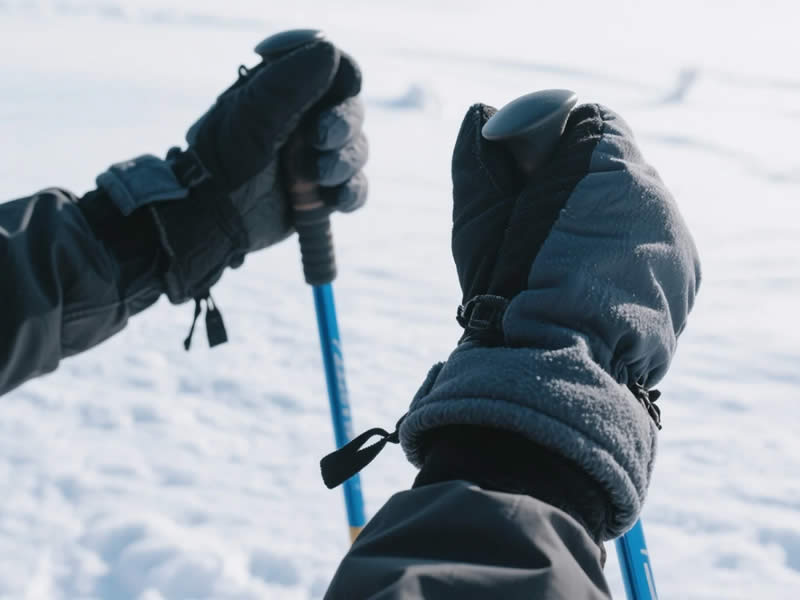
Using trekking poles with thick winter gloves or mittens is not difficult, but it does require some adjustments to your equipment and technique. The main challenges are operating locks, adjusting straps, and maintaining grip with reduced dexterity. The solution is to choose lever locks instead of twist locks, widen your wrist straps to fit over gloves, and use larger grips (foam or cork) for a secure hold. On icy ground, plant the pole vertically for better bite. Practice clipping and unclipping at home before your trip—fumbling with cold hands wastes energy and can be dangerous in exposed winter conditions. Here is a detailed guide to using trekking poles effectively with winter gloves or mittens.
1. Choosing the right locking system for winter
The type of lock on your poles makes a big difference when you are wearing thick gloves.
- Lever locks (cam locks) – These are much easier to operate with gloves. The lever is large and can be flipped with a thumb or finger, even through thick insulation. Examples: Leki SpeedLock, Black Diamond FlickLock, Decathlon cam locks.
- Twist locks – These require a twisting motion with fine motor control. With thick gloves, you may not be able to feel the twist, and the lock may slip. For winter use, avoid twist locks.
2. Adjusting wrist straps for gloves
Traditional wrist straps can be difficult to thread when wearing thick gloves or mittens.
- Widen the strap – Before putting on your gloves, loosen the strap so it is wide enough to slip over your hand with the glove on. You can tighten it slightly once your hand is in position.
- Use Leki trigger straps – The trigger system clips onto a pad that sits across the back of your hand. You can adjust the width of the strap to fit over a glove, and the clip is easy to operate with a thumb, even with thick gloves.
- Practice – Practice adjusting your straps at home with your gloves on. It takes a few tries to get the feel of it.
3. Grip and control with thick gloves
When wearing thick gloves, you lose tactile sensitivity—you cannot feel the grip as precisely. This can affect your control, especially on rough terrain.
- Larger grips – Foam or cork grips are larger and easier to hold with gloves than narrow rubber grips. They also provide better insulation.
- Hold the grip further up – On steep descents, hold the grip further up (near the top) to reduce the need for fine control.
- Use the wrist strap for load transfer – On winter terrain, your grip should be relaxed, and the strap should take the load. This is even more important with gloves, as gripping too tightly can strain your hands.
4. Adjusting pole length with gloves
Adjusting pole length on the trail with thick gloves can be tricky. Use these techniques:
- Lever locks – Flip the lever, slide the section, and close it. You can feel the lock click into place even through thick gloves.
- Pre‑set before the walk – If you know the terrain, set your poles to the appropriate length before you start the day. For mixed terrain, use a length that works for both ascents and descents.
- Carry a hex key – If the lever lock loosens, use a hex key to tighten it—you can do this without removing your gloves.
5. Handling poles in deep snow
In snow, poles can get stuck or sink deep. Here is how to manage:
- Fit snow baskets – Large snow baskets prevent the pole from sinking deep into the snow, making it easier to pull out.
- Pull straight up – If the pole is stuck, pull it straight up—do not twist or lever it, as this can bend the shaft.
- Shorten on steep ascents – On deep snow, shorten your poles to keep your hands low and your centre of gravity stable.
6. Grip issues with mittens
Mittens keep your hands warmer than gloves but offer less dexterity. If you are using mittens:
- Widen the strap – Ensure the strap is loose enough to slide over the mitten.
- Use a larger grip – A thick foam or cork grip is easier to hold with a mitten than a thin rubber grip.
- Keep mittens dry – Wet mittens lose insulation. Use waterproof over‑mitts if conditions are wet.
7. General tips for winter pole use
- Practice at home – Before heading into the winter hills, practice your pole adjustments, strap fitting, and clipping/unclipping with your gloves on. This will save time and frustration on the trail.
- Keep gloves dry – Damp gloves are cold and stiff. If they get wet, change into a dry pair at a rest stop.
- Use a wrist loop – Even with gloves, keep the wrist strap attached to your hand. In deep snow, dropping a pole is frustrating.
- Carry spare gloves – If your gloves get wet, having a spare pair is essential.
- Lubricate locks – In very cold conditions, locks can stiffen. A tiny drop of silicone spray can keep them smooth.
8. Winter-specific technique
- Plant vertically – On icy ground, plant the pole vertically (straight down) to give the carbide tip maximum bite.
- Double plant on descents – On steep, icy descents, plant both poles together and push down to brake.
- Shorten on ascents – On snow‑covered ascents, shorten your poles for better leverage.
- Test the ground – Use the pole to test snow depth and ice firmness before stepping.
9. Final verdict
Using trekking poles with thick winter gloves or mittens is entirely possible with the right equipment and technique. Choose lever locks, adjust your straps to fit over gloves, and use larger grips for a secure hold. Practice adjustments at home so you can do them quickly and confidently on the trail. On icy ground, plant vertically and use a double plant for braking. With a little preparation, you can use your poles effectively all winter—keeping your hands warm and your balance secure.




