




How to remove rust from steel components of trekking poles?
Rust on steel components—such as screws, locking mechanisms, and tip ferrules—is not just unsightly; it can compromise the function of your poles. Steel rusts when exposed to moisture and oxygen, especially in the damp conditions common on UK trails. Fortunately, rust can be removed with simple, gentle methods that won't damage the surrounding aluminium or plastic parts. Here is a comprehensive guide to identifying, removing, and preventing rust on your trekking poles.
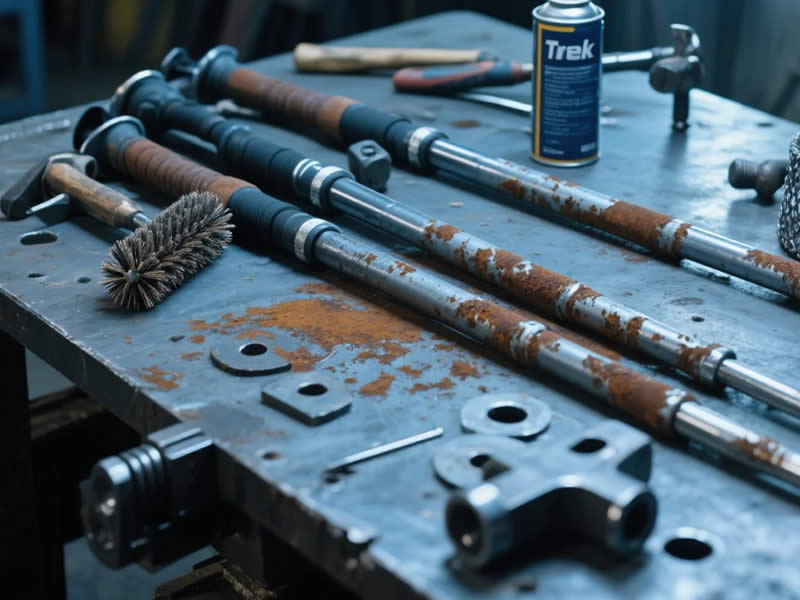
1. Identifying which parts are steel
Most trekking poles are made primarily of aluminium or carbon fibre. The steel components are usually:
- Screws and hex bolts – Used on lever locks.
- Tip ferrules – The metal collar holding the carbide tip (some are steel, some aluminium).
- Internal expander parts – In twist‑lock mechanisms.
- Springs – In anti‑shock systems.
Aluminium does not rust in the same way—it oxidises to a dull grey or white powder, which is harmless and can be wiped off. Steel rusts as a reddish‑brown flaky corrosion.
2. Gentle removal methods – step by step
a. White vinegar soak – Vinegar is a mild acid that dissolves rust without damaging the underlying steel or the surrounding coatings.
- Remove the steel part – If possible, unscrew the part (e.g., a hex bolt) and soak it in white vinegar for 1–2 hours.
- Scrub – Use a wire brush (brass or nylon) or fine steel wool to scrub off the loosened rust. For stubborn rust, soak overnight.
- Rinse and dry – Rinse with water and dry thoroughly.
- Lubricate – Apply a tiny drop of silicone spray or light oil to the threads to prevent further rust.
b. Baking soda paste – For parts that cannot be removed.
- Mix – Combine baking soda with a little water to form a thick paste.
- Apply – Spread the paste over the rusty area and leave for 1–2 hours.
- Scrub – Use a small brush (old toothbrush) to scrub away the rust.
- Rinse – Wipe with a damp cloth and dry.
c. WD‑40 – A penetrating oil that can help loosen rust.
- Spray – Apply WD‑40 to the rusty area and let it sit for 10–15 minutes.
- Scrub – Use a brass brush or steel wool to scrub off the rust.
- Wipe – Clean with a cloth and dry thoroughly.
- Note – WD‑40 is a solvent, not a lubricant; after using it, apply a proper lubricant (silicone spray) to the threads.
d. Fine‑grit sandpaper – For stubborn rust spots.
- Use 400‑grit or finer – Sand gently to remove the rust. Be careful not to damage the surrounding aluminium or anodised coating.
- Finish – After sanding, apply a rust‑inhibiting oil to the steel surface.
3. What to avoid
- Acids (e.g., hydrochloric acid) – Will damage aluminium and plastic parts.
- Abrasive tools on aluminium – Steel wool can scratch aluminium shafts. Use nylon or brass brushes on aluminium surfaces.
- Soaking whole poles – Never immerse the entire pole in vinegar or water – moisture can get inside the locking mechanisms.
4. Preventing rust
- Dry thoroughly after wet walks – Extend the poles and wipe down all metal parts.
- Lubricate threads – Apply a tiny drop of silicone spray or light machine oil to steel threads and screws periodically.
- Store in a dry place – Do not store poles in a damp garage or shed.
- Rinse after coastal walks – Saltwater is highly corrosive. Rinse poles with fresh water and dry.
5. When to replace rather than clean
- If the rust is deep and pitting – The structural integrity is compromised.
- If the screw threads are stripped – Rust can weaken threads.
- If the rust is on a critical load‑bearing component – Replace the part.
6. Where to buy replacement steel parts
- Decathlon – Forclaz replacement bolts and screws.
- Adventure Sport – Leki and Black Diamond genuine parts.
- Amazon UK – Generic screws and bolts (check thread size).
7. Final verdict
Rust on trekking pole steel components is common but easily treatable with gentle methods: white vinegar, baking soda paste, or WD‑40. Scrub with a brass brush or fine steel wool, then rinse, dry, and lubricate. Avoid harsh acids or abrasive tools that could damage aluminium parts. Prevention is key: dry your poles after every wet walk and lubricate threads periodically. With a little care, your steel components will stay rust‑free and functional for years. If in doubt, replace severely rusted parts—they are cheap and easy to source.




