




How to replace frayed or broken wrist straps?
Replacing frayed or broken wrist straps is a quick, simple, and inexpensive maintenance task that can extend the life of your trekking poles significantly. Straps are consumable items—they wear out from sweat, UV exposure, and friction against your hands and pack. Most straps are user‑replaceable, and the process takes about 5 minutes per pole. Here is a step‑by‑step guide to identifying the attachment type, removing the old strap, fitting a new one, and adjusting it correctly.
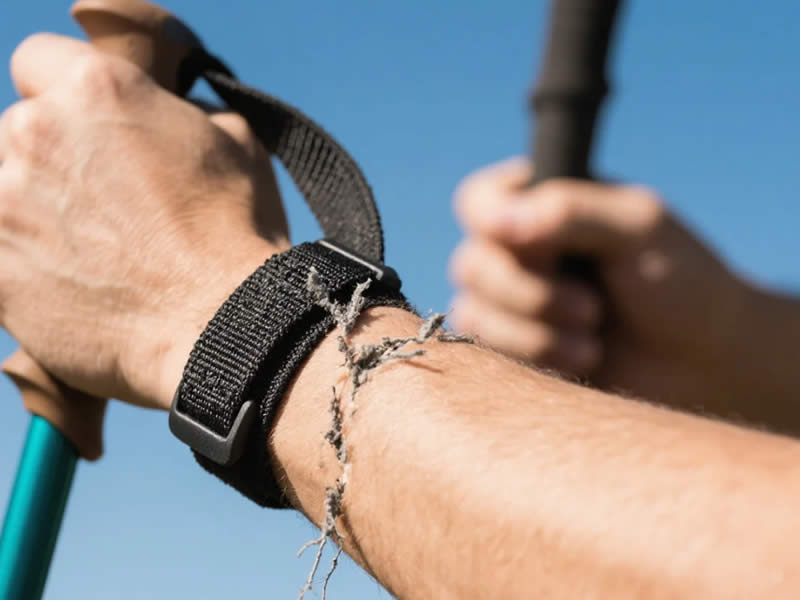
1. Why wrist straps wear out
Wrist straps are subjected to constant friction, sweat, and UV degradation. Over time, the webbing can fray, the padding can compress, or the stitching can fail. A frayed strap is not just a comfort issue—it is a safety hazard. If the strap breaks while you are leaning on the pole, you could lose your balance. Replacing them before they fail is good practice.
2. Identifying the attachment type
There are three common attachment systems for wrist straps:
- Clip‑on (slot) straps – The strap is held in a slot on the grip by a plastic clip or a metal pin. This is the most common type, found on many Leki (including trigger straps), Black Diamond, and some Decathlon poles. You can see the strap disappearing into a slot in the grip.
- Screw‑on straps – The strap is secured by a small screw (often a cross‑head or hex screw) on the underside of the grip. Found on some older or budget poles.
- Loop‑through straps – The strap is threaded through a hole in the grip and tied with a knot. This is common on very basic or budget poles.
3. Removing the old strap
a. Clip‑on straps – Press the clip or slide the strap out of the slot. On Leki trigger straps, the strap is attached to a plastic clip that sits in a recess on the grip. You may need a small flat‑head screwdriver to gently pry it out. Pull the strap free.
b. Screw‑on straps – Use a small screwdriver (Phillips or flat‑head) to unscrew the fixing screw. Remove the screw and the old strap.
c. Loop‑through straps – Untie the knot inside the grip. If the knot is tight, use a small tool (e.g., a pick or a paperclip) to work it loose. Pull the old strap out.
4. Cleaning the attachment point
Before fitting the new strap, clean the slot or screw hole. Remove any dirt, sweat residue, or old threadlock. A clean attachment ensures a secure fit.
5. Fitting the new strap
a. Clip‑on straps – Slide the new strap into the slot until it clicks into place. For Leki trigger straps, the clip must be fully seated in the recess. You should hear a click or feel it snap in.
b. Screw‑on straps – Position the new strap, insert the screw, and tighten it securely. Do not over‑tighten—you could strip the threads.
c. Loop‑through straps – Thread the new strap through the hole, tie a secure knot (a double overhand knot works well), and pull it tight. Trim any excess webbing.
6. Choosing the right replacement straps
- Genuine vs. generic – Genuine straps from Leki, Black Diamond, or Decathlon are guaranteed to fit. Generic straps (available online) may work but check the attachment type and width.
- Width – Most straps are 12–15 mm wide. Measure your old strap if unsure.
- Padding – Some straps have padding; others are simple webbing. Padded straps are more comfortable on long days.
- Trigger vs. standard – If you have Leki trigger straps, you must buy trigger‑specific replacements.
7. Where to buy replacement straps
- Decathlon – Forclaz replacement straps, available in‑store and online.
- Adventure Sport – Leki and Black Diamond genuine straps.
- Amazon UK – Generic straps and some branded options.
- Go Outdoors / Cotswold – May stock straps for common models.
8. Adjusting the new strap
Once fitted, adjust the strap to the correct length:
- The strap should sit across the base of your palm (the fleshy area between your thumb and wrist), not across your wrist.
- You should be able to slide one finger between the strap and the back of your hand.
- Test by pushing down on the pole—the load should transfer through the strap, not your grip.
9. Preventative maintenance
- Rinse straps after sweaty walks – Salt and sweat degrade webbing. Rinse with fresh water and air‑dry.
- Inspect regularly – Check for fraying, especially where the strap meets the clip or slot.
- Carry spares – A spare pair of straps takes up almost no space and can save a multi‑day trek if a strap breaks.
10. Final verdict
Replacing frayed or broken wrist straps is a quick, easy task that anyone can do. Identify the attachment type, remove the old strap, fit the new one, and adjust it correctly. Genuine branded straps are the safest choice, but generic straps can work if they are compatible. Regularly inspect your straps and replace them at the first sign of fraying. With a few minutes of care, your poles will continue to provide secure, comfortable support for many miles.




