




How to fix a twisted and misaligned trekking pole section?
A twisted or misaligned trekking pole section is typically not "twisted" in the literal sense (aluminium and carbon do not twist like rope) – it is usually a slight bend at the joint that causes the sections to become misaligned and prevents them from sliding or locking properly. If the bend is slight (less than about 10–15°), it can often be straightened. If the shaft is kinked, cracked, or severely bent, the section must be replaced. For aluminium poles, the repair involves removing the bent section and rolling it on a flat surface under firm pressure. For carbon poles, do not attempt to straighten – replace the section. This article provides a step‑by‑step guide to assessing and fixing a misaligned pole section, along with safety considerations and when to replace rather than repair.
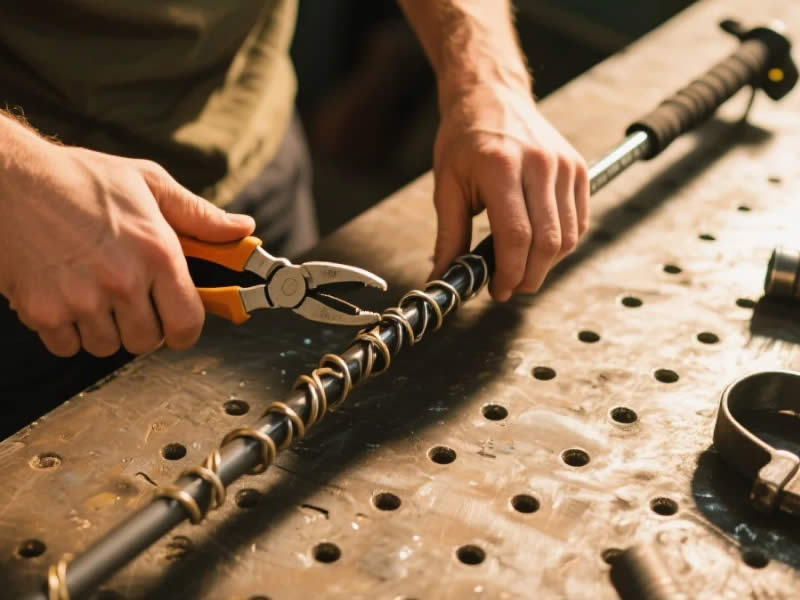
1. Assessing the damage
Before you start, you need to determine whether the pole is repairable or whether it needs a replacement section.
- Slight bend (<10–15°) – The shaft is slightly curved but not kinked. This can often be straightened.
- Kink – A sharp, angular bend where the metal has yielded. A kink weakens the shaft and cannot be safely straightened.
- Crack – Any visible crack in the aluminium means the section must be replaced.
- Carbon fibre – Do not attempt to straighten carbon fibre. It is brittle and will splinter. Replace the section.
2. Removing the bent section
If the bend is in a replaceable section (e.g., the lower section of a telescoping pole), remove it from the rest of the pole.
- For Leki, Black Diamond, Decathlon – Most telescoping poles allow you to remove the lower section by sliding it out or unscrewing it.
- For folding poles – If a section is bent, the entire pole may need to be replaced unless the brand sells replacement sections.
3. Straightening an aluminium section
The safest method for straightening an aluminium pole is rolling it on a flat surface.
a. Clean the section – Wipe off any mud or grit to avoid scratching it during the straightening process.
b. Place on a flat, hard surface – A wooden workbench, a smooth concrete floor, or a flat piece of wood works best.
c. Roll under your palm – Place the section on the surface and roll it with firm, even pressure from your palm. The bend will gradually reduce as you roll. Rotate the section to work on different parts of the curve.
d. Check straightness – Roll the section and observe whether it rolls smoothly without wobbling. If it still wobbles, repeat the process.
e. Tap gently if needed – For a stubborn bend, place the section on a piece of wood and tap the bent area gently with a rubber mallet. Do not use a metal hammer – it will dent the shaft.
4. Testing the straightened section
After straightening, test the section in the pole:
- Slide it back into the pole – It should slide smoothly without binding.
- Close the lock – The lever lock or twist lock should grip securely. If the section is still slightly bent, the lock may not hold.
- Test under load – Put your weight on the pole in a safe place (e.g., at home). If it holds, it is safe. If it bends again or the lock slips, replace the section.
5. When straightening is not safe
- If the section has a kink – The aluminium has yielded and will be weak. Replace it.
- If the section is cracked – It is compromised. Replace it.
- If the lock no longer holds – The section may have been ovalised during the bend. Replace it.
- If the pole is carbon fibre – Do not attempt to straighten carbon. It will splinter.
6. Preventing misalignment
- Plant deliberately – Avoid planting the pole in gaps between rocks where it can get wedged.
- Shorten on steep ground – A shorter pole reduces leverage and the risk of bending.
- Inspect regularly – After a hard plant or a fall, check the lower section for straightness.
7. Where to buy replacement sections
- Decathlon – Forclaz replacement lower sections, available in‑store and online.
- Adventure Sport – Leki and Black Diamond replacement sections.
- Amazon UK – Generic sections, but check compatibility.
8. Final verdict
A slightly bent aluminium trekking pole section can often be straightened by rolling it on a flat surface. For more severe bends, or if the section is kinked or cracked, it is safer to replace the section. Carbon fibre poles cannot be straightened – replace the section or the pole. After straightening, test the pole under load before relying on it on the trail. If the lock no longer holds, replace the section – a misaligned section is a safety hazard. With proper care, your poles will remain straight and reliable for many miles.




