




Can I use my normal trekking poles for ski touring in Glenshee?
The short answer is yes, but with major limitations, and I would strongly advise against it. Your normal trekking poles can work as a backup or for very gentle touring on completely flat terrain, but they are not ideal—and can be unsafe—for proper ski touring in a ski area like Glenshee. Here is a detailed breakdown of the differences, the risks, and what you should use instead.
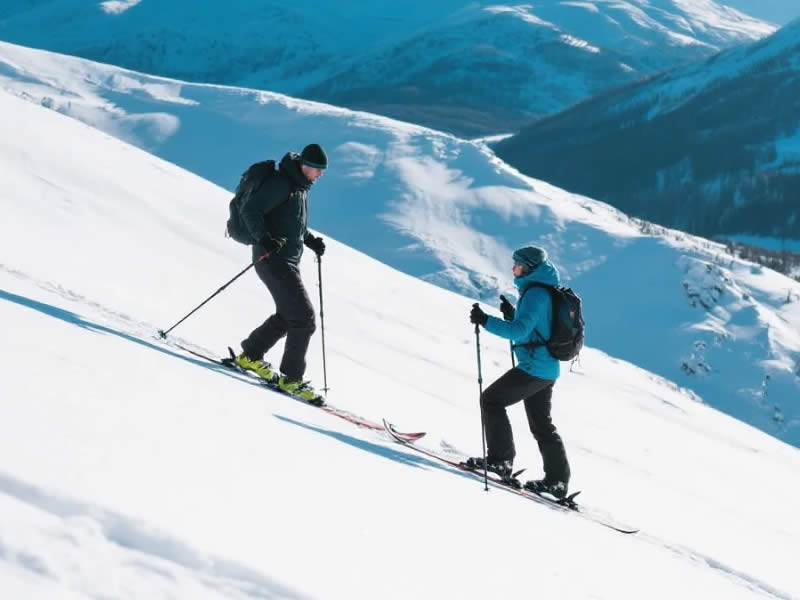
1. Key differences between trekking poles and ski poles
While they look similar, they are designed for different activities:
a. Length – Ski touring poles are typically longer than trekking poles. For ski touring, the pole length is determined by your height and the type of touring (classic or skate). A general guide is that the pole should reach your armpit. Trekking poles are designed for walking on variable terrain and are usually shorter. Using a trekking pole that is too short will affect your skiing rhythm and efficiency.
b. Grip – Ski poles have a specialised grip that allows you to push down efficiently and release quickly. The grip is often contoured and may have a "trigger" or a strap that wraps around your wrist for a secure hold. Trekking poles have a simple foam or cork grip designed for walking, which does not provide the same level of control or comfort for poling.
c. Baskets – Ski touring requires a large snow basket (often 10–12 cm in diameter) to prevent the pole from sinking into deep powder snow. While you can fit snow baskets to many trekking poles, the ones that come with ski poles are usually larger and more durable.
d. Locking mechanisms – Trekking poles often use lever or twist locks that can jam with ice and snow, making them unreliable in winter conditions. Ski poles are usually fixed‑length (or have a simple, robust adjustment) and are designed to work in sub‑zero temperatures.
e. Strength – Ski touring involves lateral forces (pushing sideways) that are not present in walking. Trekking poles are not designed to withstand these forces and can bend or snap.
2. Glenshee – the terrain
Glenshee is a ski area in the Cairngorms with a mix of groomed runs and backcountry terrain. It offers a range of skiing, from gentle beginner slopes to more challenging off‑piste terrain.
- Groomed runs – On piste, you need to push off with your poles to maintain speed and rhythm. The correct pole length and grip are essential for efficient poling.
- Backcountry – Off‑piste touring involves climbing uphill with skins on your skis and descending on variable snow. You need poles that can support your weight when pushing uphill and provide stability on descents.
3. The risks of using trekking poles in Glenshee
- Lack of grip – Trekking pole grips are not designed for ski poling. They lack the contoured shape and the wrist strap that provides a secure connection. This can lead to a loss of control, especially on steep descents.
- Length issues – A trekking pole that is too short will make poling inefficient and tiring. A pole that is too long can throw off your balance.
- Lock failure – The cold can cause the locking mechanism to fail, leading to a sudden collapse. This could cause a fall.
- Bending or snapping – The lateral forces of ski touring can bend or snap a trekking pole. This is a safety hazard.
- Inadequate baskets – Even with snow baskets, the baskets on trekking poles are usually smaller and less robust than those on ski poles, and can snap or spin on the shaft.
4. What to do instead – hire or buy proper ski touring poles
- Hire – Glenshee ski centre offers ski and snowboard hire, and they almost certainly have ski touring poles available for hire. This is the safest and most practical option. You get the right equipment for the job, and you don't have to worry about damaging your walking poles.
- Buy – If you plan to do ski touring regularly, it is worth investing in a proper set of ski touring poles. They are designed for the conditions and will last much longer.
5. Can I use them in an emergency?
If you are caught out without your ski poles and you have your trekking poles with you, they can be used as a very temporary measure to get back to the lift or the car, but only on gentle terrain. They are not a safe alternative for a full day's touring. For descents, use them cautiously, as they will not provide the same stability and support.
6. Final verdict
Can you use your normal trekking poles for ski touring in Glenshee? Yes, but it is not recommended and can be unsafe. Trekking poles lack the length, grip, basket size, and strength required for proper ski touring. For the best experience and your safety, hire proper ski touring poles from the Glenshee ski centre or a local outdoor shop. They are designed for the job and will give you the control and confidence you need. If you are only going out for a short, gentle tour on flat terrain, you might get away with your walking poles, but it is a risk that is not worth taking. Your knees and your safety are more important than saving a few pounds on hire costs.




