




How to maintain trekking poles after exposure to road salt and grit?
Road salt and grit are highly corrosive and abrasive – they can rapidly damage the anodised finish, seize locking mechanisms, and accelerate wear on carbide tips. Immediate and thorough cleaning is essential after any winter walk, especially if you have walked on salted roads or gritted paths. Here is a comprehensive guide to protecting your poles from salt and grit damage, including a step‑by‑step cleaning process, preventative measures, and long‑term maintenance tips.
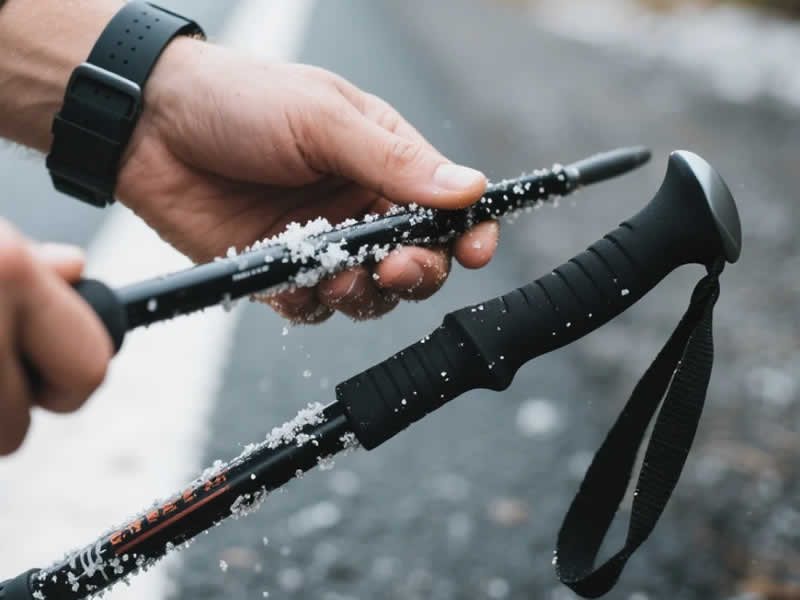
1. Why road salt and grit are a problem
- Salt (sodium chloride) – Salt is hygroscopic (it attracts moisture). When it gets onto your poles, it draws moisture from the air, creating a corrosive saltwater film on metal surfaces. This can cause pitting and corrosion on steel parts (screws, tip ferrules) and can attack the anodised coating on aluminium shafts. Salt also accelerates the corrosion of internal components, like twist‑lock expanders and springs.
- Grit (sand and small stones) – Grit is abrasive. It can get into locking mechanisms, acting like sandpaper and wearing down the moving parts. It can also scratch the anodised coating, exposing the aluminium to corrosion.
2. The cleaning process – step by step
a. Rinse immediately – The single most important step. As soon as you return from a walk where you have been on salted roads or gritted paths, rinse your poles with cold water. A garden hose or a tap is ideal. Direct the water into the locking mechanisms (open lever locks fully; twist twist‑locks while rinsing). The goal is to flush out as much salt and grit as possible before they dry and cause damage. Do not use hot water – it can soften the anodised coating and damage seals.
b. Wash with mild soap – After rinsing, wash the poles with warm water and a mild dish soap (e.g., washing‑up liquid). Use a soft cloth to wipe down the shafts. Pay special attention to the locking mechanisms, the ferrule (the metal collar above the tip), and the area around the basket. Use an old toothbrush to scrub the grooves and crevices of twist‑locks.
c. Rinse thoroughly – Ensure all soap is removed. Soap residue can also attract dirt.
d. Dry completely – Wipe the poles with a clean, dry cloth. Then extend the poles fully and leave them to air‑dry in a warm, well‑ventilated area for at least several hours. Do not store them collapsed – moisture trapped inside the sections can cause corrosion. For lever locks, leave the levers open to allow the internal surfaces to dry. For twist‑locks, extend them fully and leave them to dry.
3. After drying – inspection and lubrication
a. Lubricate moving parts – Once the poles are completely dry, apply a tiny drop of silicone spray or PTFE dry lube to the lever lock pivots. For twist‑lock poles, apply a very thin layer of silicone grease to the threads. Do not use oil‑based lubricants – they attract dirt. Do not apply lubricant to the clamping surfaces of lever locks – this can cause slipping.
b. Inspect for corrosion – Check steel components (screws, tip ferrules, internal springs) for signs of rust. If you see any, remove it with a wire brush (brass or steel) and apply a rust‑inhibiting oil or a tiny amount of silicone grease to protect the metal.
c. Check carbide tips – The abrasive grit can accelerate wear on carbide tips. Inspect the tips and replace them if they are rounded or chipped.
4. Preventative measures – protecting your poles before the walk
- Apply a protective coating – Before a winter walk, you can apply a thin coat of car wax or a silicone spray to the shafts and ferrule. This creates a barrier that makes it harder for salt and grit to adhere.
- Use rubber tip covers on road sections – If you are walking on salted roads, use rubber tip protectors to protect the carbide tips from salt and grit.
- Rinse regularly – If you are on a multi‑day trip and walking on salted roads, rinse your poles at the end of each day – even if they look clean.
5. Long‑term storage
If you are storing your poles after a winter season, ensure they are:
- Clean and dry – No salt or moisture should remain.
- Lubricated – Apply a thin layer of lubricant to moving parts.
- Loosened – Store with lever or twist locks slightly loosened to relieve pressure.
- In a dry place – A cupboard or wardrobe, not a damp garage.
6. What to avoid
- Leaving salt on the poles – Even a small amount can cause corrosion over time.
- Using hot water – Can damage the anodised coating and seals.
- Using WD‑40 – It is not a lubricant and can attract dirt.
- Storing poles collapsed – Traps moisture and can cause corrosion.
7. Final verdict
Exposure to road salt and grit is one of the most damaging things for trekking poles. A few minutes of careful cleaning after a walk can save you from the frustration of seized locks, corroded shafts, and worn tips. The golden rule is to rinse your poles as soon as possible after any walk on salted or gritted roads. Follow up with a thorough wash, drying, and lubrication. With this routine, your poles will survive many winters of use and remain in good working order. A little effort now will save you from having to replace your poles prematurely.




