




Aluminum vs carbon fiber trekking poles — which is better for tropical hiking?
Aluminium is better for tropical hiking. In hot, humid, and rocky conditions like Brazil's Atlantic Forest, Chapada Diamantina, or the Amazon, aluminium is the safer, more durable choice. Carbon fibre is lighter, but it is more fragile and can shatter on side impacts against rocks—a common occurrence on tropical trails. Aluminium bends under impact and can often be straightened, while carbon splinters and is irreparable. The humidity of tropical climates can also degrade the resin in carbon poles over time. Aluminium is also more abrasion‑resistant, especially models with steel lower sections.
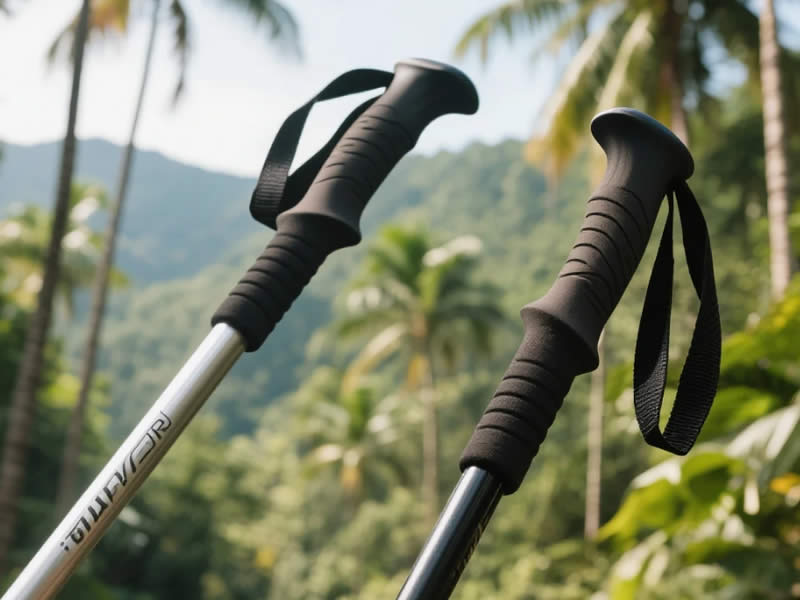
Key differences:
- Durability – Aluminium bends; carbon shatters.
- Humidity – Aluminium unaffected; carbon resin can degrade.
- Repairability – Aluminium can be straightened; carbon cannot.
- Cost – Aluminium is more affordable.
What to choose:
- Rocky, muddy, or humid trails – 7075 aluminium with lever locks and cork grips (e.g., Leki Makalu, Decathlon Forclaz MT900).
- Gentle, well‑maintained trails – Carbon is fine, but not necessary.
Pro tips for tropical hiking:
- Cork grips – Better than foam or rubber in sweat and rain.
- Lever locks – Essential; twist locks slip in mud.
- Spare tips – Abrasive rock wears them fast.
Verdict: For tropical hiking, aluminium is the better choice. It offers durability, repairability, and peace of mind on rocky, humid trails. If you are hiking in Brazil, choose 7075 aluminium with lever locks.
1. Why tropical trails are hard on poles
Tropical hiking in regions like Brazil's Atlantic Forest, the Amazon, or Southeast Asia presents unique challenges:
- High humidity – Moisture can affect the resin in carbon poles, potentially causing delamination over time.
- Abundant rain and mud – Trails are often wet and slippery. Twist locks are prone to slipping.
- Abrasive rock – Quartzite, granite, and other hard rocks wear down tips and shafts.
- Side impacts – Narrow, rooty trails often force you to plant poles between rocks, subjecting them to lateral forces.
2. Aluminium – the durable choice
7075 aluminium is the best material for tropical hiking. It offers:
- Ductility – Bends under impact but rarely breaks. A bent section can often be straightened in the field.
- Abrasion resistance – With a steel lower section (e.g., Leki Makalu), it resists wear from abrasive rock.
- Humidity resistance – Aluminium does not absorb moisture; it is unaffected by humidity.
- Repairability – Replacement tips, locks, and sections are widely available for quality brands.
- Cost – More affordable than carbon.
Best aluminium poles for tropical hiking:
- Leki Makalu – Steel lower section, SpeedLock Plus, cork grips.
- Decathlon Forclaz MT900 – 7075 aluminium, lever locks, cork grips, replaceable tips.
- Decathlon Forclaz MT500 – Budget‑friendly version of the MT900.
3. Carbon fibre – the weight‑saving alternative
Carbon fibre poles are lighter (typically 200 g vs 250 g per pole) and dampen vibration better. However, they are:
- Brittle – A side impact on a rock can cause splintering. Once splintered, they cannot be repaired.
- Less abrasion‑resistant – The outer layer is softer and can wear on abrasive rock.
- Susceptible to humidity – Over time, high humidity can degrade the resin, though this is less common with quality brands.
- More expensive – Typically 2–3 times the cost of aluminium.
When carbon is acceptable:
- Gentle, well‑maintained trails – If you walk on soft, non‑rocky paths, the risk of side impacts is low.
- Ultralight hiking – If you are counting every gram and are willing to accept the risk.
4. Locking mechanisms – lever vs twist
- Lever locks (cam locks) – Essential for tropical hiking. They are mechanical and hold securely regardless of moisture or dirt. Field‑adjustable with a hex key. Examples: Leki SpeedLock, Black Diamond FlickLock, Decathlon cam locks.
- Twist locks – Rely on friction and slip in wet, muddy conditions. Avoid them for tropical hiking.
5. Grips – cork vs foam vs rubber
- Cork – Best for tropical hiking. Comfortable in heat, becomes tacky when damp, and provides a secure hold even with sweaty hands.
- Foam – Lighter but can become slippery when wet.
- Rubber – Uncomfortable in heat; not recommended.
6. Maintenance for tropical conditions
- Rinse after muddy walks – Mud and grit can damage locks and shafts. Rinse with fresh water and dry thoroughly.
- Lubricate locks – Apply a tiny drop of silicone spray to lever lock pivots once or twice a year.
- Replace tips – Carry spare tips and replace them when they become blunt.
- Check locks – Lever locks can loosen with use; tighten with a hex key.
7. Final verdict
For tropical hiking, 7075 aluminium poles with lever locks and cork grips are the best choice. They offer the durability, reliability, and comfort needed for the region's challenging conditions. Carbon fibre is lighter, but the risk of breakage on rocky, humid trails is not worth the weight saving. If you are hiking in Brazil or any tropical environment, choose aluminium – it will last longer and give you peace of mind. Happy hiking.




