




Are foldable trekking poles better than telescopic for backpacking Brazil?
For backpacking in Brazil, telescopic aluminium poles are generally better than foldable (Z‑pole) poles. The rocky, muddy, and humid trails of Brazil demand durability – foldable poles have thinner sections and push‑button joints that can jam with grit or bend on side impacts. Telescopic poles, with their overlapping sections and lever locks, handle lateral forces better and are more field‑repairable.
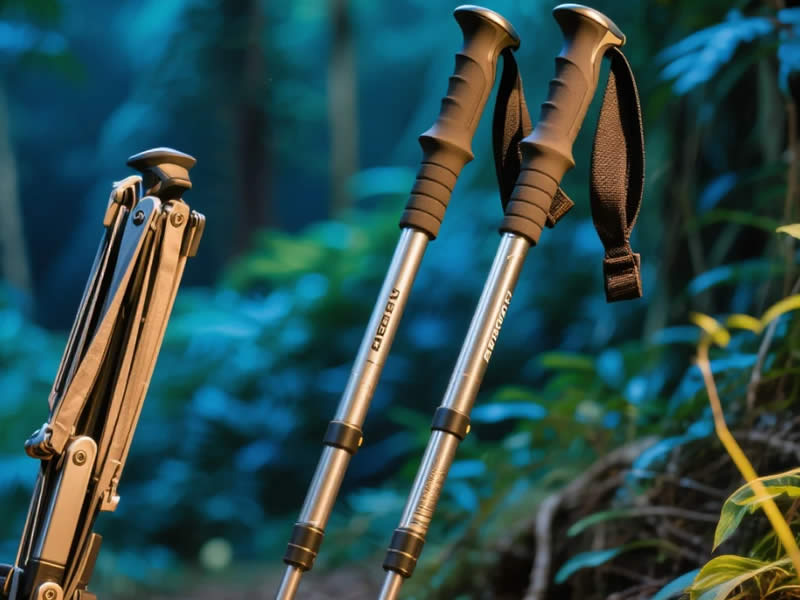
Telescopic poles are more durable (overlapping sections and lever locks handle lateral forces better), repairable (you can replace sections, e.g., Leki, Decathlon), adjustable (essential for varying terrain), and heavier (typically 250–300g per pole vs 200–250g for folding). Foldable poles are lighter and more packable (great for travel or fastpacking), but less durable (thinner walls and push‑button joints are vulnerable on rocky trails) and harder to repair (if a joint breaks, you often need to replace the whole section). For Brazilian trails, choose 7075 aluminium telescoping poles with lever locks (e.g., Leki Makalu, Decathlon Forclaz MT900). If you do use folding poles, avoid carbon fibre—it shatters on rocks.
1. Understanding the difference
Telescoping poles have sections that slide inside one another and are locked using an external lever or twist mechanism. They are the traditional design and are known for their strength and adjustability.
Foldable (Z‑pole) poles consist of three sections connected by an internal cord, with push‑button joints that lock into place. They are designed for lightweight travel and fastpacking.
2. Why Brazilian trails are tough on poles
Brazil's trails are diverse, but many share common challenges:
- Rocky terrain – Quartzite and granite are common. A side impact against a rock can damage a pole.
- Mud and grit – Wet, muddy conditions can jam push‑button joints on folding poles.
- Humidity – Moisture can affect the internal cords of folding poles over time.
- Steep ascents and descents – You need to adjust pole length for different gradients.
3. Telescopic poles – the durable choice
- Strength – The overlapping sections provide greater strength against side impacts. A telescoping pole is less likely to bend or break when wedged between rocks.
- Repairability – If a section bends or a lock breaks, you can often replace that section (for many brands, e.g., Leki, Decathlon, Black Diamond). Folding poles are harder to repair – a broken joint often means replacing the whole pole.
- Adjustability – You can shorten poles for ascents and lengthen them for descents. This is essential for the steep, variable terrain of Brazilian trails.
- Locking – Lever locks are more reliable than push‑button joints, especially in muddy conditions.
4. Foldable poles – the packable alternative
- Weight and packability – Foldable poles are lighter and pack smaller, making them ideal for travel or fastpacking.
- Quick deployment – They extend and collapse quickly.
- Durability – The thinner walls and push‑button joints are more vulnerable. A side impact can bend or break them, and mud can jam the buttons.
5. When foldable poles are OK
- Well‑maintained trails – If you are walking on gentle, non‑rocky paths (e.g., some parts of the Amazon floodplains), folding poles are fine.
- Short trips – Where weight and pack size are a priority.
- Ultralight backpacking – If you are counting every gram and are willing to accept the risk.
6. What to choose for backpacking Brazil
- Telescoping aluminium – The best choice for most Brazilian trails. Look for 7075 aluminium, lever locks, and cork grips. Examples: Leki Makalu, Decathlon Forclaz MT900.
- Foldable aluminium – If you want the packability and are willing to accept the durability trade‑off, choose aluminium (not carbon). Example: Black Diamond Distance Z (aluminium version).
- Avoid carbon fibre – It shatters on rocks. Carbon folding poles are particularly vulnerable.
7. Pro tips for Brazil
- Lever locks – Essential. Twist locks slip in mud.
- Spare parts – Carry spare tips and a hex key. In Brazil, parts for Leki and Decathlon are more widely available than for other brands.
- Cork grips – Best for heat and humidity.
- Mud baskets – Useful on soft, boggy trails.
8. Final verdict
For backpacking Brazil, telescopic aluminium poles are the safer, more reliable choice. They offer the durability, repairability, and adjustability needed for the country's challenging trails. Foldable poles are better for ultralight travel on gentle terrain, but they are not as durable for Brazil's rocky, muddy, and humid conditions. If you choose foldable poles, opt for aluminium, avoid carbon, and be prepared for the risk of damage. For most backpackers, telescoping aluminium poles are the way to go. Happy hiking.




