




Should I buy trekking poles with cork or EVA foam handles for humid conditions?
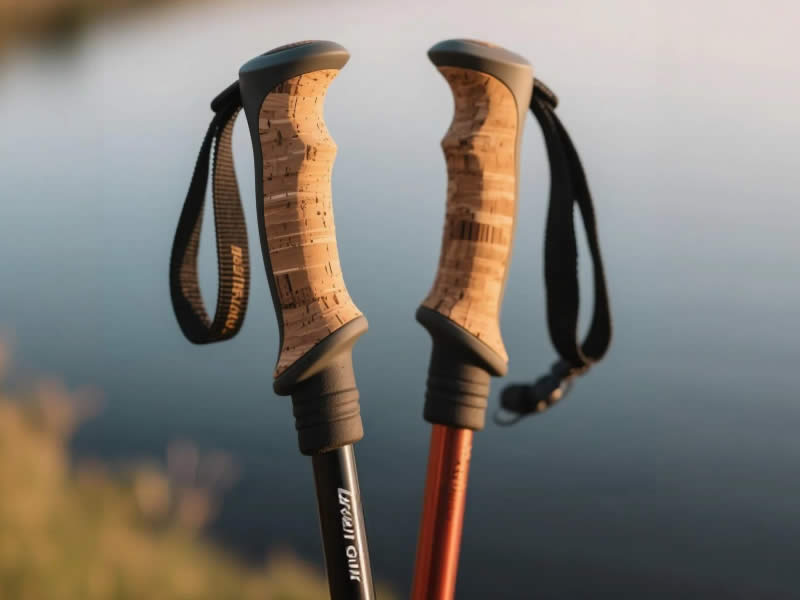
For humid conditions, cork handles are better than EVA foam. Cork becomes tacky when damp, providing a secure grip even with sweaty or wet hands. It also absorbs moisture, resists odour, and molds to your hand over time. EVA foam is lightweight and comfortable when dry, but it becomes slippery when wet and absorbs sweat, leading to odour. In tropical climates like Brazil's Atlantic Forest or the Amazon, cork is the safer and more comfortable choice. If budget is a concern, EVA foam is still usable, but be aware that you may need to grip tighter in wet conditions.
1. Why humidity is a problem for handles
In humid conditions—whether you are hiking in a tropical rainforest, the Brazilian Atlantic Forest, or a sweaty summer day in the UK—your hands sweat. Moisture on your palms reduces friction between your hand and the handle. This can lead to a slippery grip, which is dangerous on steep, rocky descents. It also increases hand fatigue, as you have to grip tighter to compensate.
2. Cork handles – the natural choice
Cork is a natural material harvested from the bark of cork oak trees. It is the preferred choice for humid conditions for several reasons:
a. Tacky when damp – Cork's microporous structure absorbs a thin layer of moisture, creating a non‑slip, tacky surface when your hands are damp. Unlike smooth materials, which become slick, cork's friction actually increases with light moisture.
b. Moisture absorption – Cork absorbs sweat from your palms, reducing the "pooling" effect that can make foam grips slippery. It wicks moisture away from your skin, keeping your hands drier.
c. Natural anti‑odour – Cork is naturally antimicrobial and resists the bacteria that cause unpleasant smells. In hot, sweaty conditions, this is a significant advantage over synthetic materials.
d. Custom fit – Over time, cork compresses and molds to the shape of your hand, creating a custom fit that reduces pressure points and improves grip comfort.
e. Insulating – Cork provides some thermal insulation, keeping your hands cooler in summer (and warmer in winter).
3. EVA foam handles – lightweight but flawed for humidity
EVA (ethylene‑vinyl acetate) foam is a synthetic material commonly used on budget and mid‑range poles. It has several advantages when dry:
- Lightweight – EVA is lighter than cork, making it a popular choice for ultralight poles.
- Soft and comfortable – When dry, EVA foam feels cushioned and comfortable.
- Inexpensive – EVA is cheaper to produce than cork.
However, for humid conditions, EVA foam has significant drawbacks:
a. Slippery when wet – EVA foam is relatively smooth. When sweat accumulates on the surface, it creates a slick film that reduces grip. You have to grip the handle harder to keep control, which increases fatigue.
b. Absorbs sweat and odours – EVA foam is porous and absorbs sweat, but it does not wick it away. Over time, the foam can become saturated with sweat, leading to a permanent damp, unpleasant feel and a persistent smell that is hard to wash out.
c. Lack of tackiness – Unlike cork, EVA foam does not become tacky when wet. Its friction coefficient drops when damp, making it less secure in humid conditions.
d. Compresses over time – EVA foam can permanently compress and lose its cushioning, especially on the contact points where your palm rests.
4. Cork vs. EVA foam – a detailed comparison
| Feature | Cork | EVA Foam |
|---|---|---|
| Grip when wet | Tacky, secure | Slippery |
| Moisture management | Absorbs and wicks | Absorbs, but does not wick |
| Odour resistance | Natural antimicrobial | Prone to odour |
| Long‑term comfort | Molds to hand | Compresses and loses cushioning |
| Weight | Moderate | Light |
| Price | More expensive | Cheaper |
| Best for | Hot, humid conditions | Cool, dry conditions |
5. Practical advice for humid conditions
- Choose cork – If you hike in humid, sweaty conditions, cork is the better choice. The tacky feel when damp will give you more confidence on steep, wet trails.
- If you choose EVA foam – Look for foam with a textured surface or perforations to improve grip. Some EVA grips have a "grip pattern" that helps with moisture management.
- Wear gloves – If you have very sweaty hands, lightweight trekking gloves can help absorb moisture and improve grip, regardless of the handle material.
- Clean regularly – Regardless of material, clean your grips after sweaty walks to remove salt and dirt, which can degrade the grip.
6. What about rubber grips?
Rubber grips are not recommended for humid conditions. They do not wick moisture, become slippery when sweaty, and trap heat against your palm. Rubber grips are suitable only for cold weather or when wearing gloves.
7. Final verdict
For humid conditions, cork handles are clearly superior. Their natural tackiness when damp, moisture‑wicking properties, and antimicrobial characteristics make them the ideal choice for tropical, sweaty, or rainy environments. EVA foam is lightweight and cheap, but its tendency to become slippery and absorb odours makes it a poor choice for humid conditions. If you hike regularly in humid conditions, invest in cork‑handled poles—they will improve your grip, comfort, and safety on the trail. If you are on a tight budget, EVA foam is acceptable, but be prepared for a less secure grip in wet conditions. Happy hiking.




