




Are rubber trekking pole tips required for urban walking in São Paulo?
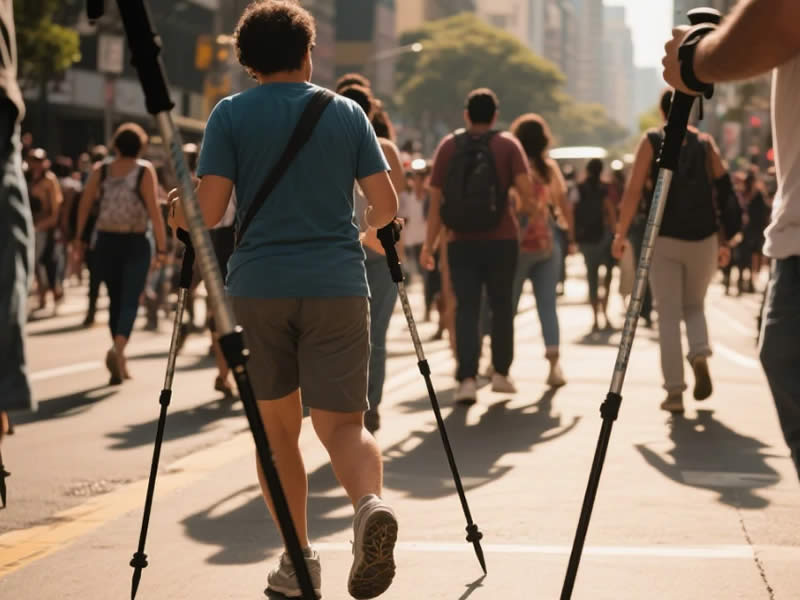
Yes – rubber tips are strongly recommended for urban walking in São Paulo. The city's pavements, sidewalks, and roads are hard surfaces that quickly wear down carbide tips. Tarmac and concrete are abrasive, and using bare carbide tips on them will significantly shorten the life of your poles. The carbide will wear down, losing its sharpness and grip for when you actually need it on trails.
What to do:
- Fit rubber ferrules – for all pavement sections, including the paved paths in parks like Ibirapuera. They protect your carbide tips, reduce noise, and provide grip on smooth surfaces.
- Remove them on trails – rubber tips are dangerous on mud, grass, or rock; use bare carbide for grip.
Pro tip: Carry rubber tips in your pocket or backpack. Fit them when you hit the city streets; remove them when you reach the trail. Most poles come with rubber tips – if yours don't, they cost around R$20–30 at Decathlon or outdoor shops.
Verdict: For urban walking in São Paulo, rubber tips are essential. They protect your carbide tips, reduce noise, and make walking more comfortable.
1. Why São Paulo's urban environment is hard on tips
São Paulo is a city of hard surfaces. The sidewalks are often made of concrete, Portuguese pavement (calçada portuguesa), or ceramic tiles. The streets are tarmac. These materials are abrasive and will wear down carbide tips at an accelerated rate. A single walk across the city can visibly round the tips, reducing their effectiveness. Rubber tips act as a sacrificial layer – they take the wear instead of the carbide.
2. Noise reduction
Bare carbide tips on pavement make a distinct, high‑pitched clacking sound with every step. This is not only annoying to you but also to those around you. In quiet residential areas or early mornings, it can be a significant nuisance. Rubber tips are nearly silent, making your walk more pleasant and less intrusive.
3. Floor protection
São Paulo has many buildings with polished floors – offices, shopping centres, museums, and apartment lobbies. Bare carbide tips can scratch and damage these surfaces. Rubber tips prevent this, allowing you to walk into buildings without leaving a trail of marks. This is not just about courtesy – in some buildings, you may be asked to leave if you are causing damage.
4. Safety on slippery surfaces
Rubber tips provide good grip on dry, smooth surfaces. On wet pavement or polished tiles, bare carbide tips can skid, which can be dangerous. Rubber tips offer better traction on these surfaces. However, on wet, smooth surfaces, rubber can also be slippery – the key is to use rubber tips on dry pavement and carbide tips on wet, natural ground. For wet pavement, carbide tips can provide a better grip as they can bite into tiny imperfections, but you will wear them down.
5. When to use rubber tips
- On pavements and sidewalks – Always fit rubber tips when walking on hard surfaces.
- In parks – If you are walking on paved paths (e.g., Ibirapuera's main paths), use rubber tips. If you are walking on grass or dirt, remove them.
- In buildings – Fit rubber tips before entering any building.
- On road sections – On tarmac, use rubber tips.
6. When to remove rubber tips
- On trails – On mud, grass, gravel, or rock, remove rubber tips and use the bare carbide tip for grip.
- On wet rock – Carbide tips provide better grip on wet rock.
- On grass – Rubber tips slide on grass; carbide tips bite in.
7. Practical tips for urban walking
- Carry rubber tips with you – They are small and lightweight. Keep a pair in your pocket or backpack. Fit them when you hit the city streets; remove them when you reach the trail.
- Check your tips regularly – Rubber tips wear out on pavement. Replace them when the tread pattern is worn.
- Use rubber tips on both poles – Even if you are only using one pole, fit rubber tips to both to balance the wear.
- Buy spares – Rubber tips are consumable. Buy a spare pair so you are not caught without them.
8. Where to buy rubber tips in São Paulo
- Decathlon – Forclaz rubber tips (~R$20–30). Available in stores across the city and online.
- Adventure Sport – Leki and Black Diamond rubber tips. Higher quality, more expensive.
- Mercado Livre – Generic rubber tips (~R$10–20). Check compatibility with your pole's shaft diameter.
- Camping and outdoor shops – Many small shops in the city stock rubber tips.
9. The environmental perspective
Using rubber tips on pavement extends the life of your carbide tips, which are made from tungsten, a finite resource. By reducing the wear on your carbide tips, you are also reducing the need to replace them, which is better for the environment.
10. Final verdict
For urban walking in São Paulo, rubber tips are essential. They protect your carbide tips from wear, reduce noise, protect floors, and improve safety on slippery surfaces. They are a cheap, simple, and effective accessory that every urban walker should use. Fit them when you are on the streets, remove them on the trails, and carry a spare pair. Your poles – and your fellow pedestrians – will thank you. Happy walking in São Paulo.




