




Do aluminum trekking poles corrode in Brazil’s humid Atlantic Forest?
Yes – aluminium trekking poles can corrode in Brazil's humid Atlantic Forest, but it is usually surface oxidation or galvanic corrosion, not structural failure. The humidity and acidic soil (peat, leaf litter) can affect aluminium over time, but with proper care, corrosion is preventable.
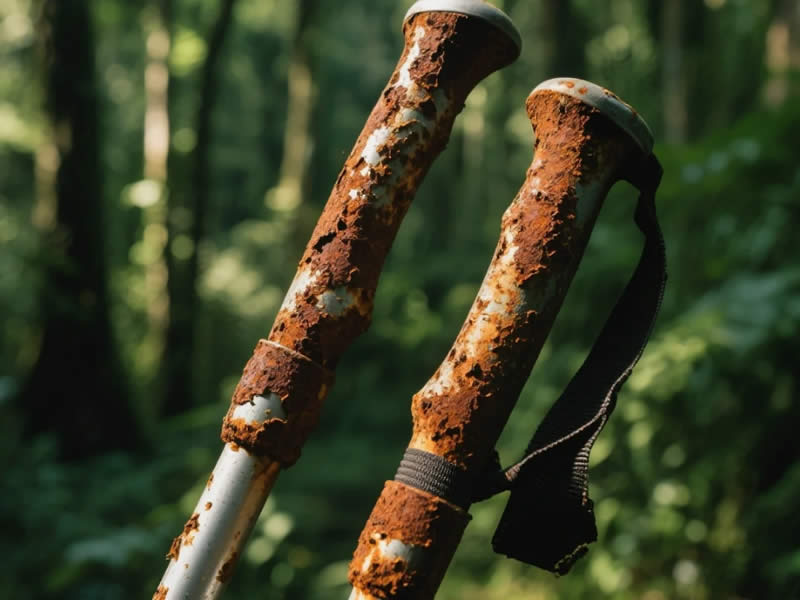
Types of corrosion:
- Surface oxidation – Aluminium naturally forms a protective oxide layer. This is harmless and can be wiped off.
- Galvanic corrosion – Occurs when aluminium contacts steel (e.g., tip ferrules, screws) in the presence of moisture. This is more common and can cause the aluminium to pit or weaken.
- Salt corrosion – Coastal sections (e.g., Serra do Mar near the coast) have salt spray, which accelerates corrosion.
Prevention:
- Rinse after muddy/salty walks – Fresh water removes corrosive residues.
- Dry thoroughly – Extend poles and dry locks and shafts.
- Lubricate locks – Apply silicone spray to lever lock pivots.
- Store in a dry place – Not in a damp garage or shed.
- Wipe down steel components – Steel ferrules can rust; wipe with an oily rag.
Verdict: Aluminium poles can corrode in the Atlantic Forest, but with regular cleaning and drying, they will last for years. The Decathlon Forclaz MT900 (7075 aluminium) is a good choice, as the anodised coating provides extra protection. In coastal areas, rinse after every walk.
1. Understanding corrosion in the Atlantic Forest
The Atlantic Forest (Mata Atlântica) is one of the most humid environments on Earth. The combination of high humidity (often 80–90%), constant rain, acidic soil (from decomposing leaf litter), and, in coastal areas, salt spray creates conditions that can accelerate corrosion on metal components. Aluminium is generally corrosion‑resistant because it forms a protective oxide layer, but certain conditions can compromise this layer.
2. Types of corrosion on aluminium poles
a. Surface oxidation – Aluminium naturally oxidises, forming a thin, protective aluminium oxide layer. This layer is hard and prevents further corrosion. It appears as a dull, greyish film that can be wiped off. This is harmless and does not affect the structural integrity of the pole.
b. Galvanic corrosion – This occurs when aluminium comes into contact with a more noble metal (e.g., steel, brass) in the presence of an electrolyte (moisture). The steel ferrule (the metal collar above the tip) or screws can cause the aluminium to corrode preferentially. This can cause pitting and weaken the aluminium. This is the most common type of corrosion on trekking poles.
c. Salt corrosion – In coastal areas (e.g., the Serra do Mar near the coast, or trails near the beach), salt spray accelerates corrosion. Salt acts as an electrolyte, accelerating galvanic corrosion. Rinsing with fresh water is essential after coastal walks.
3. How to prevent corrosion
a. Rinse after muddy walks – Mud and leaf litter contain acids that can attack the oxide layer. Rinse with fresh water and wipe dry.
b. Dry thoroughly – Extend the poles fully and leave them in a well‑ventilated area to dry. Do not store them collapsed – moisture trapped inside can cause corrosion.
c. Lubricate locks – Apply a tiny drop of silicone spray to lever lock pivots. This prevents corrosion and keeps the locks smooth.
d. Store in a dry place – Avoid storing poles in a damp garage or shed. A cupboard indoors is best.
e. Wipe down steel components – Steel ferrules and screws can rust. Wipe them with an oily rag (e.g., sewing machine oil) to prevent rust.
f. Use rubber tips on road sections – On road sections, use rubber tips to protect the carbide tips. The carbide tips themselves are not prone to corrosion.
4. What about anodised aluminium?
Most quality aluminium poles (e.g., Decathlon Forclaz MT900, Leki Makalu) have an anodised coating. Anodising is an electrochemical process that thickens the oxide layer, making the aluminium more resistant to corrosion and wear. Anodised aluminium is more resistant to the conditions of the Atlantic Forest than bare aluminium.
5. The Decathlon Forclaz MT900 – a good choice for the Atlantic Forest
The Forclaz MT900 is made of 7075 aluminium with an anodised finish. It is resistant to corrosion and, with proper care, will last for years in the Atlantic Forest. Its lever locks are made of plastic and aluminium, so they are not prone to rust. The steel tip ferrule is a potential corrosion point, but regular wiping with an oily rag prevents rust.
6. When to replace poles
- Pitting – If the aluminium is pitted (small holes), the strength is compromised. Replace the pole.
- Cracked anodising – If the anodised coating is cracked or worn, the aluminium is exposed to corrosion. Replace the pole or the section.
- Rust on steel components – If the steel ferrule is heavily rusted, replace the tip or the lower section.
7. Final verdict
Aluminium poles can corrode in Brazil's humid Atlantic Forest, but with regular cleaning, drying, and lubrication, they will last for years. The anodised coating on quality poles (like the Decathlon Forclaz MT900 and Leki Makalu) provides good protection. In coastal areas, rinse after every walk to remove salt. With proper care, corrosion is a minor, preventable issue. Happy hiking.




