




How to use trekking poles for crossing fast‑flowing rivers in Chapada Diamantina?
For crossing fast-flowing rivers in Chapada Diamantina, use two poles and face upstream. Plant both poles firmly on the streambed, shoulder-width apart, and move one limb at a time—keeping three points of contact. Lengthen poles for deeper water. The technique is simple but requires practice and respect for the water.
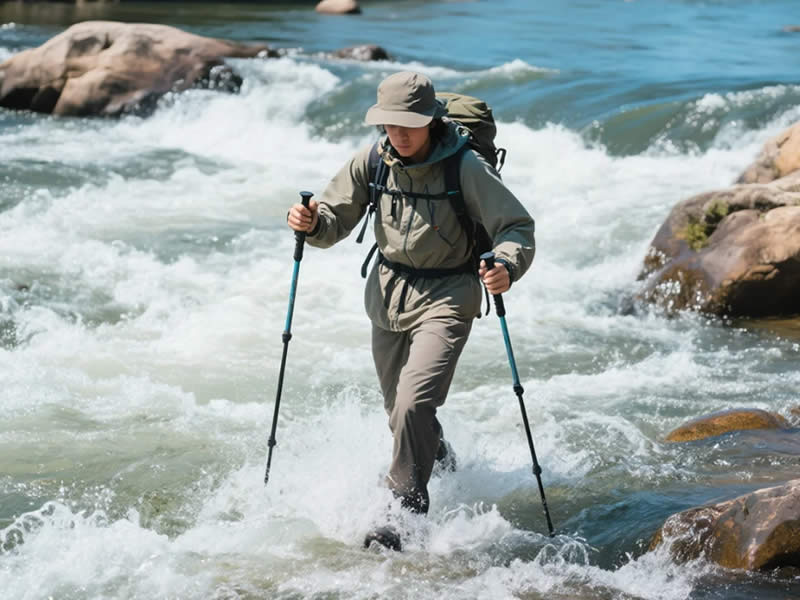
Step-by-step:
- Face upstream – reduces your body's surface area against the current.
- Plant poles upstream – water pressure pushes tips into the streambed.
- Move one foot – then the other, keeping poles planted.
- Move one pole – then the other. Always three points of contact.
Key tips:
- Remove rubber tips – carbide grips better on wet rock.
- Test depth – probe ahead before stepping.
- Unclip pack waist belt – if you fall, you can escape your pack.
- Cross at widest point – water is often shallower and slower.
When to turn back:
- Water above mid-thigh.
- Fast, turbulent flow.
- No visible bottom.
Verdict: Use the tripod method – two poles, one foot at a time. Stay safe and never cross alone. For Chapada's rivers, carbide tips and good technique are essential.
1. Why Chapada Diamantina rivers are challenging
Chapada Diamantina is a region of dramatic landscapes, with rivers that can be fast-flowing and unpredictable, especially during the rainy season. The rivers are often rocky, with slippery stones and uneven beds. Crossing them requires skill, confidence, and the right equipment.
2. The tripod method – your safe crossing technique
The tripod method is the most effective way to cross a fast-flowing river with trekking poles. It ensures you always have three points of contact with the streambed, providing maximum stability.
- Start – Plant both poles in the streambed, shoulder-width apart, upstream of your feet.
- Move one foot – Take a small, deliberate step with one foot, keeping the poles planted. You now have three points of contact (two poles + one foot).
- Move the other foot – Bring the other foot alongside, keeping the poles planted.
- Move one pole – Move one pole a short distance upstream, then the other pole.
- Repeat – Continue this rhythm: move a foot, move the other foot, move a pole, move the other pole.
3. Why face upstream?
Facing upstream reduces the surface area of your body against the current. The water flows against your front, which is easier to balance than having it push against your back. It also allows you to lean into the current, using your poles as anchors.
4. Testing depth and stability
Before stepping into the water, use one pole to probe the streambed ahead:
- Depth – How deep is the water? If it's above mid-thigh, it's dangerous.
- Bottom – Is it firm (rock, gravel) or soft (mud, silt)?
- Stability – Are the stones stable? Test before committing your weight.
5. Key safety rules for river crossings
- Never cross alone – If possible, cross with a partner. Link arms or use a rope.
- Unclip your waist belt – If you fall, you need to escape your pack quickly.
- Cross at the widest point – Water is often shallower and slower there.
- Turn back if it's too deep – Above mid-thigh, the current is dangerous.
6. Equipment for Chapada river crossings
- Carbide tips – Remove rubber tips; carbide grips better on wet rock.
- Lengthen poles – For deeper water, lengthen poles to reach the streambed without leaning forward.
- 7075 aluminium poles – Aluminium is more durable on rocky streambeds than carbon.
- Spare tips – The abrasive rock wears them down.
7. Final verdict
Crossing fast-flowing rivers in Chapada Diamantina is a serious undertaking. Use the tripod method, face upstream, and always keep three points of contact. Test the depth and bottom before committing your weight. Never cross alone, and turn back if the water is above mid-thigh. With the right technique and equipment, you can cross safely and continue your adventure. Happy hiking.




