




How to use trekking poles for boulder hopping in Itatiaia National Park?
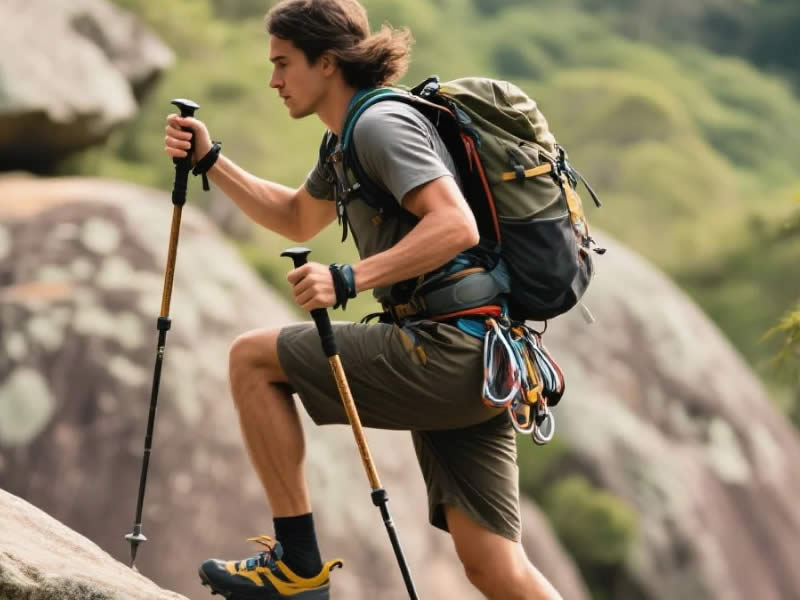
For boulder hopping in Itatiaia National Park, use your poles as balance aids, not levers. Shorten them by 5 cm to keep your centre of gravity low. Plant the carbide tip on a flat, stable part of the rock—not in crevices where it could jam. Use one pole at a time, keeping your other hand free to touch rocks if needed. Move deliberately, testing each rock for wobble. Itatiaia's boulder fields (e.g., Agulhas Negras) can be challenging—take your time, test each plant, and move deliberately. For steep sections, stow your poles and scramble hands‑free.
1. Understanding Itatiaia's terrain
Itatiaia National Park, located in the Serra da Mantiqueira, is home to some of Brazil's highest peaks, including Agulhas Negras (2,791 m) and Prateleiras (2,548 m). The park is characterised by:
- Granite boulder fields – Large, irregular rocks that require careful foot placement.
- Steep ascents and descents – The climbs are often on loose rock.
- Exposed ridges – High winds can affect balance.
- Wet conditions – Rain can make the rock slippery.
2. The boulder hopping technique
Boulder hopping involves moving across large, irregular, and often unstable rocks. Unlike walking on a firm trail, boulder hopping requires balance, agility, and careful foot placement.
a. Shorten your poles – Reduce your pole length by about 5 cm compared to your flat‑ground setting. This lowers your centre of gravity, improving your balance on uneven ground. It also reduces the risk of the pole catching on rocks.
b. Plant on flat rock – Plant the tip on a flat, stable part of the rock, not on sloping surfaces or in crevices. A tip in a crevice can get wedged, and pulling it out can bend or snap the pole.
c. Use one pole – On narrow or exposed sections, it is often safer to use one pole, leaving your other hand free to touch the rock for balance.
d. Test before committing – Before putting your weight on the pole, test the plant with a firm push. If the tip slips, find a better planting spot.
e. Move deliberately – Take short, controlled steps, planting your pole with each step. Avoid long strides that could unbalance you.
3. When to stow poles
On very steep or loose boulder fields, it is often safer to stow your poles and use your hands. On sections where you need both hands for balance and support, collapsing your poles and securing them on your pack is the best option.
4. Equipment for boulder hopping
- 7075 aluminium – Aluminium is safer on rocky ground than carbon, which can splinter on impact.
- Lever locks – Lever locks are more reliable on rocky terrain than twist locks.
- Replaceable tips – The abrasive rock will wear down tips. Carry spares.
- Mud baskets – Remove baskets on rocky sections to avoid catching on stones.
5. Safety considerations
- Helmet – On exposed routes, consider wearing a helmet. A dislodged stone or a fall on rock can cause serious head injury.
- Footwear – Wear boots with a stiff sole and a good tread. Poles are not a substitute for proper footwear.
- Weather – Wet rock is more slippery than dry rock. In wet conditions, consider whether the route is safe.
6. Final verdict
Boulder hopping in Itatiaia National Park is a challenge that requires careful technique. Shorten your poles, plant on flat rock, and use one pole at a time. On steep sections, stow your poles and use your hands. With the right technique and equipment, you can nav




