




How to use trekking poles for balance on sandy trails near Brazilian beaches?
On sandy trails near Brazilian beaches, you need to adjust your technique and tips. On soft, dry sand, the carbide tip sinks and offers no support. Fit sand baskets (wide, flat discs) to prevent sinking, or use rubber tips on firmer sand. Sand baskets are a game-changer for Brazilian beach trails. Lengthen poles slightly to reach the ground without leaning forward, and shorten them on firm sand near the waterline. Take shorter steps to reduce the chance of slipping, and use two poles for maximum stability on the shifting surface.
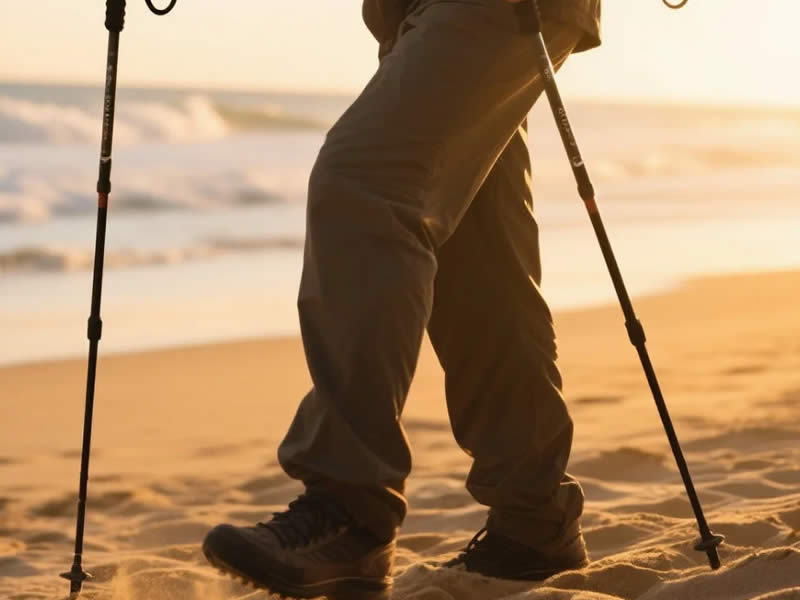
1. Why sandy trails are different
Walking on sand is tiring. Your feet sink, your ankles work harder, and your balance is constantly challenged. On dry sand, your poles will sink just as much as your feet—a standard carbide tip will plunge straight through, offering no support. The key is to increase the surface area of the pole tip so it floats on the sand rather than sinking.
2. Sand baskets – the essential tool
Sand baskets are wide, flat discs that fit onto the lower section of the pole, just above the tip. They are larger than mud or snow baskets and are designed specifically for soft sand.
- Why sand baskets? – They spread the load over a larger surface area, preventing the pole from sinking into the sand. This gives you a stable plant and reduces fatigue.
- When to use them – On dry, soft sand (beaches, dunes, desert trails).
- When to remove them – On firm, wet sand near the waterline, they are not needed and can catch on stones or vegetation.
Pro tip: Sand baskets are available for most poles (check compatibility with your pole's shaft diameter). They are a cheap and effective upgrade for beach hiking.
3. Adjusting pole length for sand
- Lengthen for soft sand – In deep, dry sand, you may need to lengthen your poles by 5–10 cm. This allows you to reach the ground without leaning forward, maintaining an upright posture.
- Shorten for firm sand – Near the waterline, where the sand is packed and firm, you can shorten the poles back to your standard length.
- Regular adjustments – If you are walking on a beach where the sand alternates between soft and firm, you may need to adjust your pole length frequently.
4. Walking technique for sandy trails
- Short steps – Take short, deliberate steps. This keeps your centre of gravity stable and reduces the chance of slipping.
- Use two poles – Two poles provide a wider base of support, improving balance on the shifting surface. One pole is not enough.
- Plant deliberately – On soft sand, plant the pole with the sand basket flat against the surface. If you jab it, it will still sink.
- Maintain a rhythm – A steady, alternating rhythm (left pole with right foot) helps maintain balance and reduce fatigue.
5. Using rubber tips on firm sand
If you don't have sand baskets, you can use rubber tips on firm sand (near the waterline). Rubber tips prevent the carbide tip from wearing down and provide a wider footprint than a bare tip. However, they are not a substitute for sand baskets on soft, dry sand.
6. What to avoid
- Using standard carbide tips on soft sand – They will sink and offer no support.
- Rushing – Walking quickly on sand is tiring and increases the risk of a fall.
- Using only one pole – A single pole is not enough for stability on sand.
- Forgetting to adjust length – Walking with the wrong length on sand reduces the benefit of the poles.
7. Tips for Brazilian beach trails
Brazil's coastline is vast, with some of the world's most beautiful beaches. Many trails combine forest, dunes, and beach walking. Here are a few specific tips:
- Lençóis Maranhenses – The sand dunes are deep and soft. Sand baskets are essential.
- Fernando de Noronha – The trails are often on firm sand, but some sections are soft. Carry sand baskets for the soft sections.
- Coastal trails of the Northeast – Many trails are on firm sand near the waterline. Rubber tips are sufficient.
8. Equipment for beach hiking
- 7075 aluminium poles – Aluminium is more durable on sand and rocks. Carbon is lighter but more fragile.
- Lever locks – Reliable in the sand and salt; twist locks can seize.
- Sand baskets – Essential for soft sand. Buy them separately if your poles didn't come with them.
- Rubber tips – For firm sand and road sections.
- Spare tips – The sand is abrasive and will wear down carbide tips.
9. After the hike
- Rinse your poles – Salt and sand can corrode locks and shafts. Rinse with fresh water and dry thoroughly.
- Clean the baskets – Remove sand baskets and rinse them.
- Lubricate locks – Apply a tiny drop of silicone spray to lever lock pivots.
10. Final verdict
On sandy trails near Brazilian beaches, the key to balance is using sand baskets, adjusting your pole length for the terrain, and taking short, deliberate steps. Sand baskets prevent your poles from sinking into soft sand, giving you a stable plant. Adjust your length for soft and firm sand, and use two poles for maximum stability. With the right technique and equipment, you can walk comfortably on sandy trails and enjoy Brazil's stunning coastline. Happy hiking!




