




Do trekking poles help with weight loss when walking in Brazilian cities?
Yes – trekking poles can help with weight loss when walking in Brazilian cities. They increase energy expenditure by engaging your upper body—arms, shoulders, and core—burning 20–40% more calories than regular walking. They also reduce knee impact and leg fatigue, allowing you to walk further and more consistently. For best results, use a brisk pace on hilly or varied terrain (e.g., Ibirapuera, Parque do Ingá), push through the straps actively, and combine with a balanced diet. While poles boost calorie burn and make walking more enjoyable, weight loss ultimately requires a calorie deficit.
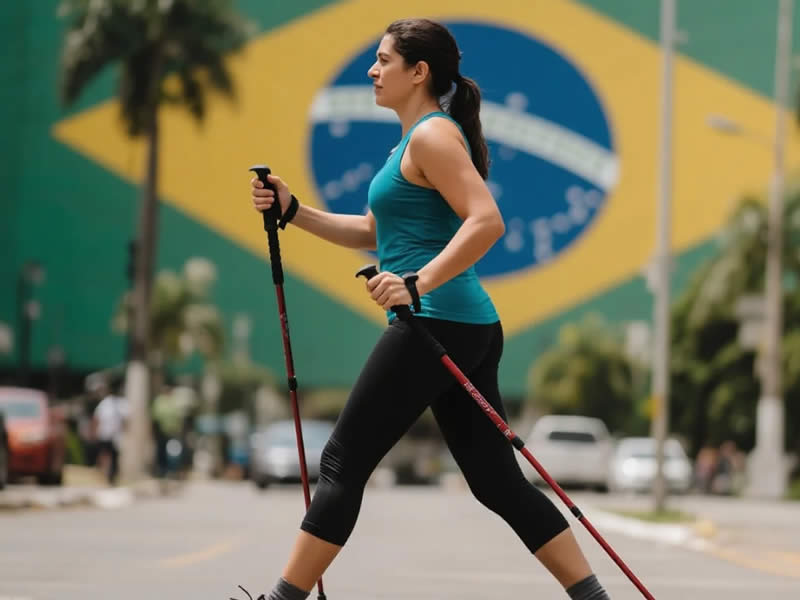
1. How trekking poles increase calorie burn
When you walk without poles, your legs do most of the work. Your arms swing, but they are not bearing load. When you use trekking poles, your upper body becomes actively engaged. Pushing down through the poles engages your triceps, shoulders, chest, and back muscles. The alternating rhythm also engages your core stabilisers.
Energy expenditure studies:
- A study published in the Journal of Sports Sciences found that using trekking poles increased energy expenditure by 20–30% compared to walking without poles at the same speed.
- On hilly terrain, the increase can be up to 40% because the poles help you push uphill and brake on descents.
- The effect is greatest when you use the poles actively (pushing through the straps) rather than passively (just resting your hands on them).
2. Walking further – the endurance effect
Poles reduce fatigue in your legs by engaging your upper body. They also protect your knees on descents, reducing impact by 20–25%. This means you can walk further without as much discomfort or pain. Walking further over time burns more calories, contributing to weight loss.
- Example – Without poles, you might walk 5 miles. With poles, you might walk 6 miles (because your legs feel fresher). The extra mile burns additional calories.
- Consistency – Because poles make walking more comfortable, you are more likely to walk regularly. Consistency is key for weight loss.
3. The technique factor – active vs. passive use
To maximise the calorie‑burning benefit, you need to use the poles actively:
- Push down – On each plant, push down through the wrist strap. This engages your triceps and chest.
- Use the straps – The strap should take your weight, not your grip. This allows you to push down more effectively.
- Maintain a steady rhythm – An alternating rhythm (left pole with right foot) distributes the effort evenly.
- Vary the terrain – Walking on hills or uneven ground increases the demand on your muscles, boosting calorie burn.
4. Calories burned – a rough guide
| Activity (30 minutes, 70kg person) | Calories burned |
|---|---|
| Walking without poles (3.5 mph) | ~120–150 |
| Walking with poles (3.5 mph) | ~150–190 |
| Nordic walking (active pole use) | ~180–220 |
| Walking with poles on hills | ~200–250 |
These figures are approximate and vary with speed, terrain, and technique.
5. Why Brazilian cities are ideal
Brazilian cities offer excellent environments for pole walking:
- Parks – Ibirapuera (São Paulo), Parque do Ingá (Maringá), Parque da Cidade (Brasília) have flat and gently rolling paths.
- Hilly terrain – Many cities have hills that increase calorie burn.
- Warm weather – The heat increases calorie burn, but stay hydrated.
- Pedestrian infrastructure – Many cities have dedicated walking paths.
6. Practical tips for Brazilian city walkers
- Use rubber tips – On pavement, use rubber tips to protect the carbide tips and reduce noise.
- Start on flat ground – Build confidence before tackling hills.
- Walk at a brisk pace – A faster pace increases calorie burn.
- Be consistent – Aim for 30–60 minutes, 4–5 times a week.
- Stay hydrated – The Brazilian heat can be intense; drink water regularly.
- Wear sunscreen – Sun protection is essential.
- Wear comfortable shoes – Poles are not a substitute for good footwear.
7. The role of diet
Trekking poles are a tool for increasing activity, but weight loss ultimately comes down to a calorie deficit. You need to burn more calories than you consume. Poles can help you burn more, but you still need to pay attention to your diet.
- Combine – Use poles to increase your activity level, and combine with a balanced, calorie‑controlled diet.
- Avoid overcompensation – Some people eat more after exercise. Be mindful of your calorie intake.
8. The psychological benefit
Poles make walking more enjoyable. They give you a sense of rhythm and purpose, and they can reduce the perceived effort of walking. When walking feels easier, you are more likely to do it regularly – and regular walking is the foundation of any weight loss programme.
9. Final verdict
Trekking poles can help with weight loss when walking in Brazilian cities by increasing calorie burn, reducing leg fatigue, and allowing you to walk further and more consistently. The increase in energy expenditure is real – up to 20–40% compared to walking without poles – but it depends on using the poles actively. For best results, combine pole walking with a brisk pace, hilly terrain, and a balanced diet. Poles are not a magic solution, but they are a helpful tool for increasing your activity level and making walking more enjoyable. With consistency and the right technique, they can be a valuable part of a healthy lifestyle. Happy (and healthy) walking!




